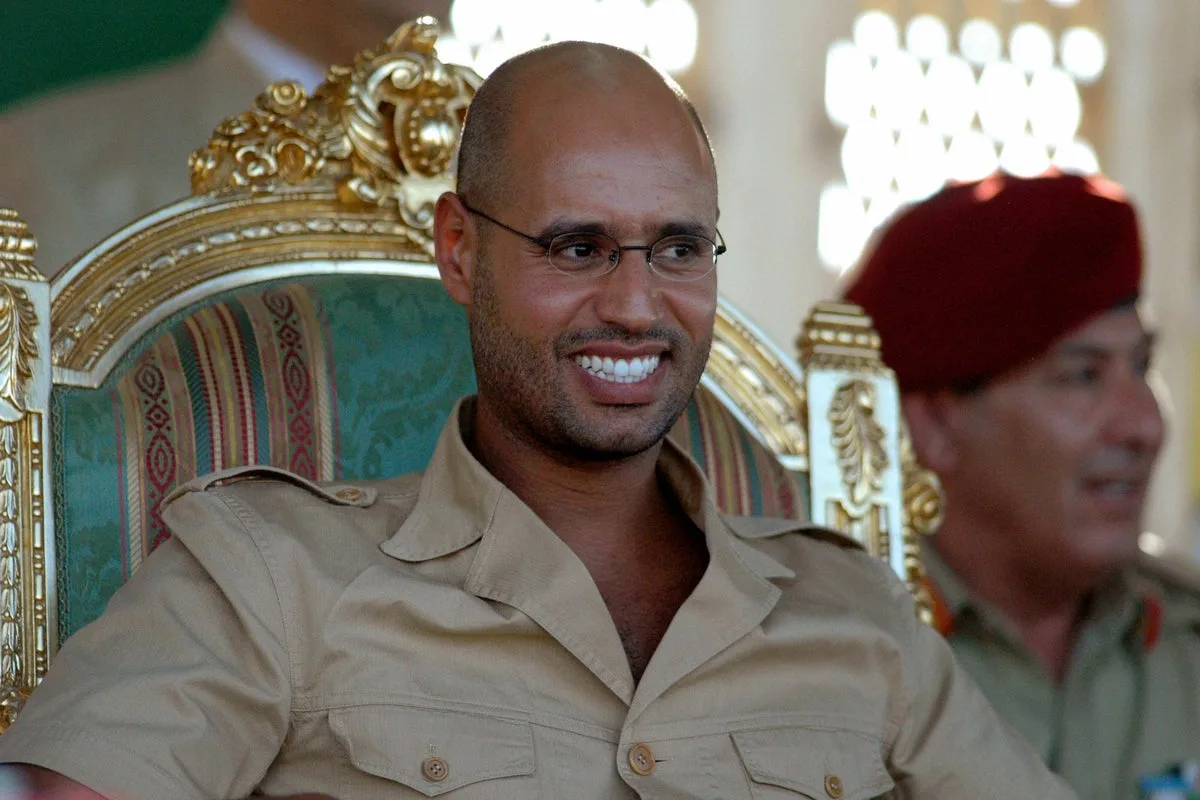
Saif al-Islam Gaddafi, the son of late Libyan dictator Muammar Gaddafi, has been shot dead at his home in the north-western town of Zintan, according to reports. The 53-year-old was killed by four masked men on Tuesday in what his political team described as a “cowardly and treacherous assassination”.
His lawyer, Khaled al-Zaidi, confirmed the death on Facebook, and the family’s political team said the assailants had shut down the house’s CCTV cameras in an attempt to conceal their crime. Gaddafi’s cousin, Hamid Kadhafi, said he had “fallen as a martyr” and noted that the address was meant to be secret.
Born in Tripoli in 1972, Saif al-Islam was the second son of the dictator and his second wife, Safia Farkash. He was seen as the reformist face of the regime, having studied for a PhD at the London School of Economics and acted as a diplomat for his father. After Muammar Gaddafi was ousted and killed in 2011, Saif al-Islam was captured and held by a rival militia in Zintan for nearly six years before being released in 2017 under an amnesty.
In 2015, a Libyan court sentenced him to death in absentia for suppressing protests and murdering protesters during the 2011 revolution. He was also wanted by the International Criminal Court on charges of crimes against humanity. Despite this, he announced a run for president in November 2021, but was disqualified by the elections committee. The elections were later cancelled due to ongoing disputes between rival administrations and armed groups.
Libya has remained politically fragmented since the fall of Muammar Gaddafi, with multiple factions competing for power and repeated attempts at elections and reconciliation failing to bring stability.