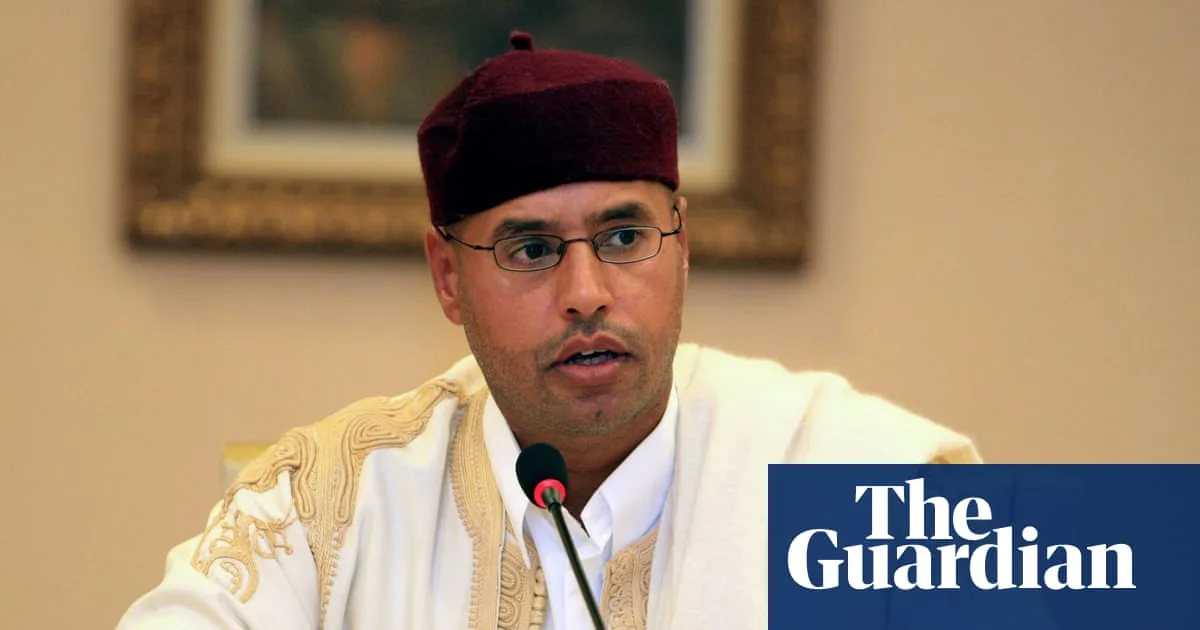
Saif al-Islam Gaddafi, the son of late Libyan dictator Muammar Gaddafi, has been killed in the town of Zintan, 85 miles south-west of Tripoli, officials confirmed on Tuesday night. The Libyan attorney general’s office stated that the 53-year-old died from gunshot wounds. Gaddafi’s own office said he was killed at his home by masked assailants.
Once considered a pro-western reformer, Gaddafi quickly supported his father’s violent crackdown on the 2011 popular protests. The International Criminal Court issued a warrant for his arrest for crimes against humanity that same year, echoed by a Tripoli court in 2015. The Libyan chief prosecutor’s office said it was searching for suspects and had sent forensic experts to the village, but provided no further details.
According to Gaddafi’s office, four masked men stormed his house, disabled the cameras, and clashed with him before killing him in what was described as a “cowardly and treacherous assassination”. However, his sister told Libyan TV that he had died near the border with Algeria. Khaled al-Mishri, former head of the Tripoli-based High State Council, called for an “urgent and transparent investigation”.
Despite holding no formal role, Gaddafi was a significant symbolic figure in post-2011 Libya. Analysts warned his death could inflame pro-Gaddafi factions. He studied at the London School of Economics and was groomed to succeed his father, leading delegations to rid Libya of weapons of mass destruction. During the 2011 revolution, he warned the country would burn if the dictator was ousted and was accused of playing a key role in the crackdown.
Gaddafi attempted to flee to Niger in 2011 but was captured by a militia and imprisoned for six years in Zintan before being released in 2017 under an amnesty deal. In 2021, he announced his candidacy for Libya’s presidential elections, prompting outrage from those who suffered under his father’s rule. He was disqualified due to his 2015 war crimes conviction, and the election ultimately collapsed.