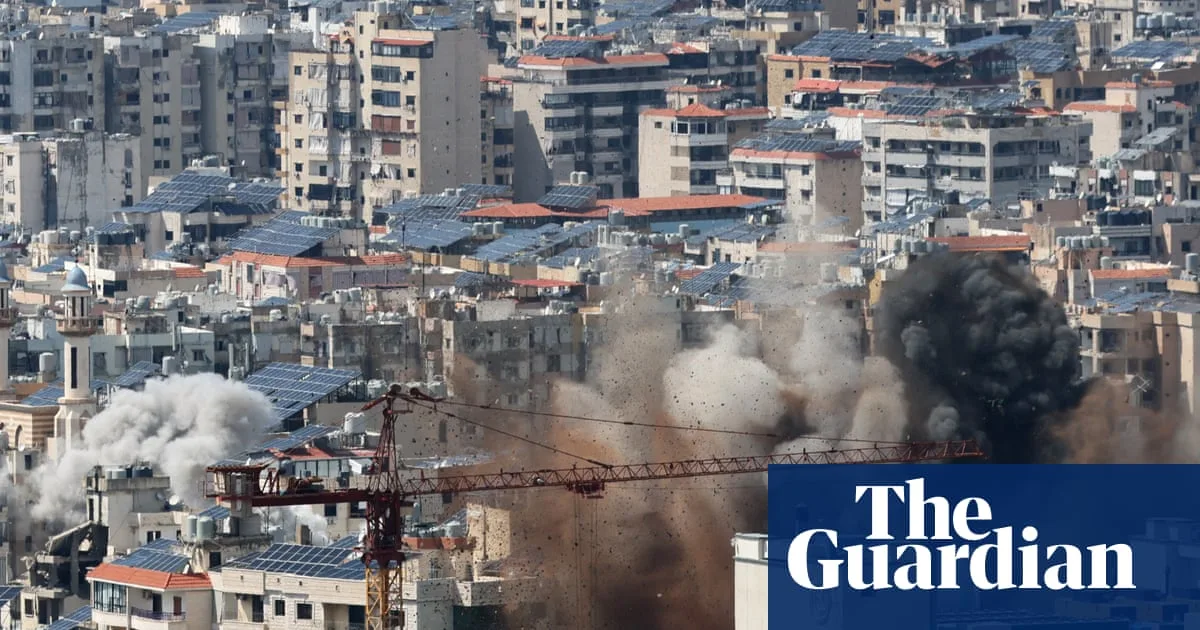
The fate of a two-week ceasefire in the Iran conflict appeared in peril on Wednesday as both sides gave divergent versions of what had been agreed, Israel intensified its bombing campaign in Lebanon and Iran halted the passage of oil tankers because of an alleged Israeli ceasefire breach.
Iran and Pakistan, which brokered the 11th-hour truce, both asserted that the ceasefire included Lebanon. Israel’s prime minister, Benjamin Netanyahu, disagreed and Israeli forces unleashed their heaviest attack of the war so far on more than 100 targets, killing at least 254 people. Donald Trump, after initially remaining silent, said Lebanon was “a separate skirmish” and not part of the deal.
The scale of Israel’s attacks on Wednesday were condemned as “horrific” by UN rights chief Volker Turk. “Such carnage, within hours of agreeing to a ceasefire with Iran, defies belief. It places enormous pressure on a fragile peace, which is so desperately needed by civilians,” he said.
In a sharply worded statement, Iran’s parliament speaker Mohammad Bagher Ghalibaf said Israel and the US had violated several clauses of the provisional ceasefire, and decried Israel’s aggressive bombing of Lebanon and a US demand that Iran should have no right to enrich its own uranium. “In such [a] situation, a bilateral ceasefire or negotiations is unreasonable,” the statement read.
Iran’s Fars news agency said oil tankers passing through the Strait of Hormuz had been stopped as a result of Israel’s “ceasefire breach”. The White House called the reports “false” and said Trump expected the strait to reopen “immediately, quickly and safely”. Vice-president JD Vance said the differing views on whether the ceasefire included Lebanon came from a “legitimate misunderstanding”.
In Israel, opposition politicians led by Yair Lapid have criticised Netanyahu for failing to deliver the conclusive victory he had promised in the war and for delivering instead a “diplomatic disaster” that had eroded trust between Israel and the United States. “We still have objectives to complete – and we will achieve them either by agreement or by resuming the fighting,” Netanyahu said in a statement on Wednesday evening.