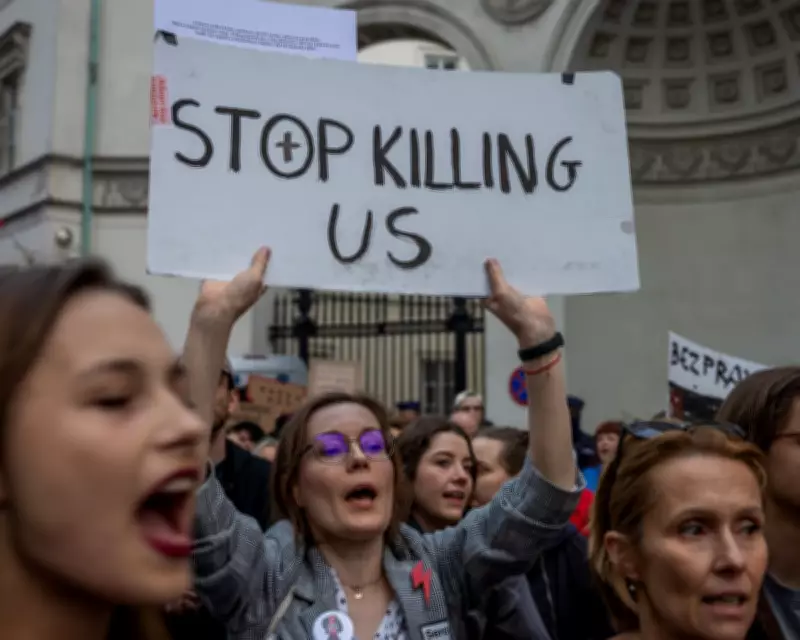
The European Union has taken a significant step towards ensuring reproductive rights across its member states by announcing that countries can now utilise existing social funds to assist women in accessing safe abortion services. This decision, celebrated as a landmark victory for gender equality, specifically aims to support women from nations with near-total bans on terminations, such as Poland and Malta, by facilitating travel to jurisdictions where abortion is legal.
A Response to Widespread Campaigning
The roots of this policy shift trace back to the extensive My Voice, My Choice campaign, which mobilised over 1.2 million signatures across Europe. The campaign forcefully argued that all women within the 27-member bloc should have equal access to legal and safe abortion procedures, compelling the European Commission to formally respond. Following robust backing from a majority of Members of the European Parliament in December, the commission has now clarified that pre-allocated social service funds can be directed to cover travel and healthcare costs associated with abortion care.
Groundbreaking Declaration from Brussels
Hadja Lahbib, the EU Commissioner for Equality, described the move as groundbreaking, emphasising its potential to transform lives. She highlighted the urgent need to address the approximately 500,000 unsafe abortions occurring annually in Europe, a figure she characterised as representing half a million women placed at risk, enduring trauma, and potentially facing lifelong health consequences. Lahbib underscored the broader political context, noting that in an era where women's bodies have increasingly become political battlegrounds and rights are being rolled back globally, Europe is demonstrating firm commitment to upholding fundamental freedoms.

Opposition and Legal Concerns
However, the announcement has not been without controversy. Olivier Bault of Ordo Iuris, a Polish anti-abortion organisation instrumental in advocating for Poland's stringent 2020 abortion restrictions, criticised the decision. He argued to Reuters that it infringes upon national sovereignty, suggesting that using the European social fund for healthcare purposes in this manner effectively mocks the domestic laws of member states. This perspective reflects the ongoing tension between EU-level initiatives and the health policy autonomy of individual nations, particularly amidst a rising tide of support for far-right political factions that often oppose abortion rights.
Campaigners Hail a Concrete Victory
Despite some disappointment that the commission did not allocate new, dedicated financial resources, reproductive rights advocates have warmly welcomed the decision. Nika Kovač, coordinator of the My Voice, My Choice campaign, hailed it as a clear and unequivocal confirmation that EU funds can be deployed to guarantee access to safe abortion care, especially for vulnerable women irrespective of their country of origin. She stressed that this represents not merely a symbolic gesture but a tangible political commitment to women's rights across the continent.
The Path Forward and Ongoing Advocacy
Campaigners acknowledge that their work is far from complete. They plan to continue pressing the European Commission to establish additional, specifically earmarked funding streams for abortion services. Furthermore, they are calling for swift action in providing member states with clear, practical guidelines on how to access these social funds and in developing a seamless, bloc-wide mechanism for women to utilise the scheme. Manon Aubry, a left-wing French MEP, encapsulated the enduring resolve of proponents, vowing to fight relentlessly until no woman in Europe dies due to an inability to access safe abortion services.