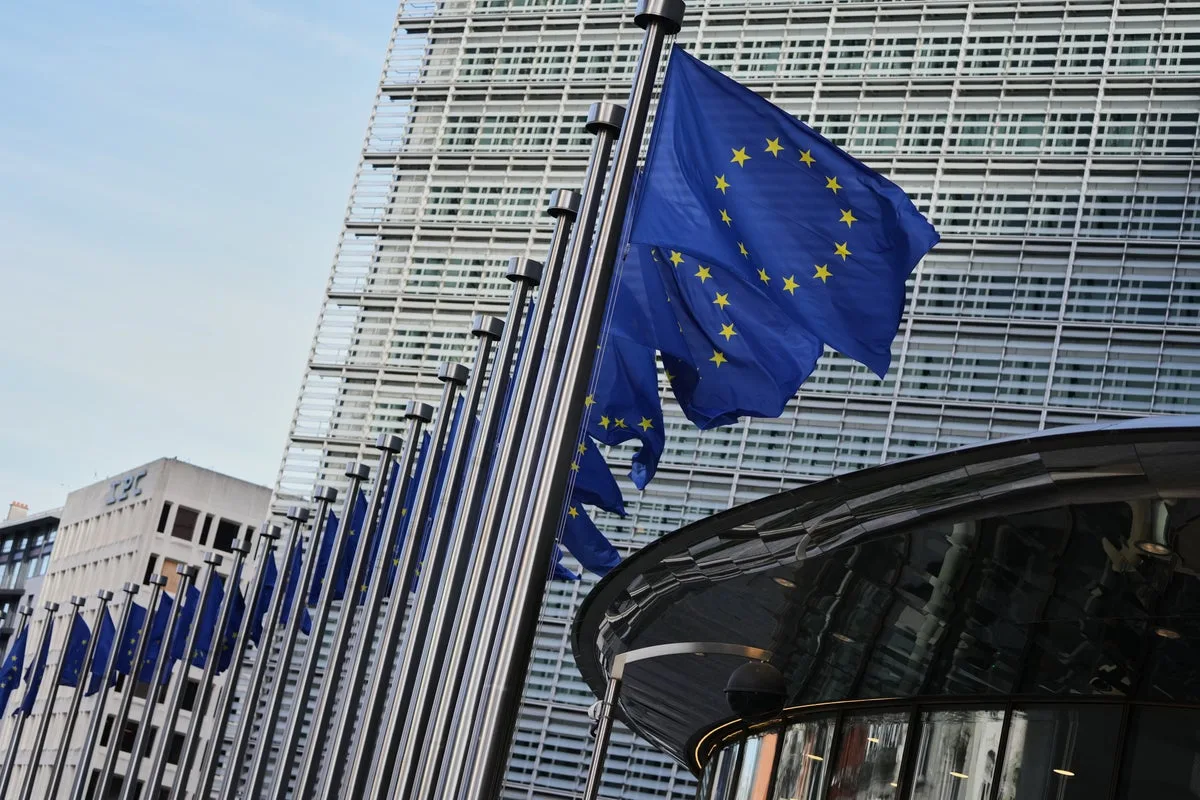
Citizens across the European Union are calling for more unified, stronger, and ambitious leadership from the 27-nation bloc as it confronts a complex array of global challenges, according to a significant official poll. The Eurobarometer survey, conducted in November, indicates a clear public appetite for a more muscular EU capable of navigating military threats, economic pressures, and climate instability.
Overwhelming Support for a More Assertive EU
The poll, which engaged more than 2,600 EU citizens primarily through face-to-face interviews, found striking levels of support for an expanded role for the Union. A substantial 69% of respondents expressed a desire for the EU to take on a greater security role in managing global crises. Furthermore, 87% backed a more diplomatically aggressive stance from Brussels on critical issues like peace and climate change, while an overwhelming 90% called for a more unified bloc to tackle key challenges effectively. The survey carries a margin of error of 2 percentage points.
Heightened Anxieties and Top Priorities
The research identified a majority of EU citizens as "highly worried" about several pressing threats. These include conflicts near the bloc's borders, natural disasters exacerbated by climate change, and the growing spectre of cyberwarfare. Specific anxieties highlighted encompass Russian hybrid attacks, such as drone incursions at European airports, disinformation campaigns, the malicious use of artificial intelligence, social polarization, foreign interference in elections, and the EU's reliance on imports for its defence industry.
Defence emerged as the paramount priority for citizens in 18 of the 27 member states, reflecting a significant shift in public focus towards security matters. The poll was conducted prior to recent geopolitical events, including a U.S. military operation that captured a former Venezuelan leader and threats against Greenland, which have since rattled European capitals. It did not specifically question respondents about relations with Washington, NATO, or China.
Alignment with Political Ambitions
The survey's findings broadly align with the stated goals of European Commission President Ursula von der Leyen, who has advocated for a more hawkish approach on trade and defence while calling for the solidification of EU power in Brussels. In response to external pressures, such as tariff threats and export curbs on critical minerals, her administration has pursued trade deals worldwide.
Notably, the results suggest that attempts by external actors, including Russia and the United States, as well as internal far-right movements, to sow division within the EU have largely failed to sway public opinion towards fragmentation.
A Paradox of Pessimism and Optimism
The poll revealed a nuanced emotional landscape among Europeans. While pessimism about the state of global affairs was widespread, respondents demonstrated greater optimism about the EU as a collective entity than about their own individual nations or personal situations. This contrast between personal confidence and broader geopolitical uncertainty is highlighted as having profound implications.
"The contrast between personal confidence and broader uncertainty has important implications, shaping citizens’ priorities, attitudes toward governance, and expectations for cooperation at national, European, and global levels," the poll analysis concluded. This sentiment underscores a complex public mood where faith in supranational cooperation persists despite anxieties about the wider world.