Cuba's Deepening Humanitarian Crisis: A Nation on the Brink
Endless blackouts, empty supermarket shelves, crumbling historic buildings and streets piled high with uncollected rubbish – this is the grim daily reality confronting millions of Cubans as the Caribbean nation teeters on the edge of a full-scale humanitarian collapse. The communist-run island, once celebrated as a tropical paradise, is now grappling with a perfect storm of severe US economic sanctions, critical fuel shortages and the disintegration of basic public services.
Crumbling Architecture and Decaying Homes
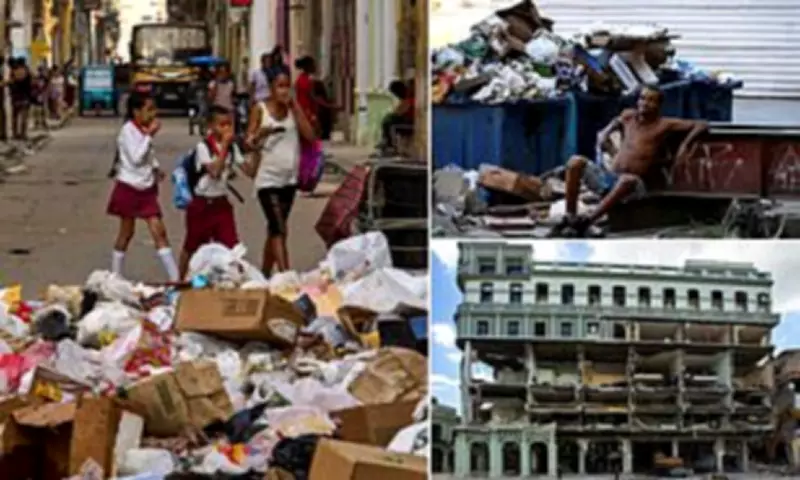
Once famed for its vibrant Spanish colonial and art-deco architecture against pristine beaches, Cuba's built environment is now visibly disintegrating. Shocking social media footage reveals the skeleton of decaying buildings in Havana, with facades collapsed and inhabitants resorting to cardboard and paper as makeshift window coverings. The ruins of what is claimed to be the University of Havana's design faculty stand as a stark symbol of the decline.
Cuba's housing minister has previously stated that nearly one million homes across the island require urgent repairs. The government attributes this crisis to the longstanding US economic embargo, which it says blocks access to essential building materials. Critics, however, accuse the state of neglecting residential repairs while prioritising hotel construction to boost tourism revenue, with some alleging buildings are deliberately left to collapse for cheap conversion into tourist infrastructure.

Mounting Waste and Public Health Risks
The severe fuel shortage, exacerbated by tightened US sanctions on oil shipments, has crippled rubbish collection services. State-run outlet Cubadebate reports that only 44 of Havana's 106 rubbish trucks remain operational. Consequently, streets across the capital are littered with accumulating piles of cardboard, plastic bottles and rotting food waste, attracting flies and creating foul odours.
Residents have taken to social media to raise alarms about the ensuing public health risks, sharing videos of murky puddles of open sewage and overflowing bins. The fuel crisis is rapidly morphing into a sanitation and health emergency, adding another layer of suffering for the Cuban population.
Severe Food Shortages and Reliance on Rations
Cuba's communist government relies on a rationing system, a legacy of Fidel Castro's revolution, to manage severe shortages of food, fuel and medicine. However, this system is now failing. In 2024, the government was forced to cut the subsidised daily bread ration by a quarter due to wheat flour shortages, again blamed on the US embargo.
For many Cubans earning the equivalent of just $15 monthly, affording more expensive bread on the private market is nearly impossible. Heartbreaking social media videos depict the daily struggle: long queues outside butcher shops where supplies run out rapidly, empty supermarket shelves, and in one particularly distressing clip, a woman searching through rubbish for food. The "libreta" ration book, once a symbol of revolutionary provision, now offers a fraction of its original products, often delivered late, in poor quality, or not at all.
Prolonged Blackouts Crippling Daily Life
The fuel shortage has triggered lengthening daily blackouts across the island. While Cuba's antiquated power grid has been failing for years, the situation has dramatically worsened. Residents are now plunged into darkness daily, forced to cook with coal and firewood, and face spoiling food during extended power cuts.
These blackouts have severely impacted healthcare, education and basic sanitation. Available electricity has disproportionately affected rural areas, with night-time light in major cities like Santiago de Cuba dropping by up to 50%. The crisis cripples hospitals, disrupts schools and leaves families without refrigeration or water pumps.

Fuel Queues and Economic Strangulation
Drivers face waits of several months to refuel their cars. To manage chaos, the government mandated the use of a mobile app for refuelling appointments, but it often schedules slots weeks or months in advance. The government has also ceased selling subsidised gasoline in local currency, now offering only more expensive fuel priced in US dollars—a litre costs $1.30 officially and up to six dollars on the black market, while many government workers earn less than $20 monthly.
The US has maintained an embargo on Cuba since 1960, but the Trump administration has recently hardened its stance, sanctioning oil shipments and threatening tariffs on suppliers. With Venezuela—once Cuba's top oil supplier—effectively halting shipments and Mexico also pausing deliveries under US pressure, Cuba's national oil supply has plummeted. Reports suggest Russia may send crude oil, but no date is confirmed.
International Concern and Domestic Resignation
US President Donald Trump recently labelled Cuba a "failed nation," citing fuel shortages so severe they affect airport operations, while acknowledging the situation as a "humanitarian threat." The United Nations has long voted for the US to end its embargo. UN Secretary-General Antonio Guterres has expressed deep concern, urging dialogue and international law adherence, with UN teams working on humanitarian relief in Cuba.
Despite predictions of uprising, organised protest remains scarce in Cuba, where dissent has long been curbed and significant emigration since the pandemic has depleted opposition. The government, rooted in Fidel Castro's 1959 revolution, has survived brutal economic struggles before, but the current convergence of crises—blackouts, food scarcity, infrastructural decay and sanitation breakdown—presents an unprecedented challenge, pushing the nation toward a humanitarian breaking point.