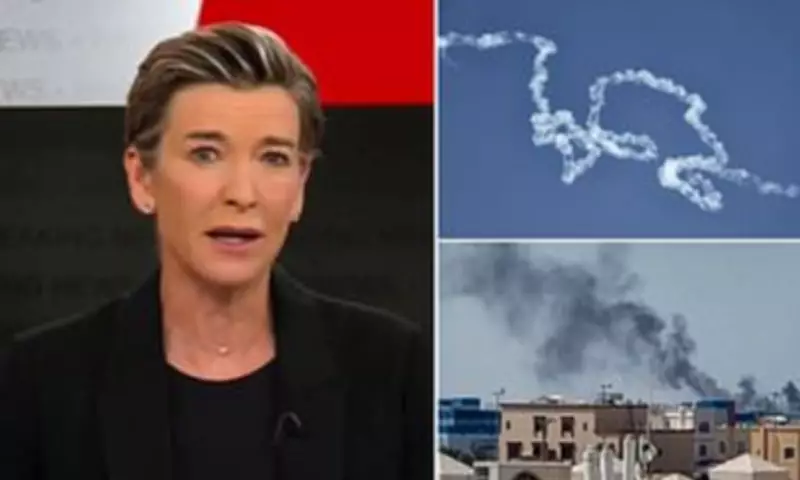
CNN Anchor's Live Broadcast Interrupted by Alarms as Iran Launches Retaliatory Strikes
A dramatic live broadcast from Abu Dhabi was abruptly halted when CNN anchor Rebecca 'Becky' Anderson and her team were instructed to seek immediate shelter. This urgent directive came as Iran launched a wave of retaliatory missile strikes across the Gulf region, targeting several Arab states that host United States military installations.
Escalation Following US-Led Military Action
The Iranian counteroffensive was a direct response to a joint military operation conducted by the United States and Israel earlier on Saturday. This initial attack targeted Iranian leadership, including Supreme Leader Ayatollah Ali Khamenei's compound in Tehran, after weeks of heightened tensions and failed negotiations concerning Iran's nuclear program.
President Donald Trump subsequently released a video message, vowing a 'massive and ongoing' military effort aimed at dismantling Iran's military industry. Israeli Prime Minister Benjamin Netanyahu echoed this stance, stating their joint operation would empower the Iranian people to 'take their fate into their own hands.'

Widespread Strikes and Regional Impact
Iran's Revolutionary Guards confirmed the launch of missiles against 'all occupied territories and criminal US bases in the region,' promising the operation would continue relentlessly. The strikes impacted Kuwait, Qatar, the United Arab Emirates, and Jordan, all nations with significant US military presence.
In Abu Dhabi, loud booms were reported, causing windows to vibrate, and residents received emergency phone alerts urging them to shelter in secure buildings. Fighter jets were observed over Yas Island, and one fatality was confirmed in the city. Similar explosions were heard in Dubai, with smoke seen near Jebel Ali port.
Journalists Report Amid Chaos
The conflict created perilous conditions for journalists reporting on the ground. Following the interruption in Abu Dhabi, Anderson calmly informed viewers her team would comply with the shelter order, assuring them coverage would resume after a short break.
In Tel Aviv, Fox News chief foreign correspondent Trey Yingst continued his live broadcast as air raid sirens sounded, pausing only to put on a bulletproof vest while cameras rolled. The broadcast captured missile interceptors in the sky over the city as Israel attempted to thwart incoming fire.
Sky News Middle East Correspondent Adam Parsons reported from Jerusalem wearing a ballistic vest and helmet, with loud booms from interceptions audible in the background. He relayed reports of missiles heading toward Palestine.
Regional Responses and Casualties
Bahrain officials confirmed an attack on the US Fifth Fleet, with footage showing smoke along the coastline. Qatar's military stated it had intercepted Iranian strikes, resulting in heavy booms in Doha. Anwar Gargash, an advisor to the UAE president, told CNN the strikes presented significant challenges for regional stability, noting the UAE had not been forewarned.
The human cost began to emerge, though the full death toll remains unclear. Iran's state-run IRNA news agency reported 40 girls killed and at least 45 wounded at a school near the strikes. Syrian state television cited four deaths from an Iranian missile, while Iraqi officials reported two fatalities from a drone strike.
Global airlines suspended flights across the Middle East as the region braced for further military escalation, underscoring the widespread disruption and danger posed by the conflict.