British Mother Recounts 'Pretty Chaotic' Ordeal at Abu Dhabi Airport Amid Conflict
Fay McCaul, a 41-year-old British woman, has described a "pretty chaotic" situation at Abu Dhabi International Airport over the weekend, where she was stranded with her seven-year-old son as flights to London were abruptly cancelled. The cancellations occurred amid escalating tensions in the Middle East, with passengers receiving alarming alerts about potential missile strikes.
Missile Warnings and Confusion at the Airport
Ms McCaul, who was due to fly from the United Arab Emirates capital to London on Saturday, reported that sirens began blaring in the airport while she waited to board. "Sirens started going off in the airport and everyone started receiving texts on their phones with alarm signals to stay away from windows because of potential missile strikes," she said. The lack of announcements from airlines added to the confusion, leaving passengers in the dark about the unfolding events.
"It was just taking ages to board, with no announcements, so we didn't know what was going on," Ms McCaul explained. "So then it was pretty chaotic, and the airline obviously didn't know what was going on either." After being grounded for hours without information, she and other stranded travellers were eventually sent to hotels, though space was limited, with some redirected to Dubai, two hours away.
Limited Flights Evacuate Stranded Passengers
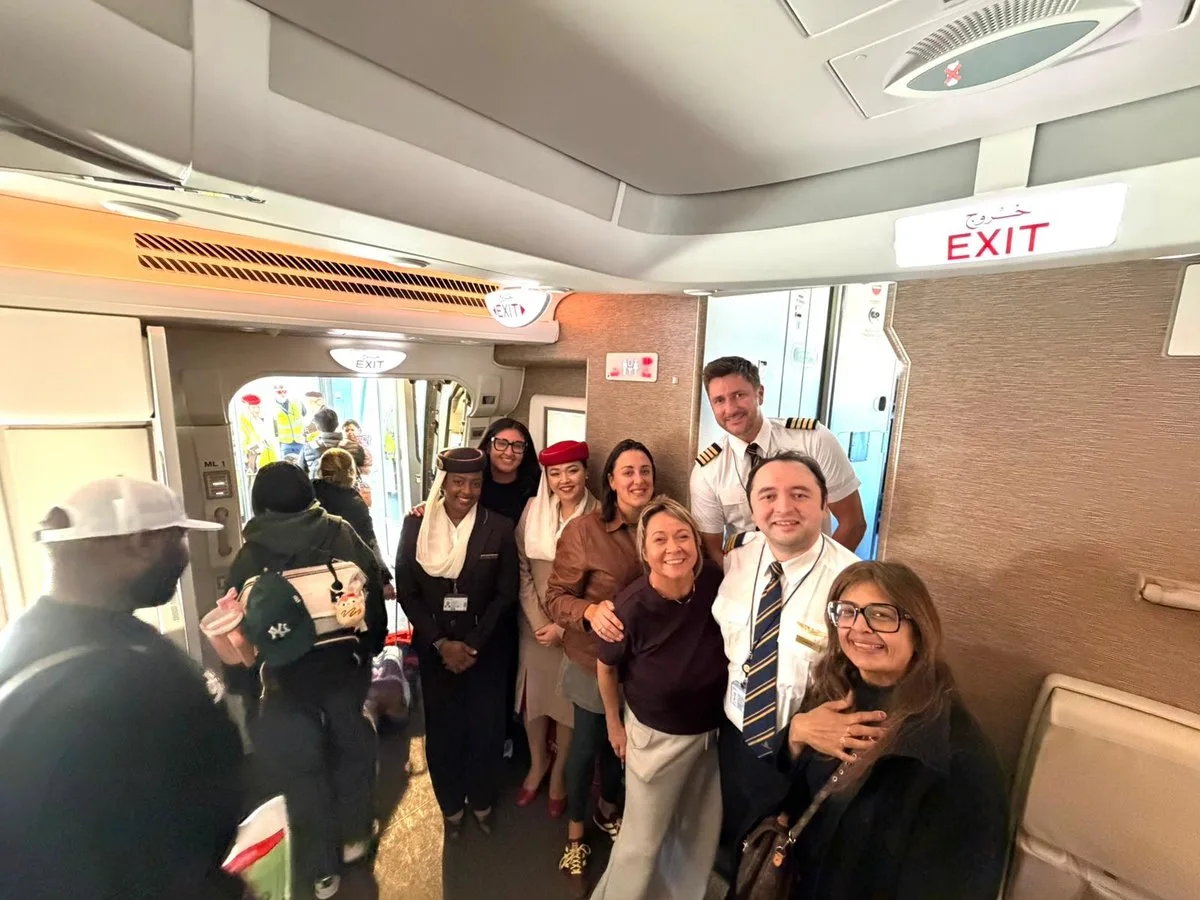
In a brief respite, Etihad Airways managed to operate 15 flights from Abu Dhabi within a three-hour window on Monday, according to flight tracking company Flightradar24. These flights were "likely helping to clear transit passengers who have been stuck there since the start of the conflict." One of these, flight EY067, landed at London Heathrow's Terminal 4 at 7.25pm on Monday evening, carrying UK nationals including Ms McCaul and her son.
Upon arrival, Ms McCaul expressed "unbelievably relieved" emotions as she hugged her partner, Adam Smith, 41, who awaited them at Heathrow. Around 70 people gathered at Terminal 4 arrivals to welcome family and friends from Abu Dhabi. However, Etihad Airways has suspended all scheduled commercial flights to and from Abu Dhabi until 2pm UAE time on Wednesday, March 4, advising passengers not to travel to the airport unless contacted directly.
Personal Accounts of Stress and Uncertainty
Ms McCaul highlighted the psychological toll of the ordeal, noting, "I'm exhausted, because it's just the 'not knowing', the lack of information and then the news constantly." From their hotel, located about 15 minutes from the airport, she could hear explosions, adding to the stress. Fortunately, her son remained unaware of the dangers, enjoying the hotel pool. "It was pretty stressful for me, but yeah, luckily, he's quite chilled," she said.
Other passengers shared similar experiences. Isabel Robertson, who was rerouted from a cancelled British Airways flight in Dubai to an Etihad flight from Abu Dhabi, called herself "lucky" to be on one of the few departing flights. Lindsay and Ric Elvidge, both 60, were returning from Australia when their connecting flight from Doha to London was cancelled, redirecting them to Abu Dhabi. Mr Elvidge described the situation as not "awful," but acknowledged it "could have been a hell of a lot worse."
Broader Impact and Government Response
The disruptions are part of wider flight cancellations across Middle Eastern airports due to the intensifying conflict between Iran and US-Israeli forces. Foreign Secretary Yvette Cooper revealed that 102,000 British nationals have registered their presence in the region, with an estimated 300,000 British citizens in Gulf countries targeted by Iran. Sir Keir Starmer assured that the government is "looking at all options to support our people," including potential repatriation via land routes to Saudi Arabia for onward flights.
Airlines like British Airways and Virgin Atlantic have also cancelled or rerouted flights, with Virgin axing two Heathrow-bound flights from Dubai and Riyadh on Monday. As the situation remains fluid, Ms McCaul voiced concern for those still stranded, saying, "I just hope the people who are stuck there get some help." The ongoing uncertainty underscores the challenges faced by travellers caught in geopolitical crises.