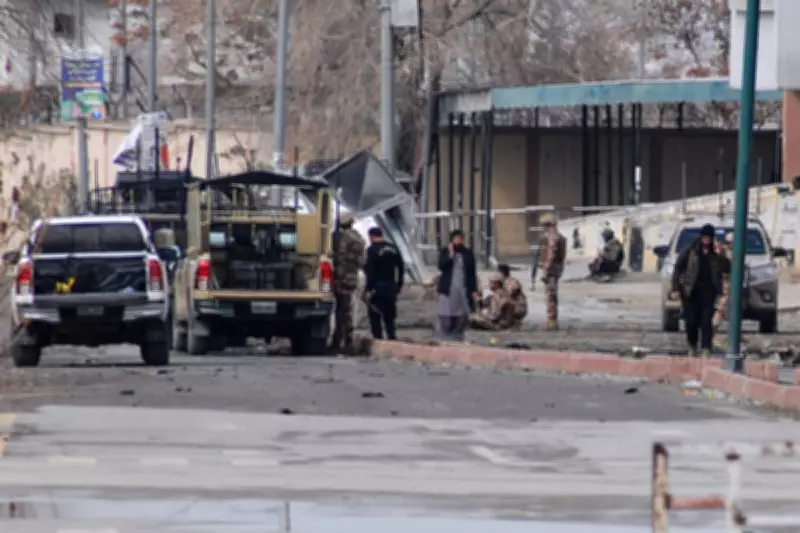
In a significant escalation of violence, separatist militants from Pakistan's Balochistan province have launched nearly a dozen coordinated attacks across southern Pakistan, resulting in the deaths of at least ten security personnel and dozens of insurgents. The assaults, which occurred early on Saturday, targeted a range of high-security installations, including a prison, multiple police stations, and paramilitary facilities.
Widespread Violence and Casualties
Authorities reported that the attacks began almost simultaneously across the province, leading to intense gunbattles. Pakistan's Interior Minister, Mohsin Naqvi, confirmed the death of ten security officers in a statement, praising the forces for their response which resulted in the killing of numerous insurgents. Provincial officials indicated that nearly one hundred militants have been eliminated across Balochistan over the past forty-eight hours, with fifty-eight of those fatalities occurring on Saturday alone.
Key Incidents and Targets
The coordinated strikes involved multiple fronts. In Quetta, the provincial capital, two police officers were killed in a grenade attack on a police vehicle. Separately, dozens of insurgents assaulted a prison in Mastung district, successfully freeing more than thirty inmates. Attempts to storm the provincial headquarters of paramilitary forces in Nushki district were repelled by security personnel.

Further attacks included grenades being hurled at a government administrator's office in Dalbandin district, though a swift security response forced the assailants to flee. Additional assaults on security posts in Balincha, Tump, and Kharan districts were thwarted. In Pasni and Gwadar, insurgents attempted to abduct passengers from buses travelling along highways, according to police reports.
Infrastructure Disruption and Emergency Measures
The violence also caused significant disruption to infrastructure. Insurgents destroyed rail tracks, prompting Pakistan Railways to suspend train services from Balochistan to other parts of the country. In response to the casualties, the provincial government declared an emergency at all hospitals to manage the influx of wounded.
Claim of Responsibility and Propaganda
The Baloch Liberation Army (BLA), a separatist group banned in Pakistan and designated as a terrorist organisation by the United States, claimed responsibility for the attacks. During the assaults, some banks were also robbed. The BLA released videos showcasing female fighters participating in the operations, a move seen as propaganda to highlight the role of women within their ranks.
Shahid Rind, a spokesman for the Balochistan government, stated that most of the attacks were foiled by security forces. This wave of violence follows a military announcement that security forces raided two militant hideouts in the country's southwest earlier in the week, killing forty-one insurgents in separate gunbattles.
Political and Regional Context
Balochistan has long been the epicentre of an insurgency by separatist groups seeking independence from Pakistan's central government in Islamabad. The recent attacks underscore a troubling intensification of violence, with Baloch separatist groups and the Pakistani Taliban, known as Tehrik-e-Taliban Pakistan (TTP), increasing their operations in recent months.
Pakistan has repeatedly accused Baloch separatists and the TTP of using Afghan soil to launch attacks inside the country, a claim that Kabul denies. Additionally, Pakistan alleges that the BLA enjoys backing from India, a charge that New Delhi consistently refutes. The TTP, while a separate entity, is allied with Afghanistan's Taliban, who regained power in August 2021.
Provincial Chief Minister Sarfraz Bugti noted on social media that security forces are actively pursuing the insurgents, claiming that at least seven hundred insurgents have been killed by security forces in the past year. According to Balochistan police and government officials, at least thirty-seven assailants were killed initially in the recent attacks, with twenty-one more traced and shot dead subsequently.
The scale and coordination of these assaults are considered rare, marking a significant challenge for Pakistani authorities in a region plagued by longstanding separatist tensions.