Australian Tourist Trapped in Dubai as Iranian Missiles Strike
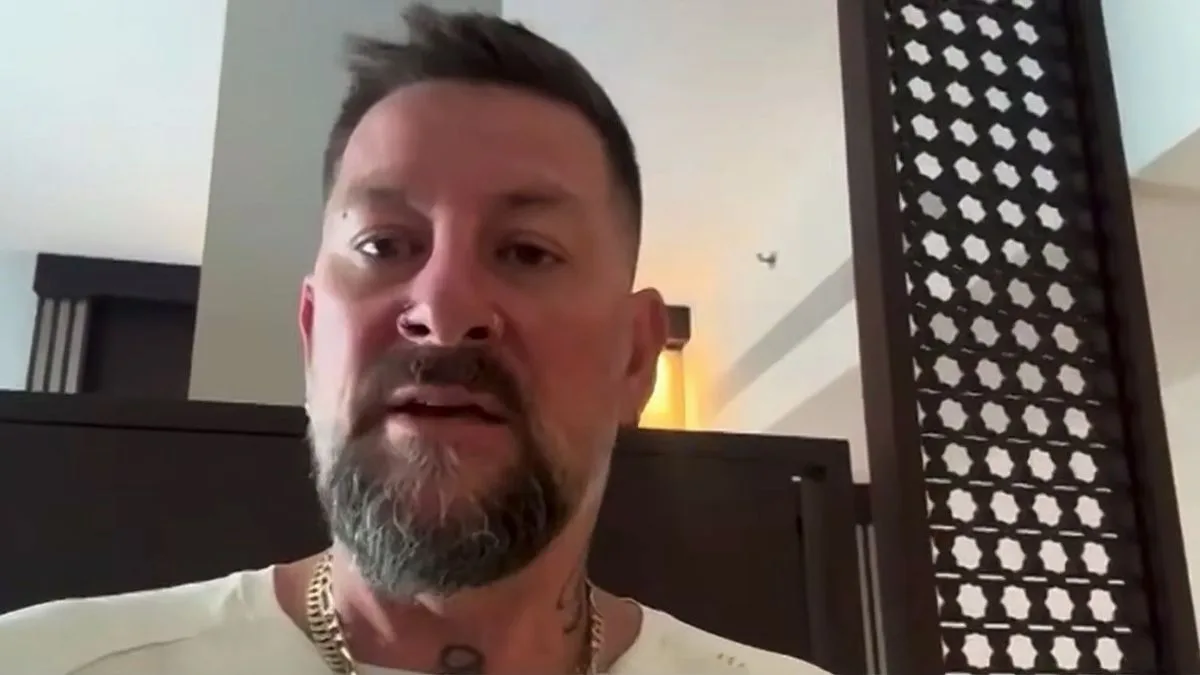
An Australian traveller has found himself stranded in Dubai, witnessing a missile strike firsthand, after Iran launched a massive retaliation against US and Israeli forces. Scott Graham, who was visiting the city, described scenes of chaos and fear as explosions rocked the area, forcing airports to shut down and leaving thousands of travellers unable to return home.
Close Encounter with a Missile Blast
Scott Graham told 9 News that he was just 200 metres from the five-star Fairmont The Palm hotel when it was hit by a missile, causing an enormous explosion. "I was across the road at the Palm Tower," he said. "I had an 8pm slot booked in the infinity pool at the top of the tower, but I had a half-hour wait so I thought I’d just grab something to eat from the ground floor. I was in the restaurant and we heard this almighty boom."
Women and children screamed as the detonation shook the building to its foundations, covering his restaurant table in dust from the shock wave. "I went outside," Scott recounted. "I couldn’t believe what I could see just across the road from me. The fear in people’s faces and the panic across the whole area was just crazy."
Panic and Shelter in the Aftermath
In the immediate aftermath, no one knew where to go or what to do, according to Scott. Staff from nearby hotels began offering shelter as further missiles streaked across the sky. "There were literally bombs going off above our heads, everywhere," he said, adding that he could hear anti-missile rockets being launched throughout the night.
Once he made it back to his hotel, sleep was difficult due to ongoing emergency alerts. The UAE's emergency alert system, which sends loud tones and messages in Arabic and English to all mobile phones, advised people to seek immediate shelter away from doors and windows. Scott praised the system as "second to none" and commended the UAE government's handling of the crisis.
City Shutdown and Travel Chaos
Today, the streets of Dubai are nearly empty, with shops closed and residents urged to stay indoors. Some people are sleeping on hotel floors rather than risk travelling across the city. "People have nowhere to go," Scott said. "The airport is shut, all the flights have been stopped – it’s a waiting game now to find out what’s going on."
His travel agency has been supportive, checking in on him regularly. According to Flightradar24, over 3,400 flights were cancelled across seven main airports in the Middle East, grounding commercial aircraft region-wide. Scott admitted, "I’ve never been in a position like this before," expressing his fear and uncertainty.
Background of the Conflict
The Iranian strikes were a response to a massive onslaught from US and Israeli forces early on Saturday, code-named Operation Epic Fury by the Pentagon. This attack followed failed US-Iranian talks on Tehran's nuclear programme. US President Donald Trump claimed that Iran's Supreme Leader Ali Khamenei was killed in the attacks, a claim later confirmed by Iranian media.
Additionally, a US missile hit a girls’ elementary school in southern Iran, killing 148 people and injuring 95 others, according to Iran state media. Iranian foreign minister Abbas Araqchi warned the UN Security Council that Iran considers all US and Israeli bases, facilities, and assets in the region as "legitimate military objectives."
He stated, "Iran will continue to exercise its right of self-defence decisively and without hesitation until the aggression ceases fully and unequivocally." Iran's counter-attacks, described as targeting US interests across the region, have affected Israel, Kuwait, Qatar, Bahrain, and the UAE.
The UAE’s official Media Office released a statement confirming an "incident occurred in a building in the Palm Jumeirah area," with four people injured. As the situation unfolds, stranded tourists like Scott Graham face an anxious wait for normalcy to return.