How Seabird Excrement Powered an Ancient Andean Kingdom
In 1532, Spanish conquistador Francisco Pizarro captured the Inca ruler Atahualpa at Cajamarca, Peru, precipitating the collapse of the Inca Empire. Before this pivotal assault, Pizarro's brother Pedro noted a curious detail: alongside the Inca emperor, only the Lord of Chincha was transported on a ceremonial litter, a privilege denoting exceptional status.
What elevated the Lord of Chincha to such prominence within Inca hierarchy? Groundbreaking research published in PLOS One proposes a surprising answer: the strategic control and utilisation of seabird guano, a potent organic fertiliser that became a cornerstone of economic and political power.
The Precious Resource of the Desert Coast
The Chincha Kingdom, flourishing between 1000 and 1400 CE in southern Peru, was a sophisticated society of approximately 100,000 people, organised into specialised communities of farmers, fisherfolk, and merchants. Its territory encompassed the Chincha Valley, an arid region irrigated by Andean waters, and crucially, the nearby Chincha Islands.

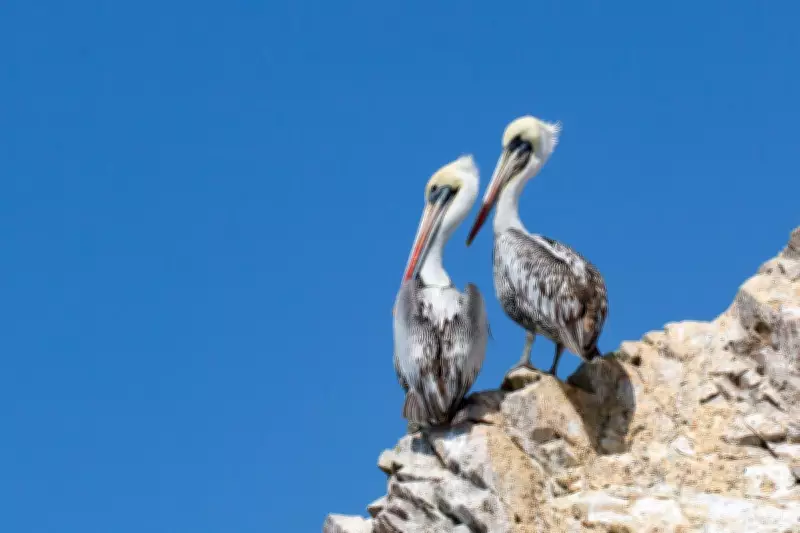
These offshore islands hosted the Pacific's most substantial deposits of seabird guano. The unique environmental conditions—the nutrient-rich Humboldt Current supporting vast fisheries, massive seabird colonies, and an exceptionally dry climate that prevented guano from washing away—created accumulations many meters deep. This guano, rich in nitrogen and phosphorus, far surpassed terrestrial manures like cow dung in fertilising potency.
Biochemical Evidence of Ancient Fertilisation
The research team employed stable isotope analysis on 35 archaeological maize samples recovered from Chincha Valley graves. The biochemical results were revealing. Most samples exhibited higher nitrogen isotope values than unfertilised maize would produce, indicating deliberate fertilisation. Approximately half displayed exceptionally high values, a chemical signature consistent exclusively with the use of seabird guano.
This analysis confirms that Indigenous communities were applying this marine fertiliser to their crops at least 800 years ago, significantly boosting agricultural yields long before European contact.
Cultural Reverence and Economic Power
Guano's importance transcended mere agriculture; it was woven into the fabric of Chincha culture and cosmology. Analysis of textiles, ceramics, metalwork, and architectural friezes reveals recurring motifs of seabirds, fish, ocean waves, and sprouting maize. This iconography reflects a profound understanding of the ecological cycle: seabirds consuming fish, producing guano, which then nourished maize crops that sustained the population.
This reverence may persist in modern Peruvian toponymy, with place names like Pisco (possibly derived from a Quechua word for bird) and Lunahuaná (potentially meaning "people of the guano").
Economically, control over guano transformed the Chincha Kingdom. The fertiliser enabled expanded crop production and fortified extensive trade networks. Fisherfolk likely harvested guano from the islands, supplying local farmers and merchants who traded it along the coast and into the highlands. This agricultural productivity and mercantile influence amplified Chincha's strategic value.
The Guano Alliance with the Inca Empire
Around 1400 CE, the expanding Inca Empire incorporated the Chincha Kingdom through what is often described as a peaceful capitulation—a rare negotiated alliance. Researchers posit that guano was a critical bargaining chip in these discussions. The Inca state, eager to boost its maize production, lacked direct access to such potent marine fertilisers.
The Lord of Chincha's exalted status, as witnessed by the Spanish, likely stemmed from his control over this invaluable resource. The Inca came to value guano so highly that they later imposed strict regulations: restricting access to the islands during breeding seasons and forbidding the killing of guano-producing birds under penalty of death.

This study not only substantiates long-held scholarly hypotheses about guano's role in the rise of the Chincha Kingdom but also expands the known geographic scope of pre-Inca guano fertilisation practices. It highlights how a seemingly mundane natural resource could shape the destiny of an ancient civilisation, fuelling its agriculture, economy, and ultimately, its political leverage on the world stage.