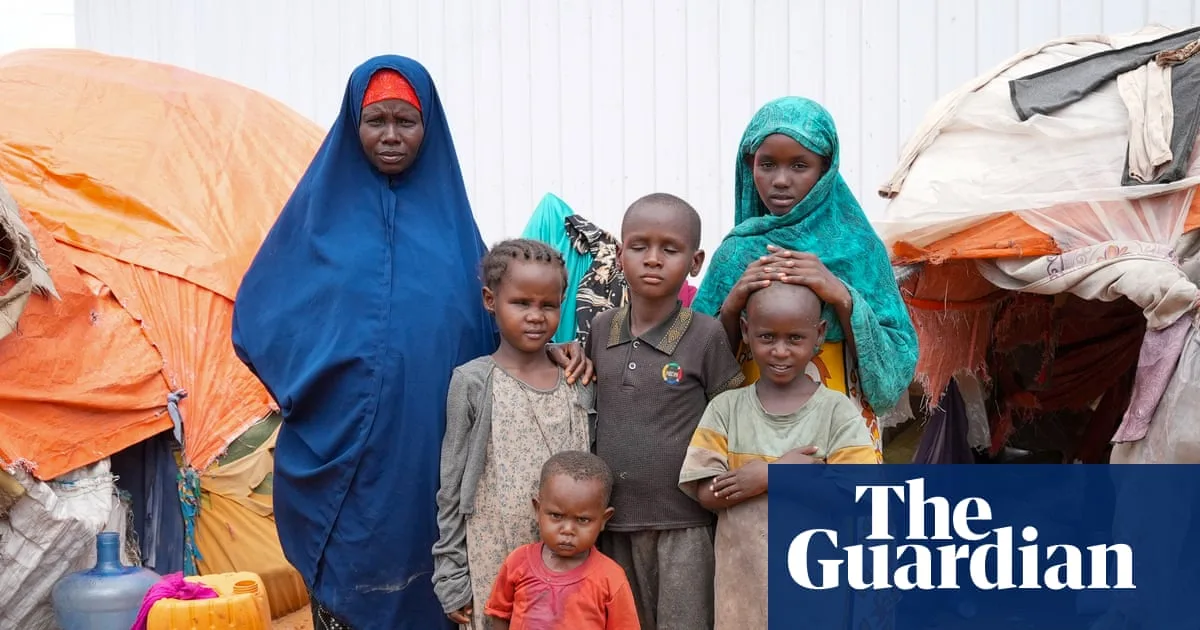
More than 6.5 million Somalis have been pushed to the brink of severe hunger as the climate crisis, conflict and cuts in aid leave a trail of despair. For three years, Zeynab Ibrahim watched as her town shrivelled up and died. The rains never came, reservoirs were depleted and farms turned to dust. Hunger and sickness swept through the village, claiming four of her ten children.
“We tried every means to survive – selling dried grass and digging up water from the barren earth. Unfortunately, there was nothing left, so we had no choice but to escape to save our children,” she says, sitting in front of her shelter in a camp for internally displaced people (IDP) in the Kahda district of Mogadishu. They joined more than a million displaced people living in abysmal conditions in informal settlements across the city.
Adan Roble, 77, has lived through drought, floods and violence. Years of drought destroyed his crops, then recent rains created flooding that swept through his village near Janale town in the Lower Shabelle region. As water washed everything away, military drones flew overhead as government forces fought al-Shabaab nearby. “Imagine losing everything and trying to survive without food and clean water, while fighting continues around you,” he says.
Internally displaced people are the worst affected, living on overcrowded sites with limited access to water, sanitation and health facilities. The situation is aggravated by significant international humanitarian aid cuts and rising fuel, food and transport costs. Nearly 1.9 million children under five face acute malnutrition, and nearly 500 nutrition clinics have closed due to lack of funding.
In the past three months, more than 700 children under five were admitted to Kismayo general hospital’s specialised facility, and ten died, according to the International Committee of the Red Cross. UN humanitarian chief Tom Fletcher described the grim reality, saying, “On top of conflict and displacement, you have got the flash floods and the drought getting worse, and that should make us furious about the lack of humanity being shown.”