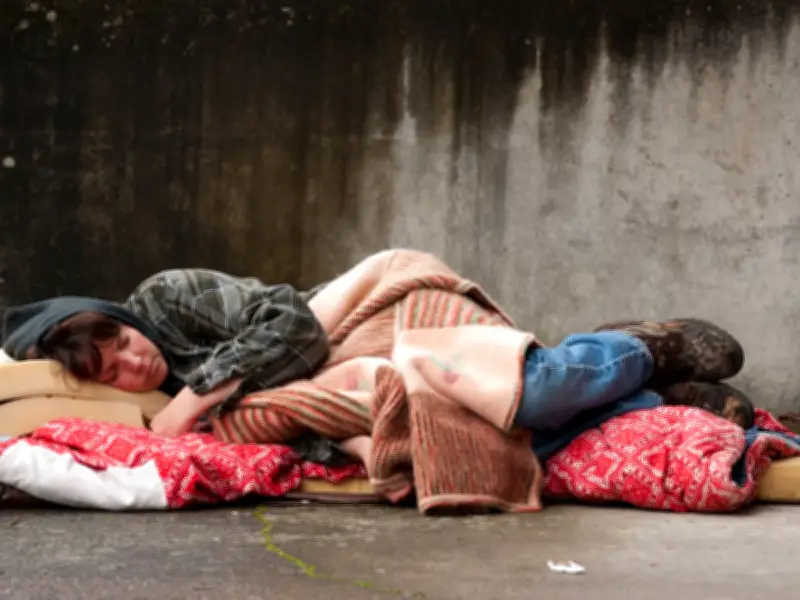
A new report reveals that women sleeping rough are being overlooked by official government counts, with many forced to seek refuge in places such as buses, A&E waiting rooms, and public transport that are excluded from homelessness statistics. The Women’s Rough Sleeping Census 2025, led by Single Homeless Project and Solace alongside Crisis and Change Grow Live, found that nearly two-thirds (65%) of women said they slept in places excluded from official counts.
Key Findings of the Census
The survey identified 1,406 women sleeping rough in England, while the Government Rough Sleeping Snapshot 2026 recorded only 733 women. In some areas, the Census found ten times more women than official counts. Six local authorities, including Enfield, Haringey, Rochdale, and Barnet, reported zero women sleeping rough, but the Census identified 162 women in those same areas.
Women reported feeling forced to stay awake to avoid violence, exploitation, and sexual assault. Victoria, from London, spent three years sleeping rough on busy central London streets. She said: “As a woman, I was often afraid to sleep, so I wouldn’t sleep at all, especially at night - the minute men realised I was vulnerable and homeless, they would begin to offer me money to do things with them. I felt unsupported, alone and suicidal.”

Link to Violence and Disadvantage
Researchers found that women’s homelessness is closely linked to violence against women and girls, domestic abuse, mental ill health, poverty, and multiple disadvantage. The findings have reignited calls for a different approach to counting women experiencing homelessness.
Rebecca Goshawk, Director of Business Development at Solace, said: “For years now, this evidence has shown that government counts put women at risk of violence and assault; we have said, time and again, that services do not meet the needs of women, but systems are yet to change.”
Lucy Campbell, Assistant Director for System Change at Single Homeless Project, added: “The Government has pledged to reduce long term rough sleeping by half, but this cannot be achieved without an accurate starting point. The Women’s census shows there is a better way to count, understand and respond to women’s rough sleeping. The government now has an opportunity to make that the national standard.”
Requests to the Government
The report sets out several requests to the Government to address the issue:
- Update the definition: Amend the 2010 government definition of rough sleeping to reflect how women experience homelessness, including hidden, transient, and less visible forms.
- Roll out the Census nationally: Fund and resource the Women’s Rough Sleeping Census across England, with clear guidance for local authorities to collect accurate, inclusive data.
- Make services safe for women: Provide clear guidance and ring-fenced funding for gender-informed homelessness systems and accommodation.
- Make the National Plan work for women: Ensure every toolkit in the National Plan to End Homelessness is gender-informed.
- Act before women are forced into danger: Expand priority need to include survivors of rape, sexual assault, and exploitation, and update prevention guidance.
Positive Impact in Camden
Camden Council has used the gender-informed report to offer appropriate support. Councillor Anna Wright, Cabinet Member for Better Homes and Homelessness Prevention, said: “It has also helped us to strengthen the specialist support we are providing for women through our Housing First service and dedicated women’s outreach, while also increasing the spaces we have available for women only in our accommodation services. As a result, more women in Camden are able to access the tailored, trauma-informed support they need.”
Paula Barker MP, Co-Chair of the APPG for Ending Homelessness, stated: “Women are not absent from our streets, they are absent from the data. For four years, this census has exposed the same dangerous blind spot: women experiencing homelessness are still being overlooked because official systems are not designed around the reality of women’s lives. We cannot end homelessness while continuing to ignore the women hiding in plain sight.”