Two US advocacy groups filed a lawsuit against the Trump administration on Wednesday, alleging that sanctions targeting Palestinian rights organizations, International Criminal Court (ICC) officials, and a UN expert unlawfully violate Americans' First Amendment rights. The lawsuit, filed in federal court in Manhattan, argues that the 2025 sanctions package has had a 'profound' chilling effect on Palestine-related advocacy, compelling Americans to sever professional relationships and abandon constitutionally protected work.
Lawsuit Details and Plaintiffs
The plaintiffs are Democracy in the Arab World Now (Dawn), a Washington-based advocacy group focused on US foreign policy in the Middle East, and the New York-based Taxpayer Alliance Against Genocide. Omar Shakir, executive director of Dawn, stated: 'The Trump administration is using the blunt instrument of economic sanctions not only to punish human rights defenders but to police the political expression of millions of Americans.'
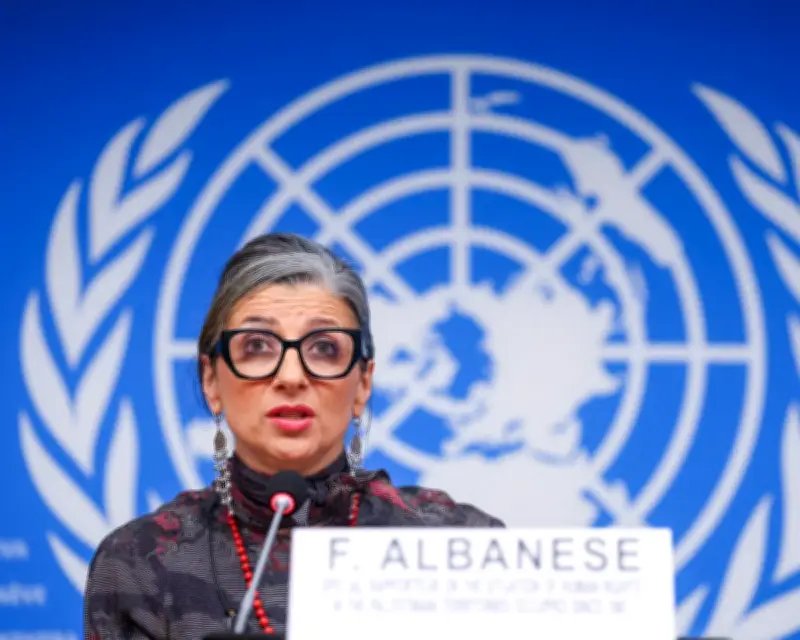
The 43-page legal complaint notes that both organizations have worked on ICC submissions documenting Israeli war crimes in the West Bank and Gaza. Dawn has also collaborated with three sanctioned Palestinian NGOs and Francesca Albanese, the UN special rapporteur, to publish research, convene conferences, and lobby US policymakers. The lawsuit asserts that 'each of these activities is protected speech and association, squarely within the First Amendment’s heartland.'
Impact of Executive Order 14203
Under Donald Trump’s executive order 14203, American employees of these groups could face criminal prosecution and civil penalties if they continue such work. The suit comes two days after US Secretary of State Marco Rubio threatened to dismantle the entire International Criminal Court. Several US legal experts have rallied in support of the lawsuit, including Akila Radhakrishnan, an international human rights lawyer who sued the administration last year for halting her work advising the ICC on sexual and gender-based violence claims. Radhakrishnan noted: 'I had to stop certain aspects of my work supporting affected populations around the world. The US attacks have disrupted the ecosystem for international justice, devastating victims’ prospects for justice the world over.'
Constitutional and Statutory Challenges
Both Radhakrishnan’s Maine lawsuit and the latest New York filing claim that Trump’s ICC sanctions exceed his presidential authority under the International Emergency Economic Powers Act (IEEPA), which exempts noncommercial 'personal communications' from sanctions. The lawsuit warns: 'If the Executive is permitted to blow past constitutional and statutory restraints here, there is little to stop it from weaponizing IEEPA to target other disfavored viewpoints. A future president could, for example, declare a ‘national emergency’ over high energy prices, designate foreign environmental groups that campaign against fossil fuel extraction, and cut off American climate advocates from their overseas partners … The list of potential abuses is virtually endless.'
Effectiveness of Sanctions
The lawsuit also describes the sanctions as 'hopelessly ineffective' at achieving Trump’s stated objective of halting 'baseless' ICC prosecutions. 'Suppressing [advocates’] speech, after all, does nothing to prevent ICC prosecutors from conducting their own investigations,' the legal brief says. The defendants named in the lawsuit include Trump, Rubio, Treasury Secretary Scott Bessent, Acting Attorney General Todd Blanche, and Brad Smith, director of the Office of Foreign Assets Control.
Kenneth Roth, former executive director of Human Rights Watch, commented: 'It is bad enough that the Trump administration is using extraordinary powers to protect Israeli officials from efforts to bring them to justice for their genocide and war crimes. But it is blatantly unconstitutional for Trump to threaten American citizens and residents for assisting such efforts.'