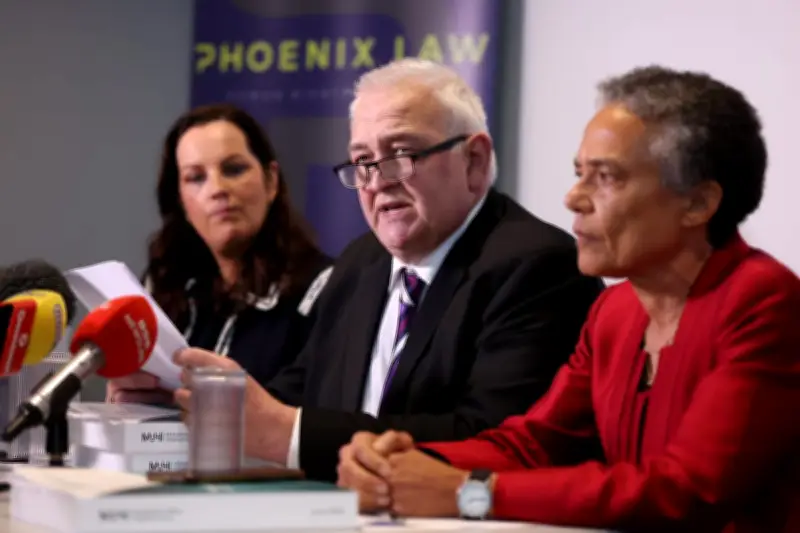
A public inquiry into the abuse of vulnerable people at Muckamore Abbey Hospital has identified 'profound and deeply troubling' failures in their care. The inquiry reported that some staff engaged in 'systematic bullying' of patients, restrictive practices were used inappropriately, and 'as needed' medication was overused, leaving some patients 'zombified'.
Systemic Failures and Normalised Mistreatment
Delivering the findings in Belfast, inquiry chairman Tom Kark KC told relatives that the mistreatment of their loved ones by some staff had become 'normalised'. The hospital has been at the centre of the UK's largest-ever police investigation into alleged abuse of vulnerable adults, with ongoing prosecutions. To date, police have reported 124 individuals to Northern Ireland's Public Prosecution Service.
The inquiry report highlighted that CCTV footage was 'essential in revealing the truth' at the Co Antrim facility for adults with severe learning disabilities and mental health needs. 'The people who lived at Muckamore Abbey Hospital deserved better and their families deserved better,' said Mr Kark. He noted that 'unexplained marks and injuries' on patients included 'bruises, grip marks, black eyes and broken bones', which were 'neither isolated nor incidental' but 'the visible marks of a systemic failure'.
Apologies and Calls for Accountability
Stormont's Health Minister Mike Nesbitt expressed deep regret, stating he was 'truly sorry' that vulnerable patients and their families had been 'let down'. A system meant to protect the most vulnerable failed in its core duty. Responding to the report, Glynn Brown, father of a man with severe learning difficulties who resided at Muckamore, said multiple 'red flags' on abuse were not acted on. He recalled being told an alleged assault on his non-verbal son Aaron was a 'one off incident', but the inquiry revealed hundreds of incidents.
Solicitor Claire McKeegan, representing several families, said the findings 'confirm years of systemic abuse and failure' and called for those in power to be held accountable, with survivors and families given redress. She urged the full implementation of all 106 recommendations, including a statutory duty of candour for healthcare providers to be transparent with families.
Trust's Response and Ongoing Investigations
The chief executive of the Belfast Health and Social Care Trust, Jennifer Welsh, sincerely apologised to families, acknowledging the organisation had 'lost trust' and expressing determination to rebuild 'damaged relationships'. She admitted that loved ones were treated in the 'most uncivilised way' by staff who should have behaved better. The inquiry expressed 'serious concern' about the trust's capacity to reform independently, to which Welsh responded that proper legal process should not be seen as adversarial.
The trust's director of nursing, Olga O'Neill, stated that over 119 staff had been reviewed through disciplinary processes, with 115 concluded. Nineteen staff were dismissed, nine received final warnings, 11 formal warnings, and one verbal warning. The inquiry's central finding was that a policy shift from 2001 to move patients with learning disabilities and autism into community care was not matched with investment, leading to unsafe wards and delayed discharges.
Recommendations and Future Actions
The inquiry found that staff instability, increased violence, high use of restrictive practices, and repeated complaints were 'visible and known'. Peer-on-peer abuse escalated dramatically, and 'as needed' medication was overused as a restraint tool. Seclusion was misused as punishment, and a 'closed culture' discouraged reporting. Systems were 'wholly inadequate' to manage the scale of abuse uncovered through CCTV in 2017.
The inquiry proposes reforms to address the 'profound catalogue of failures', including ineffective external inspection regimes and serious governance failures within the Belfast Trust. Chairman Tom Kark paid tribute to residents and families for being 'central to uncovering the truth' and urged that recommendations be implemented without delay, dilution, or side-stepping. PSNI Assistant Chief Constable Davy Beck noted that this remains the largest adult safeguarding investigation in the UK, with ongoing criminal proceedings and 124 people reported to the Public Prosecution Service.