Australia is set to launch its most significant national gun buyback scheme in three decades, alongside a major tightening of firearms legislation, in direct response to the devastating terror attack in Sydney's Bondi area. The shooting, which targeted a Hanukkah celebration, resulted in 15 fatalities and dozens of injuries, marking the deadliest mass shooting in the country since the 1996 Port Arthur massacre.
Government Announces Sweeping Reforms
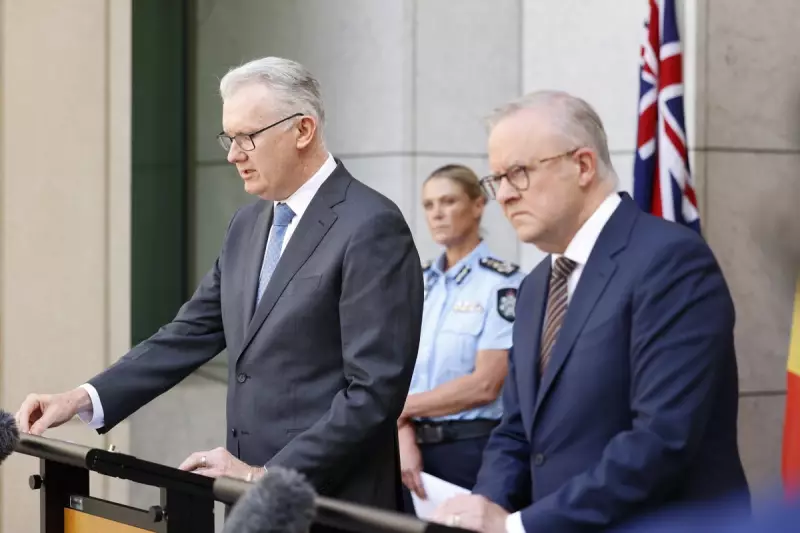
Prime Minister Anthony Albanese confirmed the new measures at a press conference on Friday, 19 December 2025. He stated that existing laws had failed to prevent the violence, declaring, "The terrible events at Bondi show we need to get more guns off our streets." The proposed buyback initiative will be the largest since the historic reforms enacted after Port Arthur.
Mr Albanese revealed that more than four million firearms are currently in circulation across Australia, a higher number than nearly 30 years ago. He highlighted a critical failure in the system, noting that one of the alleged Bondi attackers held a firearm licence and legally owned six guns while living in a suburban Sydney area. "There's no reason why someone in that situation needed that many guns," he asserted.

Details of the New Firearms Crackdown
The national cabinet has agreed on a comprehensive package of reforms. The federal government will fund the purchase of surplus, newly banned, and illegal firearms, with costs shared equally between Canberra and the states and territories.
The key legislative changes include:
- A cap on the number of firearms an individual can own.
- Restrictions on open-ended gun licences.
- Tighter controls on the types of weapons that can be legally held.
- A new requirement for Australian citizenship to obtain a gun licence.
Furthermore, work on a national firearms register will be fast-tracked, granting regulators broader access to criminal intelligence databases.
Attack Details and Ongoing Security Concerns
The announcement follows the attack on Sunday evening, where two gunmen opened fire on a crowd of over 1,000 people celebrating Hanukkah in Archer Park near Bondi Beach. Authorities state the assault was inspired by the ideology of the terror group Islamic State (ISIS).
One alleged gunman, Naveed Akram, 24, has been charged with 59 offences, including 15 counts of murder and terrorism offences. His father, Sajid, was shot dead by police at the scene. As of Friday, 15 victims remained in hospital, with four in a critical but stable condition.
In a separate but related security operation, police confirmed they were preparing to release seven men detained in Sydney's south-west under rare national security powers. While no confirmed link to the Bondi attackers has been established, investigators believe they shared elements of "extremist Islamic ideology." Security has been heightened across Sydney, including at synagogues and mosques.
Community Mourning and Outpouring of Support
As police lifted the crime scene on Thursday, the Bondi Beach area gradually reopened. The community's response has been one of profound grief and solidarity. On Friday, hundreds of surfers and swimmers paddled into the ocean to form a large circle in tribute to the victims.
Members of Australia's Jewish community gathered on the sand for prayers, with the names of the victims read aloud. Rabbi Yosef Eichenblatt of Sydney's Central Synagogue told ABC News the support had been "heart-warming" amid heightened fears of antisemitism.
Funerals have begun, including that of 41-year-old Rabbi Eli Schlanger, a father of five. In a remarkable show of public support, more than $5 million has been donated through verified fundraising pages. This includes significant funds raised for Ahmed al Ahmed, a Sydney shop owner hailed as a hero for wrestling a firearm from an attacker before being shot.
Prime Minister Albanese said Sunday would be observed as a day of reflection, with plans for a national day of mourning in the new year, organised in consultation with the Jewish community.