Cop City Legal Battle Escalates as Georgia Appeals Dismissal of RICO Charges
Cop City Case Escalates as Georgia Appeals RICO Dismissal

Georgia Appeals Dismissal of RICO Charges in High-Profile Cop City Case

The state of Georgia has formally appealed a judge's dismissal of criminal conspiracy charges against sixty-one individuals connected to opposition against the controversial Atlanta police training facility, widely known as Cop City. This move extends a landmark legal confrontation that carries significant implications for how criminal conspiracy and domestic terrorism statutes are applied to protest movements across the United States.

Legal Proceedings and Constitutional Challenges

With this appeal, the largest case in American history employing racketeering or RICO laws against a protest or social movement is now anticipated to persist for many months, if not several years. The RICO statute was originally crafted to combat organised crime syndicates like the mafia, making its application in this context particularly contentious.

In a parallel development, Francis Carroll, one of the numerous defendants, has petitioned the Georgia Supreme Court. His legal team is urging the state's highest judicial body to review a motion arguing that the domestic terrorism charges included in the case violate Georgia's constitution. The motion contends these charges are excessively broad and vague, and further asserts that the state's domestic terrorism legislation was enacted through an unconstitutional process.

Should the state court of appeals decline to grant Attorney General Chris Carr a reversal of the trial court's dismissal, the entire prosecution could unravel. Similarly, if the supreme court accepts Carroll's petition and rules in favour of the defendant, the case may collapse entirely.

National Implications and Prosecutorial Scrutiny

"Prosecutors across the country are going to be watching this case very closely," remarked Michael Schwartz, an attorney representing Carroll. He suggested that if Georgia's domestic terrorism statute is ultimately deemed unconstitutional, prosecutors in other jurisdictions "will be less likely to initiate prosecutions in the same mould."

Such an outcome could also influence legislative bodies beyond Georgia's borders. "Other state legislatures considering similar legislation could also be influenced by the final ruling in this case," Schwartz added. However, reaching any definitive resolution will likely require many more months of legal wrangling.

Background of the Cop City Controversy

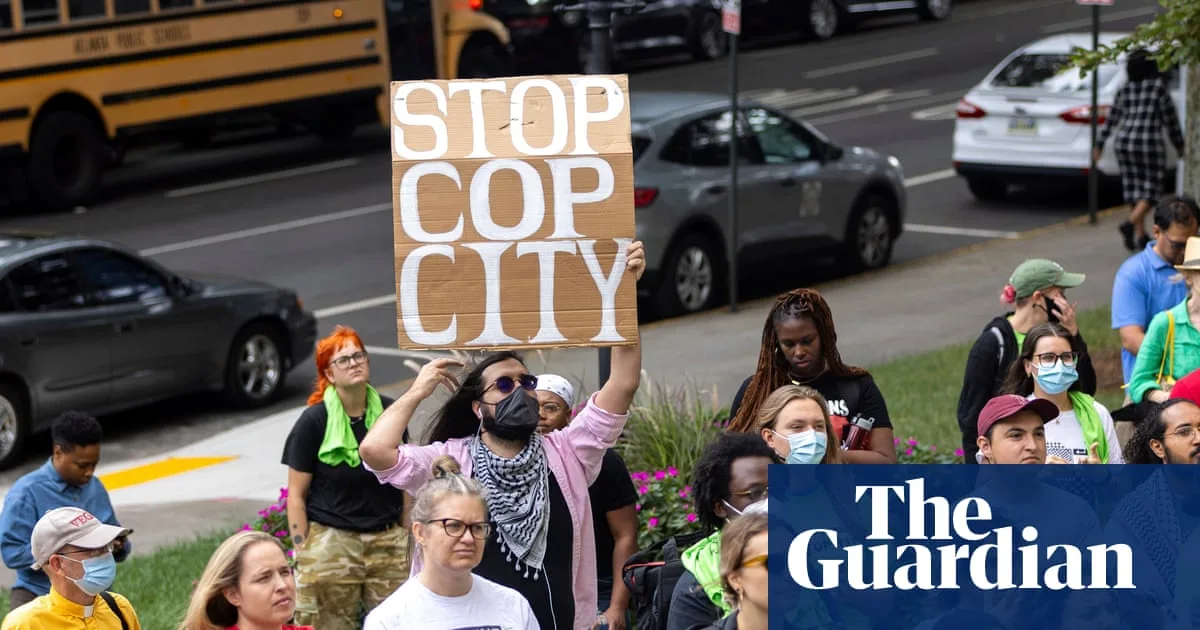
Opposition to the $109 million police training centre, which commenced operations last spring, has drawn support from a diverse coalition of local and national organisations and activists. Central concerns revolve around perceived police militarisation and the environmental impact of clearing forested land during a climate crisis. Atlanta police authorities maintain that the facility is essential for providing "world-class" training and recruiting new officers.

The recent flurry of legal activity followed Fulton County Superior Court Judge Kevin Farmer formally issuing a written order in late December to dismiss the RICO charges on procedural grounds. This came a week after reports highlighted that the judge had exceeded a three-month statutory deadline for delivering this ruling.

That reporting also illuminated how defendants, who face potential decades-long prison sentences, have been deprived of personal possessions seized as evidence for three years. These items included birth certificates, personal diaries, and medical records. Following media attention, the state returned some of these belongings to the accused.

Ongoing Legal Uncertainty and Broader Context

On the same day Judge Farmer dismissed the RICO charges, he also rejected Carroll's motion regarding the unconstitutionality of the domestic terrorism statute. This prompted Schwartz to file an appeal with the state supreme court on 20 January.

While the dismissal of the RICO charges initially appeared to signal the potential end of the state's case, the new appeals have once again plunged the sixty-one defendants into a state of legal limbo. This stop-and-go pattern has characterised the state's prolonged effort to prosecute the environmental and criminal justice movement opposing the training centre.

Even as the state's and Carroll's appeals proceed through their respective courts, hundreds of motions from other defendants remain unaddressed by Judge Farmer.

Political Statements and Legal Criticism

The state's appeal motion argues that the court of appeals' intervention is necessary "because no Georgia court has defined the scope of the attorney general's prosecutorial jurisdiction." Attorney General Carr, who is concurrently campaigning for governor in this year's election, referenced property destruction during some protests in a public statement. "We are not Seattle. We are not Portland. We are not New York. In Georgia, that is domestic terrorism, and we do not look the other way," he declared.

However, Schwartz, alongside other defence attorneys and legal experts, has countered that existing criminal charges, such as arson, are sufficient to prosecute acts of property destruction. "This case illustrates the danger of vague criminal laws. When the law is unclear, the risk of selective enforcement increases, and with it, the power of the state to target political adversaries," explained Elizabeth Taxel, a clinical professor at the University of Georgia School of Law.

Historical Precedents and Movement Significance

Social movement historian Dan Berger drew parallels to past failed state prosecutions of protesters, such as the Chicago Seven case, where convictions were ultimately overturned. "The failure of a particular attempt doesn't necessarily mean the government stops trying to use a method," he observed. "But it does establish a legal precedent."

Berger emphasised that any precedent set in the Cop City case will attract national attention due to the broad coalition of the Stop Cop City movement. This coalition encompasses concerns ranging from environmental protection and systemic racism to unchecked policing and democratic accountability. "From the very beginning, this was not merely a local fight in Atlanta," Berger noted. "The underlying message was, 'It's coming to a city near you.'"

The legal battle over Cop City continues to unfold, with its outcomes poised to influence protest rights, prosecutorial strategies, and anti-terrorism legislation far beyond the borders of Georgia.