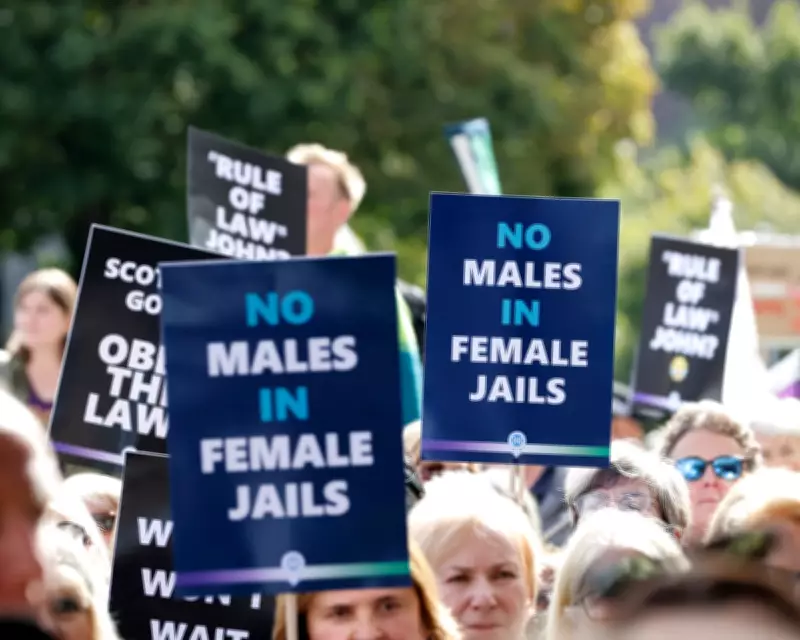
The Scottish government's policy on housing transgender prisoners is facing a significant legal challenge in the nation's highest civil court, with campaigners arguing it places female inmates at risk and contradicts established legal rulings.
Legal Battle Over Prison Placements
Campaign group For Women Scotland has launched a judicial review at the Court of Session in Edinburgh, challenging official guidance that permits transgender prisoners to be housed according to individual risk assessments. The group contends this approach directly conflicts with last April's landmark Supreme Court ruling, which determined that the definition of woman in equalities law refers exclusively to biological sex.
This legal action represents the latest development in an ongoing national debate about transgender rights and women's protections within institutional settings across Scotland.

"Orwellian" Policy Allegations
During the first day of proceedings, Aidan O'Neill KC, representing For Women Scotland, delivered a scathing critique of the current policy framework. He described the situation as "Orwellian" and suggested female prisoners were being treated as "pawns for political gain" by Scottish ministers.
"What is happening here is that women in prison are being treated and used by the Scottish government in this case to be traded as pawns for political gain," O'Neill told the court. He argued the policy represented "institutional neglect of and contempt for women's rights" and created a hierarchy where "women good. But men identifying as women better."
Current Prison Service Statistics
The Scottish Prison Service has confirmed that as of June 2025, there were 19 transgender inmates within the Scottish prison system. According to official figures, approximately 80% of these individuals were accommodated in prisons that aligned with their biological sex rather than their gender identity.
O'Neill highlighted particular concern about biological men convicted of serious violent offences, including murder, being placed alongside female prisoners. He described the female prison population as "an ultra-vulnerable population" facing increased risk under the current policy framework.
Political Responses and Positions
The court case has emerged against a backdrop of significant political debate ahead of May's Scottish parliament elections. Scottish Labour leader Anas Sarwar has pledged that, if elected as first minister, he would act "within days" to ban transgender prisoners from women's jails.
Meanwhile, First Minister and SNP leader John Swinney has acknowledged the strength of feeling on this issue, including among his own MSPs. However, he maintains that his government has a responsibility to ensure policy remains compatible with obligations under the European Convention on Human Rights.
Origins of Current Policy
The Scottish Prison Service adopted its current transgender prisoner policy following significant public outcry over the case of Isla Bryson. Bryson, previously known as Adam Graham, was convicted of two rapes committed while living as a man and was initially sent to the women-only Cornton Vale prison for assessment after conviction.
This case sparked nationwide debate about appropriate placement of transgender prisoners and prompted the development of the risk assessment approach now being challenged in court.
Broader Legal Context
For Women Scotland previously brought the legal challenge that resulted in last year's Supreme Court ruling on the definition of woman in equalities law. That ruling established that biological sex alone determines legal status as a woman for the purposes of equalities legislation.
Meanwhile, the UK government continues to consider new guidance on how public bodies and businesses should apply this ruling to questions about inclusion or exclusion of transgender women in women-only spaces across various sectors.
O'Neill argued in court that Scottish ministers were asking the judiciary "to go beyond where the European Court of Human Rights has reached" on this issue. He noted: "There is no case law from Strasbourg which says that trans-identifying male prisoners have to be accommodated within the women's prison estate."

Questions About Alternative Facilities
The court heard questions about why the Scottish Prison Service, which has extensive experience handling vulnerable male prisoners for various reasons, has not developed "special facilities" specifically for transgender inmates. O'Neill suggested this lack of alternative provision meant "women who are paying the price again" for policy decisions.
The judicial review before Lady Ross continues as campaigners seek to overturn what they describe as a dangerous and legally questionable approach to transgender prisoner placement in Scotland's correctional system.