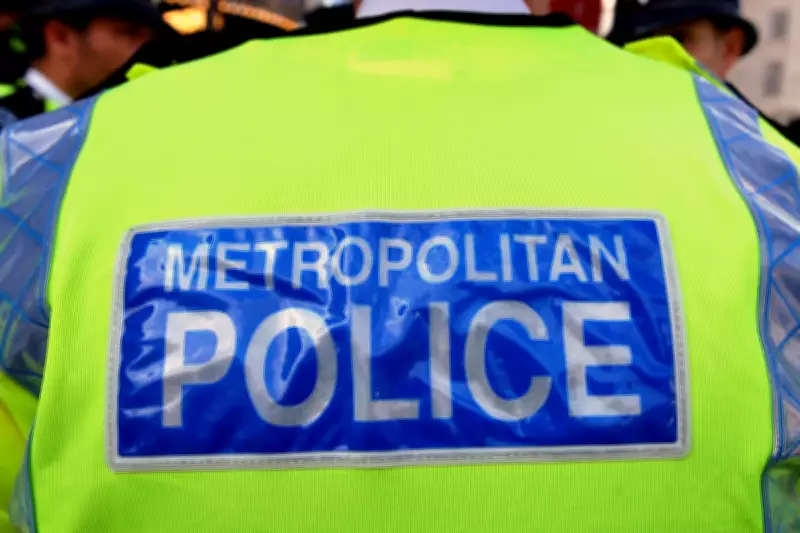
Black individuals face a dramatically heightened risk of being stopped and searched by police in London's most affluent neighborhoods, with new data revealing they are up to 48 times more likely than white people to experience this intrusive police power.
Extreme Disparities in Wealthy Wards
A comprehensive analysis of 152,000 Metropolitan Police stop records from 2023 has uncovered shocking racial disparities in how stop and search powers are applied across different areas of London. Researchers at King's College London identified specific wards where the disproportionality reaches extreme levels.
In East Sheen, Richmond, Black people were found to be 48 times more likely than white residents to be stopped and searched. Dulwich Village showed a rate of 40 times higher likelihood, while Hampstead Town recorded Black people being 38 times more likely to face this police intervention.

Broader London Context
Across the entire capital, Black Londoners were 3.4 times more likely than white Londoners to be stopped and searched by police officers in February of this year. This compares to a national average where Black people are four times more likely to experience stop and search than white individuals.
The research further revealed concerning patterns in how these searches are documented. The stated reasons for conducting searches were often less specific when applied to Black individuals, raising questions about the consistency and fairness of police decision-making processes.
Questionable Outcomes and Community Impact
In London, approximately two-thirds (65.9%) of all stop and searches end with no further action taken, while only 17.4% lead to an arrest. This high rate of searches that yield no legal consequences has significant implications for community-police relations.
Dr Yijing Li from King's College London, who led the research, stated: "Our modelling revealed clear evidence of unexplained disproportionality in how stop and search powers are used across London. These data-driven insights provide a robust evidence base to support fairer, more effective policing in London, and aim to help rebuild trust between communities and law enforcement."
Recent Police Activity and Weapon Recovery
In 2025, Metropolitan Police officers conducted 149,299 stop and searches across London. Of these, 19,054 were specifically for weapons, resulting in the discovery of 1,860 weapons. An additional 1,888 weapons were found during searches conducted for other suspected offences, such as drugs and stolen property, bringing the total weapons recovered to 3,748.
Political Response and Calls for Reform
London Mayor Sadiq Khan responded strongly to the research findings, acknowledging both the importance of stop and search as a policing tool and the urgent need for reform. "Stop and search is a vital policing tool," Khan stated. "Done well, it stops those intent on causing harm and fear in our communities and takes dangerous weapons and drugs off our streets and ultimately saves lives."
However, the Mayor added a crucial qualification: "But when done badly and unfairly, it harms community confidence and trust and damages the partnership and community relationships so important to policing by consent and keeping Londoners safe."
New Accountability Measures
Khan described the research as revealing "significant and unacceptable levels of disproportionality that we must act on." In response, he announced new accountability measures, including a mandatory annual report detailing how stop and search is being used across London.
"The use of stop and search must be more transparent and accountable to deliver a safer and fairer London for all," Khan emphasized, highlighting the dual goals of public safety and equitable policing practices that respect all communities equally.
The research findings come at a critical time for police-community relations in London, with the data providing concrete evidence of racial disparities that many community advocates have long reported anecdotally. The extreme disparities in affluent areas particularly challenge assumptions about where discriminatory policing practices might be most prevalent.