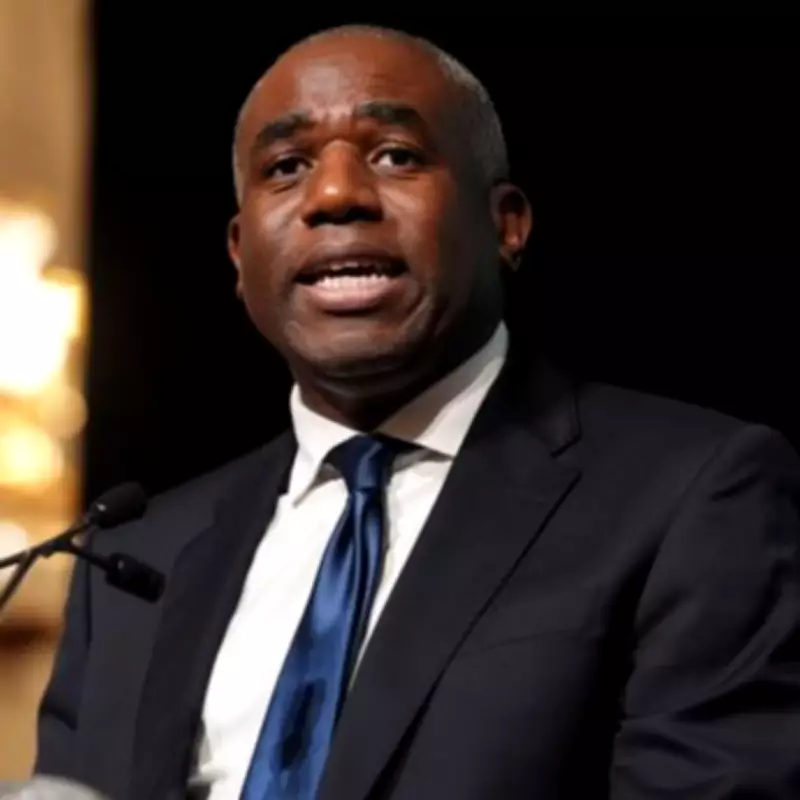
David Lammy to Push for AI Integration in Courts to Address Record Delays
In a landmark address this week, Deputy Prime Minister David Lammy will urge judges to embrace artificial intelligence as a critical tool to slash the unprecedented backlogs crippling the courts system. The Justice Secretary is set to outline a comprehensive package of reforms aimed at modernising what he describes as a "creaking" justice infrastructure, even as his proposals face significant backlash over plans to reduce the number of jury trials.
Modernisation Drive Amid Controversial Jury Trial Changes
Mr Lammy will emphasise that while human decision-making must remain protected, the judiciary must actively accept and integrate technological advancements. A senior Ministry of Justice source revealed to The Mirror: "The Deputy PM is determined to bring the Courts system into the 21st century, using technology to make it more efficient and to put victims at its heart, as they should be."
This push comes alongside other operational reforms, including allowing prison vans to use bus lanes to accelerate transportation from jails to courts and increasing the number of court sitting days. However, the government maintains that such efficiency measures alone are insufficient to resolve the deepening justice crisis, insisting that generational changes to court processes are essential.

Backlash Over Jury Trial Reduction Plans
The most contentious aspect of Lammy's agenda involves restricting jury trials for criminals facing sentences of less than three years, a move announced last year that has drawn fierce criticism from dozens of MPs and legal professionals. Under the proposals, juries would still be retained for the most serious offences, including rape, murder, kidnap, rioting, terrorism, and robbery.
Nevertheless, the reforms are projected to halve the proportion of cases going to juries from 3% to just 1.5%. Legislation to enact these changes could be introduced as early as Wednesday, pending parliamentary scheduling. Ministers argue that reducing jury trials is a necessary step to tackle the courts backlog, which currently sees around 80,000 cases awaiting hearing in Crown Courts, with some trials scheduled as far out as 2030 in certain regions.
AI Adoption: Augmentation Over Replacement
The call for AI adoption follows the recent publication of the second half of Sir Brian Leveson's review into the courts, which contained over 130 recommendations to enhance system effectiveness. In his report, Sir Brian noted that HM Courts & Tribunals Service identified the "biggest challenge" in accelerating AI implementation as ensuring it does not compromise judicial outcomes, independence, impartiality, or integrity.
Sir Brian wrote: "It is my view that judges need to embrace the adoption of AI across the courts and tribunals, provided the necessary safeguards are in place for judicial decision-making." The retired senior judge cautioned that using predictive AI tools to replace human decision-making raises "profound ethical and practical concerns," potentially eroding accountability, transparency, public trust, and due process. Consequently, the review advocates focusing on AI tools that augment rather than replace human judgment.
Legal Profession Expresses Cautious Support
Brett Dixon, Vice President of the Law Society, commented: "We support modernising the justice system and adopting new technology, provided it enhances access to justice, is reliable, and ensures fairness. AI is not, however, a silver bullet to improve the justice system. It might help to ease some administrative pressures, but it is not a replacement for much-needed investment in the court estate and additional court staff."
Dixon added a critical caveat: "Where liberty and reputation are at stake, the government must take particular care to safeguard people's rights and ensure fair processes. All decisions, especially those with serious consequences to people's lives, must be made by humans." This sentiment underscores the delicate balance Lammy must strike between technological innovation and preserving the fundamental principles of justice as he seeks to overhaul a system under immense strain.