FBI Agent Reveals How Kohberger's Digital Blackout Backfired in Idaho Murders
Kohberger's Digital Blackout Backfired in Idaho Murders

FBI Agent Reveals How Kohberger's Digital Blackout Backfired in Idaho Murders

An FBI agent has disclosed for the first time how Bryan Kohberger's calculated efforts to erase his digital footprint during the brutal 2022 University of Idaho murders ultimately became instrumental in proving his guilt. Jeff Tanzola, a supervisory special agent in Philadelphia's FBI field office, detailed to The Independent how the killer's attempted digital blackout created a pattern of evidence that prosecutors used to build their case.

The Missing Digital Evidence

When Kohberger's phone and laptop reached Tanzola's desk in 2023, investigators immediately noticed something unusual: massive amounts of data were conspicuously absent. Text messages, Google searches, buffer logs, privacy dashboards, battery statistics, and usage information had been systematically removed from the devices.

"A lot of times when you get a phone, you get a computer, there's a lot of evidence that just jumps off the screen at you," Tanzola explained during a panel at the Cellebrite C2C User Summit. "This was not the case with that. It was the complete opposite of that."

Wide Pickt banner — collaborative shopping lists app for Telegram, phone mockup with grocery list

Forensic analysis revealed that Kohberger had attempted a complete digital blackout during the night of November 13, 2022, when four University of Idaho students were stabbed to death in their off-campus home. This period represented one of only four total digital inactivity periods dating back to June 2022.

The Pattern That Emerged

Tanzola, working with Cellebrite digital forensics experts Heather Barnhart and Jared Barnhart, discovered that the voids in Kohberger's otherwise trackable digital life formed a revealing pattern in the months leading up to the murders. The most significant gap occurred precisely during the murder window.

"He didn't just lose signal or run out of battery," Jared Barnhart explained. "This was an actual button press, power off, on purpose, and then a power back two hours later. And in the middle of that, four people were killed."

The digital evidence proved crucial in establishing that the killings were premeditated, bolstering the DNA evidence from a knife sheath found at the crime scene. This combination created a compelling case that prosecutors planned to present at trial before Kohberger unexpectedly pleaded guilty in July 2025.

The Investigation Challenges

Tanzola wasn't initially called into the case for digital forensics but for tactical operations, as Kohberger was arrested on December 30, 2022, at his parents' Pennsylvania home within Tanzola's jurisdiction. The 48-day gap between the murders and arrest presented both challenges and opportunities for investigators.

"I'm a senior digital forensic examiner, but I wasn't finding what I needed to find," Tanzola admitted. "Everyone's looking at you. You're the digital forensic guy. You have the phone. You're looking at it. Why is nothing there?"

This absence of evidence prompted Tanzola to seek specialized assistance from Cellebrite, a digital forensics company that provides software for law enforcement to extract and analyze data from devices.

What Investigators Eventually Found

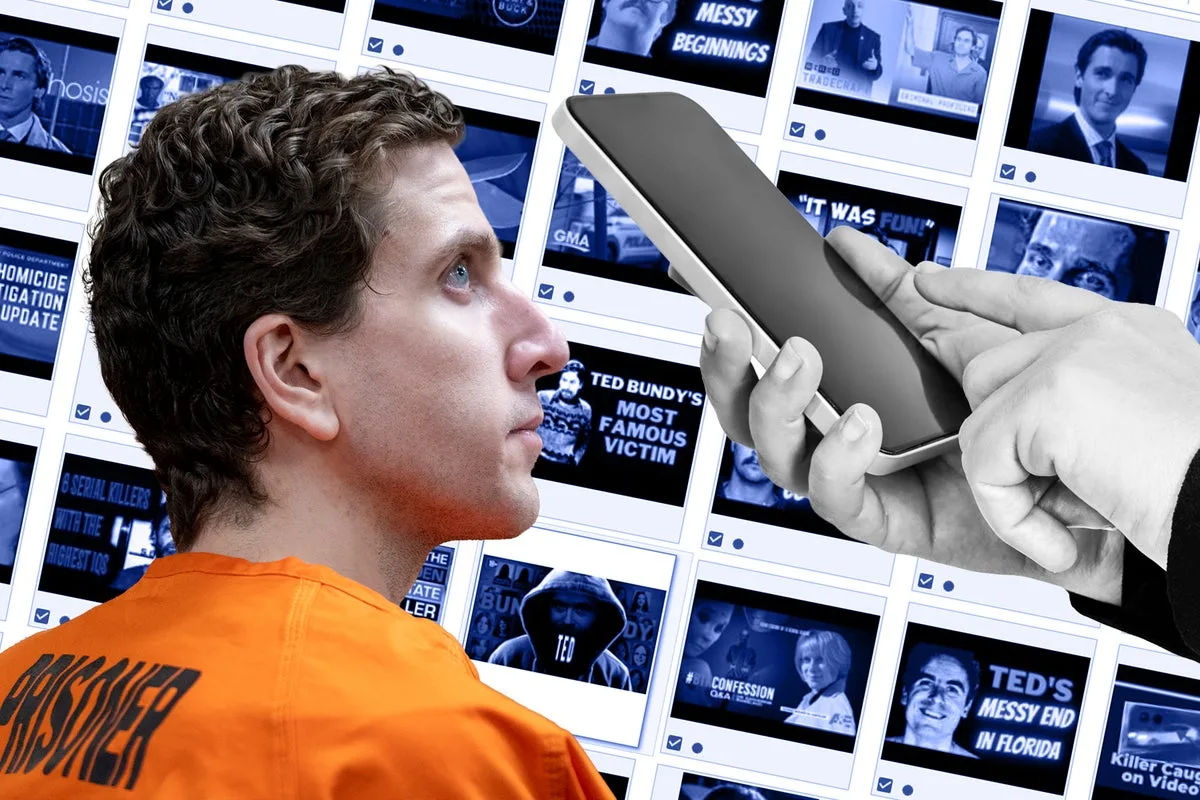
Despite Kohberger's extensive digital cleanup before the murders, investigators discovered he became less careful during the 48 days between the killings and his arrest. The forensic team found he had downloaded PDF files containing official updates on the Idaho murders case from Moscow Police Department and had saved extensive research on serial killers.

In the days before his arrest, Kohberger searched for more than two dozen serial killers including Ted Bundy, John Wayne Gacy, and Dennis "BTK" Rader. He also began shopping for a new vehicle after police publicly sought information about a white Hyundai Elantra.

"He didn't just Google these cases," Heather Barnhart noted. "He downloaded full PDFs of case files. Not once, but repeatedly. He was downloading detailed reports on serial killers. This wasn't casual browsing. This was meticulous research."

Pickt after-article banner — collaborative shopping lists app with family illustration

The Digital Behavior Analysis

Forensic experts determined that Kohberger's "normal" digital behavior was itself abnormal. He maintained only about 16 contacts on his phone, mostly general numbers for services like AT&T and customer support rather than personal connections.

"He did not have friends. He did not chat with people," Heather Barnhart observed. "He had hour-long conversations with his parents. So it also felt weird on where is the normal."

In the days surrounding the murders, Kohberger disabled WiFi access on his devices and routed his traffic through NordVPN, a tool designed to anonymize online activity. While not criminal, this behavior was noted as abnormal by investigators.

The Ultimate Outcome

The digital forensics team, along with Tanzola, were scheduled to testify at Kohberger's trial in August 2025 before the 30-year-old unexpectedly accepted a plea deal on June 30, 2025. He avoided the death penalty and received four consecutive life sentences plus an additional 10 years for burglary.

"I think ultimately we want to see the subjects being held accountable for their crimes," Tanzola reflected. "I'm confident that he was the subject. But you don't know what the jury's going to say."

The case demonstrated how even the absence of digital evidence can become evidence itself when it reveals deliberate patterns of behavior. The collaboration between FBI investigators and digital forensics experts proved crucial in uncovering the story told by what was missing from Kohberger's devices.