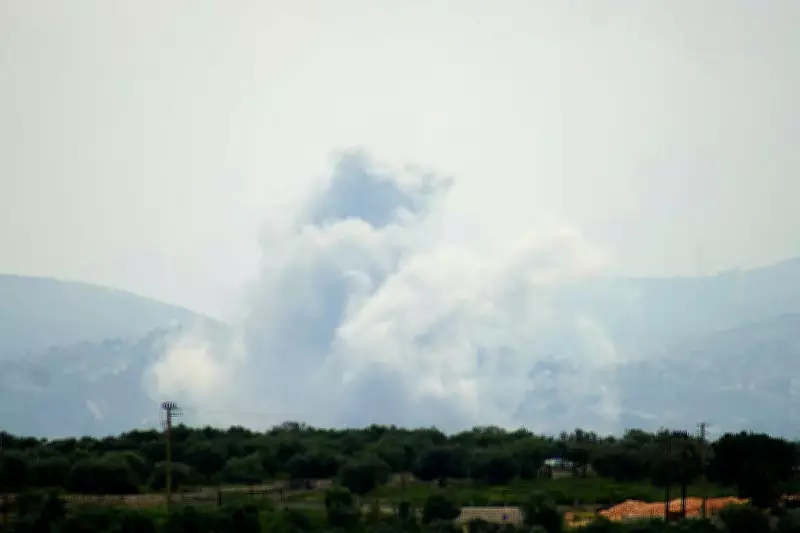
Israeli strikes on Lebanon have killed 17 people including two children on Thursday, despite a ceasefire negotiated two weeks ago. Lebanon's health authorities reported that 35 people, among them nine children and eight women, were also injured in the attacks. Israel claims it is targeting Hezbollah infrastructure and issued evacuation warnings for 15 villages in southern Lebanon, many located outside the 'yellow line' marking the limits of its occupation.
President Aoun Calls for International Pressure
'Pressure must be exerted on Israel to ensure it respects international laws and conventions, and ceases targeting civilians, paramedics, civil defence and humanitarian organisations,' said Lebanese President Joseph Aoun in the aftermath of the latest attacks. A ceasefire was agreed between the countries on 16 April, but Lebanon's army reported that Israel had carried out multiple violations of the deal hours into the historic truce brokered in Washington. France has also accused Israel of violating the agreement, but Israel maintains that Hezbollah is responsible for the ongoing hostilities.
Ceasefire Extension and Continued Violence
US President Donald Trump announced a three-week extension to the agreement last week. Earlier this week, 'double-tap' strikes killed nine people including three rescue workers, according to Lebanese officials. Attacks on Beirut have largely been halted by the deal, but evacuation orders, air raids, and strikes persist in several southern areas. Reports indicate that the ceasefire permits Israel to respond to 'planned, imminent or ongoing attacks,' but Hezbollah has rejected this aspect of the truce.

Rising Death Toll and Regional Impact
More than 2,500 people have been killed in Lebanon since war erupted on 2 March, shortly after US-Israeli strikes on Iran on 28 February, which triggered upheaval across the region and global oil markets. Hezbollah fired rockets at Tel Aviv in response to the attacks that killed supreme leader Ayatollah Ali Khamenei and what it claims is an ongoing encroachment on Lebanon's borders.
Israel's Buffer Zone Plans
Israel has stated its intention to occupy a 10km-wide buffer zone along the border and will prevent residents from returning until it deems the threat from Hezbollah eliminated. In response to queries, the Israeli military said it issues warnings via phone, text, radio, social media, and leaflets, in line with 'principles of distinction, proportionality and feasible precautions' under international law. However, on 8 April, a hundred targets were attacked in rapid succession without warning, killing over 350 people in one of Lebanon's deadliest attacks, dubbed 'Black Wednesday.'
International Condemnation
'I expressed France's full solidarity in the face of the indiscriminate strikes carried out by Israel in Lebanon today, which resulted in a very high number of civilian casualties,' President Emmanuel Macron wrote at the time. 'We condemn these strikes in the strongest possible terms.' The Independent has approached the IDF for comment.