Gamekeeper's Vengeful Ambush Unravels Amid Police Blunders in Perthshire Murder
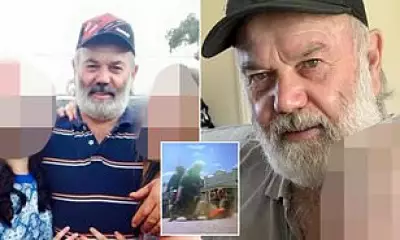
There may eventually arrive a moment, after the heavy door of his prison cell clangs definitively shut, when the dense fog of self-deception that David Campbell cultivated to obscure his murderous actions finally begins to dissipate. Countless sleepless nights upon a hard plastic mattress, beneath thin institutional bedding, will grant him more opportunity for reflection than he ever desired. He will be forced to contemplate the catastrophic folly of pursuing a lethal vendetta against his former work colleague, Brian Low.
A Calculated Ambush in Leafy Lane
As the former head gamekeeper on the sprawling Edradynate sporting estate near Aberfeldy, Campbell, now 77, likely believed his skills in stealth and tracking rendered him uniquely capable of stalking his prey without leaving a trace. Consumed by a deep-seated bitterness, he acted upon a long-festering grievance against the retired 65-year-old groundsman, arrogantly convinced his intelligence would forever shield him from justice. To this day, he may still be puzzling over how his sinister scheme spectacularly unravelled, leading a jury to convict him despite the absence of any eyewitness or murder weapon.
The court heard how, on the early evening of February 16, 2024, Campbell manually disabled his home CCTV system and carefully placed duct tape over a Ring doorbell camera to conceal his movements. He then left his property on Aberfeldy's Crieff Road, hooded and armed, riding his wife Betty's Merida e-bike. His destination was a stony track known locally as Leafy Lane, a popular walking route high above the Perthshire market town, where Mr Low regularly exercised his black Labrador, Millie.

Campbell selected his position and waited. As Mr Low passed a broom-covered knoll, Campbell raised his weapon and fired directly into his face. Advocate Depute Greg Farrell told the court the victim would have died within minutes, if not seconds. "Brian Low had no chance – unarmed and unaware. A cowardly ambush motivated by nothing more than sheer malice," he stated. The victim's frantic dog remained loyally by his side until another dogwalker discovered the pensioner's lifeless body the following morning.
A Trail of Clumsy Circumstantial Evidence
Campbell's hopes of evading justice were initially, and inexplicably, bolstered by a profoundly shambolic police investigation. In a scarcely comprehensible failure, none of the four first responders—two police officers and two paramedics—who answered the 999 call at 8.34am recognised the obvious signs of gunshot injuries. Paramedic Andrew Bryce stated he was dispatched to a reported 'cardiac arrest'. Mr Low's facial injuries and minor bleeding were wrongly attributed to a fall, with the initial cause of death listed as 'medical or non-suspicious'.
This critical error meant the crime scene was left unsealed and exposed to the elements for days, allowing winter rains to wash away potential forensic evidence and letting dogwalkers and livestock trample the area. A full post-mortem examination, which officially confirmed the cause of death as a 'shotgun wound to neck and chest', was not conducted until February 23—a full week after the killing. Detective Constable Mark Chance, who arrived over an hour after Mr Low was declared dead, told the court he saw injuries 'consistent' with falling. Defence counsel Tony Lenehan later pointed out there were 'something like 30 shotgun pellet injuries' to the victim's face, labelling the initial assessment a 'glaring mistake'.
However, Campbell himself had clumsily sown a trail of compelling circumstantial evidence. Prosecutors presented this as proof of a 'brazen and brutal execution'. Key elements included:

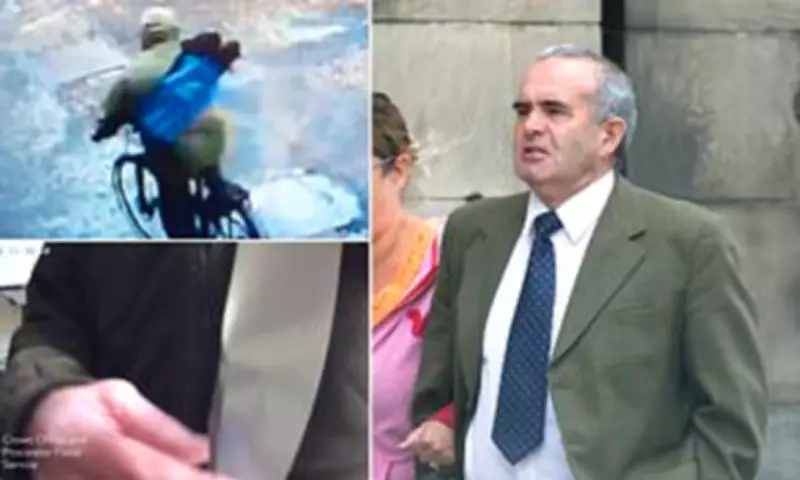
- CCTV footage of a hooded figure on a bike matching Mrs Campbell's e-bike travelling towards Leafy Lane.
- Digital analysis showing a two-hour period of inactivity on Campbell's phone coinciding with the murder window.
- Soil forensics linking the e-bike to the murder scene.
- The damning fact that Campbell had the bike's tyres replaced days after the murder; the old tyres were never recovered.
- Multiple witnesses testifying to Campbell's volatile nature and his specific hatred for Mr Low.
Campbell claimed he was at home, had no contact with Mr Low since 2017, and only learned of the death via television news. He struggled to explain why he disabled his cameras, and insisted he 'never wore a hood or a hat'—a claim Mr Farrell dismissed as 'comical if it were not such a serious matter'.
A History of Bad Blood and Boiling Rage
The motive, the court heard, stemmed from a seed of anger planted years earlier, which festered into a cold, calculating desire for revenge. Both men had worked at Edradynate Estate—Campbell from 1984 to 2018, and Mr Low from 2000 to 2023. Campbell's tenure was marked by controversy, including run-ins with co-workers and police. He had previously appeared in court in 2018, accused of poisoning game crops in retaliation after losing his job, but was acquitted. He remained convinced, however, that Mr Low had once planted a box of poison in his home during an earlier police raid—an incident that left Campbell feeling 'set up'.
Witness after witness described Campbell's 'Jekyll and Hyde' character and his specific animosity towards the victim. Farmer Sally Crystal, 77, recalled Campbell confiding, "I f***ing loathe him." Others reported threats and intimidating behaviour. In contrast, Mr Low was universally described as a 'gentle soul', 'lovely', and 'hard-working'—a man who 'wouldn't say boo to a goose'.
In the end, the jury at the High Court in Glasgow returned a majority guilty verdict. Police Scotland remains subject to a separate probe by the Police Investigations and Review Commissioner (Pirc) over its initial handling of the case, which was paused during the trial.
Now, David Campbell faces a life behind bars, with ample time for regret. For Brian Low's loved ones, however, no amount of soul-searching or institutional reckoning can ever mitigate the pain of such a pointless and petty murder.