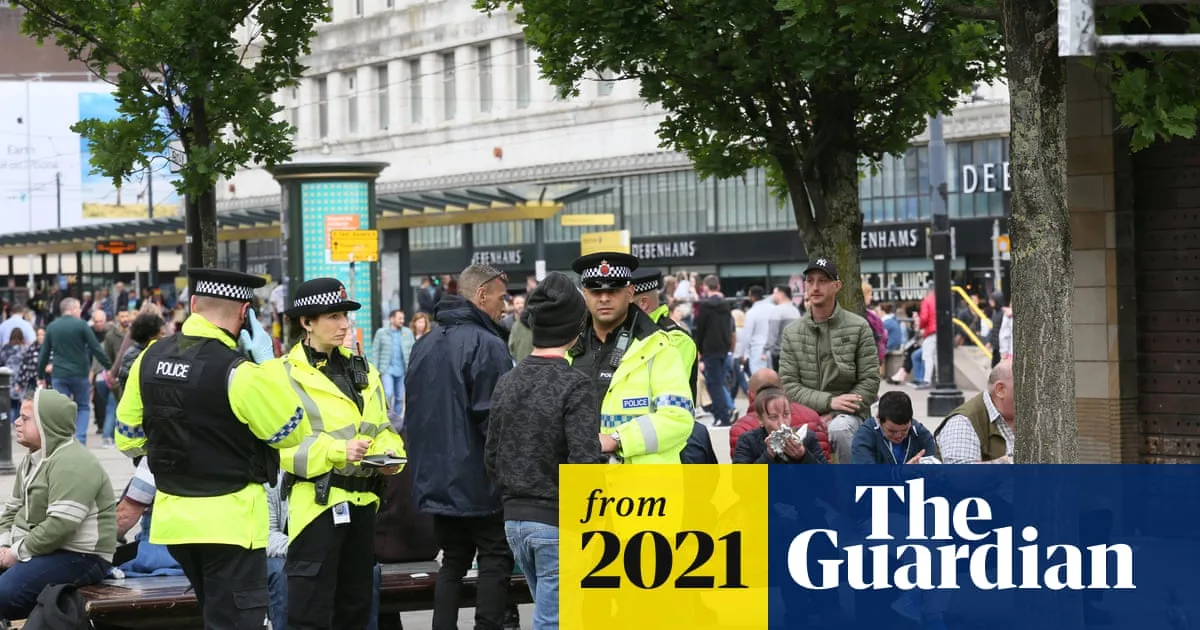
Inspectors have issued an unprecedented warning about public safety in Greater Manchester after finding serious failings in the region’s police force – four years after the alarm was first raised. The inspector of constabulary said he was deeply concerned that Greater Manchester Police (GMP) was failing vulnerable victims of crime, with some waiting days or weeks for a response.
In the first warning of its kind, Her Majesty’s Inspectorate of Constabulary and Fire and Rescue Services (HMICFRS) said on Thursday: “It has now reached the point where we are concerned about public safety in Greater Manchester.” Such warnings are only issued when inspectors discover “significant service failures or risks to public safety”. The HMICFRS confirmed that this was the first time such an alert had been made about a metropolitan police force in England or Wales.
The troubled force, which has been in special measures for nearly a year, attended under a third of incidents that should be responded to within an hour, the watchdog found, with some victims left waiting days for a response. GMP is the biggest police force in England and Wales outside London. Andy Cooke, inspector of constabulary, said he was deeply concerned that GMP had “consistently failed to make significant improvements in how it responds to vulnerable victims of crime”.

The latest HMICFRS report into GMP said the force had a “significant” backlog of 2,700 emergency calls from the public and that it was failing to prioritise the most vulnerable. It said: “We reviewed a number of incidents where vulnerable people were at risk and found that there were significant delays before the police attended. The force attends under a third of incidents that should be responded to within an hour. Some victims wait for several days, in some cases over a week, and in most cases, the force doesn’t contact the victim to explain that there is a delay. Some of these incidents had been closed without any police response being deployed.”
Stephen Watson, who took over as chief constable of GMP in May 2021, said: “We recognise and accept HMICFRS’ findings about our continued weaknesses, which follows a routine inspection. These describe a quality of service which is not yet where we want it to be and which I know is far from what the people of Greater Manchester deserve. For this simple fact I humbly apologise. I am truly sorry for every time we have not met the needs of victims of crime. I can assure you that our top priority is to keep people safe.”