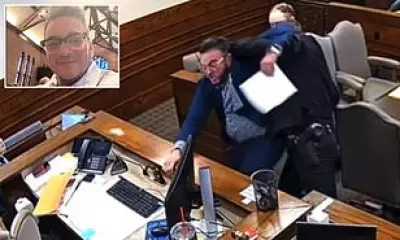
A Sydney court has firmly rejected an application to conceal the identities and residential details of alleged Bondi terrorist Naveed Akram's immediate family, despite ongoing death threats and harassment from vigilante groups. The 24-year-old's bid for a comprehensive suppression order was dismissed at the Downing Centre Local Court on Thursday, with Judge Hugh Donnelly ruling such measures unnecessary given the extensive public exposure of the information.
Judge Cites Public Domain and Media Opposition
Judge Donnelly emphasised that Naveed Akram's driver's licence, which includes his home address, has already been circulated widely across Australia and internationally. This dissemination rendered any court-imposed gag order effectively futile. The decision represents a significant victory for several prominent media organisations, including News Corp, Nine newspapers, the Guardian, and the ABC, all of which formally opposed the suppression orders during the proceedings.
Unprecedented Public Interest and Family Interviews
The judge acknowledged the extraordinary level of public interest, outrage, anger, and grief surrounding the case. He specifically noted that Akram's mother had participated in an interview with the Sydney Morning Herald shortly after the tragic mass shooting incident. The attack, which occurred on December 14 during a Hanukkah celebration at Bondi Beach, resulted in the deaths of 15 individuals, including a 10-year-old girl. Akram and his father, 50-year-old Sajid Akram, are alleged to have opened fire on the gathering.

Detailed Accounts of Vigilante Harassment
Judge Donnelly confirmed that Akram's mother and siblings have been subjected to severe threats and harassment. This has included direct death threats delivered in person, via telephone, and through online chat platforms. Strangers have arrived at their home late at night, pork has been thrown into their front yard, and a bottle containing suspected urine was placed at their residence. "(His mother) fears for her life and the lives of her children," the judge stated, while also clarifying that the family members had no involvement in the Bondi attack.
Limitations of Suppression Orders and Lack of Evidence
The court highlighted the practical limitations of any suppression order, which would only be enforceable within Australia and could not compel compliance from overseas publishers. Furthermore, Judge Donnelly found no necessity to suppress the workplaces and schools of Akram's family, as there was no evidence that threats had occurred at those locations. The accused terrorist had also failed to provide psychiatric or psychological evidence demonstrating that his family was at risk of mental harm, a critical point in the ruling.
Legal Proceedings and Case Background
Naveed Akram had sought to have his family's details suppressed for a period of 40 years nationwide. He remained silent during Thursday's decision, observing from Goulburn's supermax prison. His barrister, Richard Wilson SC, indicated that there would be no appeal against the judge's decision. Akram has not yet been required to enter a plea to the dozens of charges he faces, which include terrorism offences and multiple counts of murder.
His father was killed by police during the alleged terror attack, which stands as Australia's deadliest mass shooting since the 1996 Port Arthur massacre. Investigators discovered a box-like bomb in the boot of their vehicle, along with two hand-painted ISIS flags. The case is scheduled to return to court on April 8 for further proceedings.