Canada School Shooting Horror: A Grim Pattern Crosses Another Border
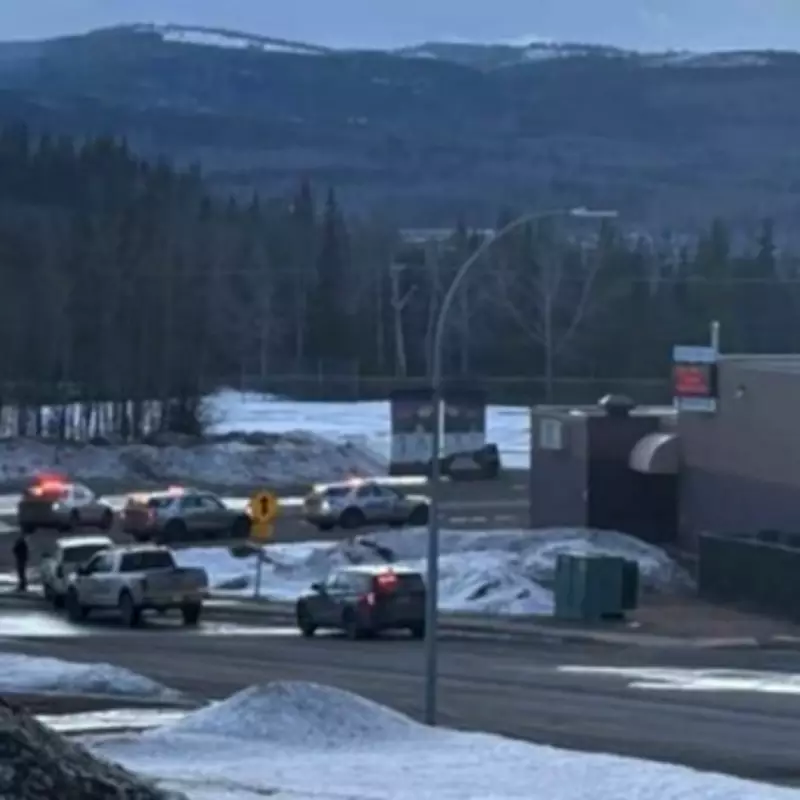
The horror at Tumbler Ridge Secondary School has shattered a community and stunned a country that does not often confront this kind of bloodshed in its classrooms. Of the nine people killed in the attacks, six were found dead in the school, while a seventh died on the way to the hospital. Two other people were found dead at a nearby residence.
A Decade of Reporting on Massacres
For more than a decade as a US editor, I have reported on massacre after massacre south of the border. Whether it was the slaughter on the Las Vegas Strip, the racist carnage inside Emanuel AME Church, the killings at Tops Friendly Market, the atrocity in El Paso or the bodies carried from Pulse Nightclub, the pattern became grimly familiar. Too familiar.
So too were the mornings I stood outside school gates after children like those at Florida’s Marjory Stoneman Douglas High School were gunned down, parents clutching each other, staring at phones, praying their child’s name would not be read out next. I have written about vigils beneath stadium floodlights and the ritualistic paralysis that follows each American bloodbath, when politicians line up to offer “thoughts and prayers” as if grief alone were a policy.

Canada's Rare but Devastating History
But until now, I had never covered one across the border. School shootings do happen in Canada. They are not unheard of. But they are rare - perhaps once or twice a decade. The country’s most notorious remains the École Polytechnique massacre, when 14 women were murdered in 1989 in an act of misogynistic violence that scarred the national conscience.
Since then, there have been others: the WR Myers High School shooting, the Dawson College shooting, and the La Loche school shooting. Each was devastating. Each dominated front pages. Each forced a reckoning. But they have not become a relentless drumbeat in the way they have in the United States, where the names of towns blur into a grim geography of loss.
The Role of Gun Control Legislation
One reason is that, after 1989, Canadian governments moved with urgency. Firearms legislation was strengthened. Licensing became stricter. Background checks more robust. Storage requirements clearer and enforceable. The political rows were fierce but action followed. Lawmakers did not simply bow their heads. They changed the rules.
That does not mean Canada is immune. It means that when catastrophe struck, there was a collective determination to reduce the chances of the next one. The more honest question today is not “why does Canada not have mass shootings?” It does. Clearly. The better question is: “why does Canada have fewer mass shootings than the USA?”
Population is of course a factor. Canada has roughly one-tenth the population of the United States. Even if every other social and political variable were identical, the raw numbers would differ dramatically. But gun control plays a significant role. Canada operates a strict licensing system. To own a firearm legally, you must complete a mandatory safety course, pass background screening and demonstrate that you are fit to possess a weapon.
Licensed owners are subject to continuous eligibility screening - effectively a daily criminal record check. There are clear legal requirements governing how firearms are stored and transported. None of that guarantees safety. But it builds safeguards into the system. It erects barriers. It reduces easy access at moments of rage or despair.
Violence Knows No Borders
What happened in British Columbia is not an aberration in human nature. Violence, alienation and hatred do not respect borders. The frequency differs. The scale differs. The political responses differ. But the underlying capacity for devastation is universal.
And here is where the UK enters the conversation. In Britain, there is a small constant chorus particularly insisting that the country is sliding into chaos. Nigel Farage and his dog-whistling cheerleaders would have anyone believe Britain is teetering on the brink - that crime is exploding, that danger stalks every high street, that only they can see the chaos the rest of us are apparently too naive to notice. It is a familiar script.

I lived throughout Donald Trump’s rise, seeing first-hand the same politics of fear propel him all the way to the White House, painting America as a dystopia in need of a strongman saviour. The playbook is simple: amplify anxiety, cherry-pick horror, repeat it until it feels universal. It wins votes. It fuels outrage. And it leaves a country more divided than when it started.
Perspective on Safety and Responsibility
Yet when it comes to schools and guns, the reality is starkly different. British parents send their children through school gates without the uniquely American fear that today might be the day a classmate arrives armed with a legally purchased firearm. That relative safety did not happen by accident. It followed tragedy - from Dunblane onwards - and it was cemented by decisive gun laws that made certain weapons all but inaccessible.
No country is perfect. No system can promise absolute protection. But perspective matters. After covering so many American massacres, I never expected to write about one in Canada. Yet here we are, reminded that complacency is dangerous, that no nation is immune, that vigilance must be constant.
The lesson is not smugness. It is responsibility - in law, in culture, in mental health support, in political courage. And while divisive politicians scream about rising danger in Britain, every parent should pause, hug their child a little tighter, and recognise one uncomfortable truth: when it comes to the risk of being shot in a classroom, they remain among the safest in the world.