Hundreds of protesters clashed with Australian emergency service workers in a remote town following the arrest of a man suspected of murdering a five-year-old Indigenous girl, police confirmed on Friday.
Around 400 Indigenous people gathered on Thursday night at a hospital where the suspect was being treated after reportedly being beaten unconscious by locals. Footage from public broadcaster ABC showed members of the crowd calling for "payback", a term referring to traditional, often physical, punishment within Aboriginal societies.
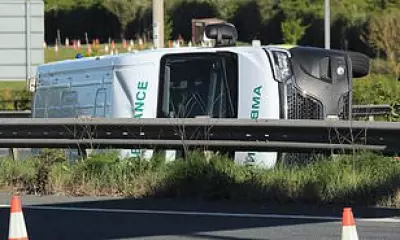
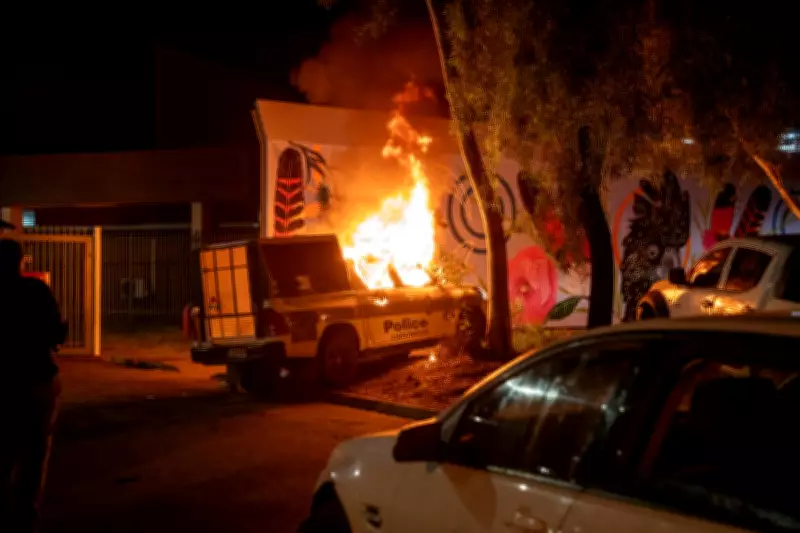
During the unrest, demonstrators threw projectiles and lit fires, resulting in injuries to several police officers and medical staff. Emergency vehicles, including police cars, ambulances, and fire trucks, sustained damage. Officers deployed tear gas to disperse the crowd.

Appeals for calm
Australia's Prime Minister, the Northern Territory's police commissioner, and a spokesperson for the victim's family have all issued appeals for calm amidst the escalating tensions.
Jefferson Lewis, a 47-year-old man who police say they believe abducted and killed the girl, presented himself to one of the town camps in Alice Springs, Northern Territory Police Commissioner Martin Dole said at a news conference.
"As a result of presenting himself, members of that town camp decided to inflict vigilante justice upon Jefferson," he said.
The girl, now referred to by her family as Kumanjayi Little Baby in line with Indigenous customs, went missing from her home on the outskirts of Alice Springs late on Saturday.
Her body was located on Thursday by one of hundreds of people searching the dense bushland around the town, a popular tourist destination in Australia's Northern Territory.
Lewis, who was identified as a suspect by police earlier in the week, has past convictions for physical assaults and was recently released from prison.
"I just call for calm across the community today ... I'd like to think that what we saw last night is an aberration," Dole said, adding that Lewis was moved to the territory capital Darwin in the early hours of Friday morning for his own safety. He is likely to be charged in the coming days.
Prime Minister Anthony Albanese said he understood "people's anger and frustration" but urged the community to come together.
Robin Granites, a senior Aboriginal elder and spokesperson for the family, also appealed for restraint.
"This man has been caught, thanks to community action, and we must now let justice take its course while we take the time to mourn Kumanjayi Little Baby and support our family," he said in a statement. "Now is not the time to be heroes on social media or make trouble."
Measures to prevent further escalation
A day-long ban will apply to takeaway alcohol and more police will be arriving from Darwin to prevent further escalation, Northern Territory Chief Minister Lia Finocchiaro said. Alcohol restrictions are already enforced in the town on certain days during the week in an effort to reduce crime.
Australia has struggled for decades to reconcile with its Indigenous population, who have inhabited the land for some 50,000 years but were marginalised by British colonial rulers.
Indigenous Australians make up around 3.8 per cent of Australia's population of about 27 million, but track near the bottom in almost every economic and social indicator and have disproportionately high rates of suicide and incarceration.
Thousands, including the victim and her family, live in communities known as camps on the outskirts of Alice Springs, where housing and services are often inadequate.