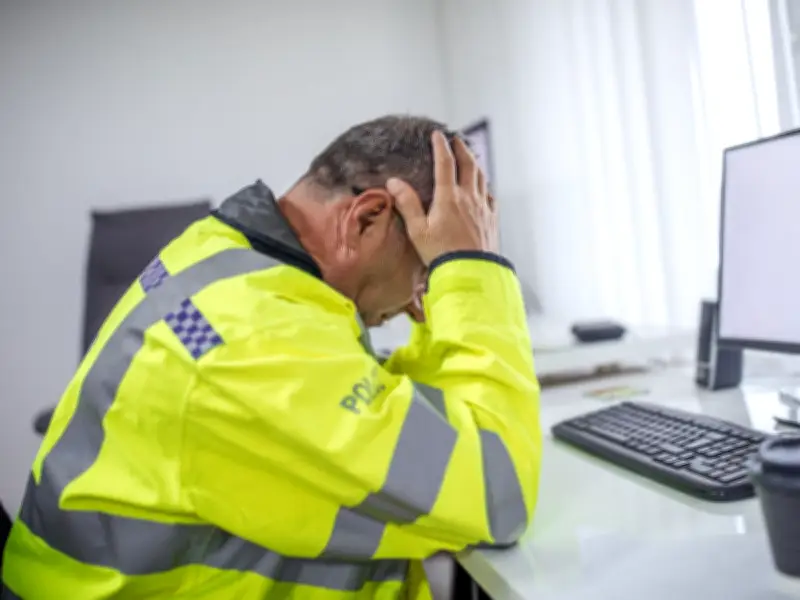
Almost 500 police officers in Scotland are currently on long-term sick leave, as Police Scotland contends with a rising tide of crime and disorder. New figures released by the force under Freedom of Information show that 498 officers have been absent from work for a month or more.
The vast majority—272—are absent due to mental health issues or what Police Scotland describes as 'psychological disorders'. A further 81 are suffering from 'musculoskeletal' conditions, thought to be injuries suffered on duty such as broken bones. Long-term sick leave is normally defined as an absence of more than four weeks.
Union and Former Officer Concerns
Former police inspector Ryan MacDonald, who took early retirement last October after a PTSD diagnosis, said: "The figure of 498 officers on long-term sick leave is concerning, particularly when Police Scotland is operating at its lowest strength since its formation in 2013. Officers are being asked to do more with fewer resources, while also dealing with the additional pressures of increasing demonstrations and protests and major investigations."

MacDonald added: "The figures also show the significant impact on officers' mental health. Although sickness absence will always have a range of causes, the reality is that when fewer officers are available, the pressure on those who remain increases. That can create a cycle of greater workload, less opportunity to recover and, ultimately, more officers becoming unwell. Three per cent of the workforce being off long-term sick should be a serious concern."
Rising Crime and Falling Officer Numbers
Police Scotland recorded 315,357 crimes in 2025-26, a five percent increase on the previous 12 months. The force strength is around 16,430 officers, one of the lowest figures since the formation of the national force in 2013.
David Kennedy, General Secretary of the Scottish Police Federation, said: "Officers are not getting the down time for their body and mind to recover. It's constant and totally relentless. There has been an increase in what the police are asked to do but we have reduced their numbers. You are seeing more and more police officers who wouldn't have been off sick but are going off sick because they can't cope. The longer somebody is off sick there comes a point where it is more difficult to get them back."
Police Scotland Response
A Police Scotland spokesperson said: "The health and welfare of our officers and staff remains one of Police Scotland's highest priorities with enhanced provisions from both our Employee Assistance and Your Wellbeing Matters programmes. This has been further enhanced through the implementation of our new HR structure with increased resource within our Health and Wellbeing team. We also have a range of mechanisms in place to support our employees who are absent from work for any reason. Working in policing is a job like no other and our officers and staff find themselves in situations which can be stressful, traumatic and can have a lasting impact on them. We continue to work with our occupational health provider to support police officers and staff in their journey back to health and, subsequently, to work."
Political Reactions
Scottish Conservative justice spokesman Stephen Kerr MSP said: "These deeply alarming figures highlight the pressure our police officers are under. They stand on the frontline and they deserve our full support, but it is clear many have been pushed beyond breaking point. Ministers must properly fund the force and restore officer numbers to the levels required."
Scottish Lib Dem MSP Yi-pei Chou Turvey said: "This is a sad reflection of the many police officers and staff who feel overwhelmed and stretched dangerously thin. We could see many more officers and staff off on leave or heading for the door."
Scottish Labour justice spokesperson Pauline McNeill said: "Police officers are being pushed to breaking point as a result of years of mismanagement and neglect by this government. The reality is that Police Scotland now has fewer officers than when the force was established in 2013. Ministers must wake up to the warnings being issued by officers about the increasing demands they face and ensure they have the resources they need to do their jobs."

Justice Secretary Neil Gray said: "Scotland’s police officers and staff do an outstanding job, often in challenging circumstances, and I welcome the Chief Constable’s commitment to ensuring they receive the right physical and mental wellbeing support. As with any job, employees can become unwell with a range of illnesses and will need to take time off. The Scottish Government is investing record funding of more than £1.7 billion for policing in 2026-27 and Scotland continues to have more police officers per capita than England and Wales. Health and welfare remain a priority for Police Scotland, with support available through their Employee Assistance and Your Wellbeing Matters programme."
Additional Context
In January, Police Scotland Chief Constable Jo Farrell said extra funding was needed to strengthen frontline policing in the face of increasing online harm, gangland violence, and public protests. In the last 16 months, 64 people have been arrested for a string of firebombings and machete attacks linked to a long-running feud between the Lyons and Daniel crime clans. Last week, it was reported that the violence has been brought under control, but there are fears it could return, putting additional strain on resources.
Last week, the Daily Record revealed that the number of police officers off work with post-traumatic stress disorder (PTSD) has soared by almost 70 percent in the past three years. The figures showed working days lost more than doubled from 3,313 in 2023 to 6,863 in 2025, while the number of cops absent due to PTSD rose from 36 to 60.