Spain has long been a safe haven for Scottish organised crime groups involved in international drug trafficking and money laundering, as highlighted by Daily Record's Crime Reporter Norman Silvester. The country's appeal to Scottish criminals began in the 1960s with the rise of affordable package holidays, making travel easier and cheaper. At that time, the absence of an extradition treaty with Spain provided a secure refuge for crooks from across the UK, not just Scotland.
The Costa Del Crime Era
This situation changed in 1985 when the British and Spanish governments signed an extradition agreement, driven by the increasing number of UK wanted criminals hiding in the sun. By then, the Costa Del Sol region had earned the nickname "Costa Del Crime" due to the high concentration of fugitives settled there or fleeing justice. However, the new treaty did little to stem the flow of Scottish gangsters to sun-soaked destinations like Fuengirola, Marbella, Torremolinos, and Benidorm.
The Costa Del Sol's large expatriate community and proximity to North African drug routes, particularly Morocco, have provided an ideal environment for Scottish fugitives to hide and conduct illicit business along its 150-kilometre coastline. Recent events underscore this enduring connection. Spanish Police revealed that officers investigating a shooting near the La Manga golf resort in November 2024 arrested a suspected gunman attempting to board a flight from Alicante to Edinburgh. The victim was left paralysed. A woman was also detained at the same airport in April as she tried to enter Spain. Both are suspected members of a "violent criminal group originating from the UK."

Notable Scottish Fugitives in Spain
One of the most notorious Spanish fugitives is Glasgow murder suspect Derek "Deco" Ferguson. Wanted for the 2007 murder of barman Tam Cameron, who was shot dead in the car park of the Auchinairn Tavern in Bishopbriggs near Glasgow, Ferguson has been on the run for almost 20 years. Authorities also want to question him about the murder of Billy Bates, 43, whose body was found in an oil drum near the Erskine Bridge in West Dunbartonshire. Ferguson is believed to be hiding under a false name in Spain, likely on the Costa Del Sol. In 2012, officers travelled to Madrid for a joint appeal with Spanish authorities, part of a wider crackdown on British criminal suspects abroad. While others were arrested, Ferguson remained at large. In 2021, on the 14th anniversary of Cameron's murder, Crimestoppers offered a £5,000 reward, later increased to £10,000. Ferguson's name appears on numerous "most wanted" lists, and a fresh appeal was made only last month.
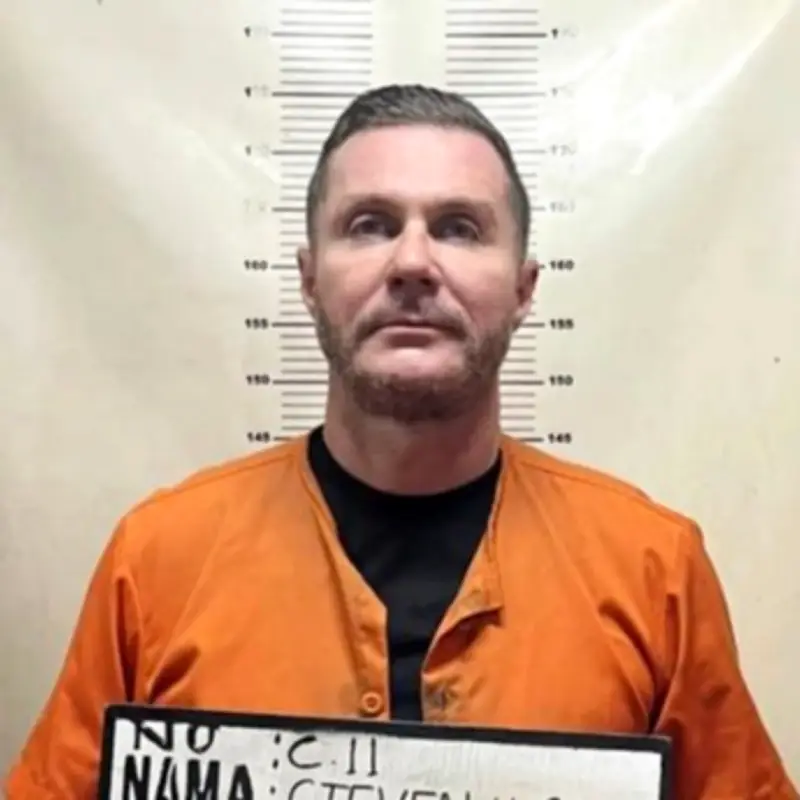
Another Scottish crime figure with long-term Spanish connections is Steven Lyons. He is believed to have relocated to Spain after being shot and injured during a 2006 gangland shooting at a Glasgow MOT station, in which his relative Michael Lyons was killed. Lyons, head of the Glasgow-based Lyons crime clan, was arrested in Bali in March and deported to the Netherlands, where he is fighting extradition to Spain. Spanish authorities, who targeted his network in Operation Armorum, accuse the Lyons gang of operating a major drug and money laundering ring, claiming to have "smashed" the operation after arresting multiple associates in March and April during early morning raids. Investigators allege Lyons laundered upwards of €30 million. Last week, he appeared at Amsterdam District Court for a hearing on extradition to Spain to face organised crime charges; the judge's decision is expected later this month.
In May 2025, Steven Lyons' brother Eddie Lyons Jnr and gang member Ross Monaghan were shot dead at a beachfront bar in Fuengirola, which Monaghan ran. The alleged hitman, Michael Riley from Liverpool, was arrested and extradited to Spain last year to stand trial for the double murder.

Historical Cases
One of the first high-profile cases involving a Scots criminal hiding in Spain was that of Brian Doran. In the 1980s and 1990s, the Glasgow travel agent and former teacher was alleged to be a major player in the global drugs trade, particularly cocaine. In 1982, he and three others were arrested on drug trafficking charges in Glasgow by Strathclyde Police. Doran, released on bail, fled to Marbella, leaving his family behind. He was among many suspects arrested in June 1987 when Spanish authorities claimed to have broken a £50m-a-year smuggling operation involving Moroccan hash. After being granted bail, he moved to Amsterdam, where he was arrested and extradited to Scotland to face the original charges. In October 1989, he was sentenced to two years' imprisonment at the High Court in Glasgow for supplying cocaine. In 1997, Doran and another man were found guilty of trafficking £57 million of cocaine at Bristol Crown Court and sentenced to 25 years each. Two years later, their convictions were overturned due to a misleading summing-up by the trial judge, but they remained in prison after pleading guilty to other drug dealing charges, receiving nine years each. Doran was released in 2003 and later named by the Sunday Mail as one of Scotland's ten richest criminals, with an estimated fortune of £10 million.
Modern Policing and Cooperation
Graeme Pearson, former Director of the Scottish Crime and Drug Enforcement Agency, notes that Scotland is only now seeing the benefits of the 1985 extradition treaty, thanks to improved relations with Spanish authorities. He also highlights the impact of Encrochat, an encrypted communication system used by criminals, which has provided vital intelligence on Spanish-based Scottish criminals. Pearson stated: "Though the extradition got sorted out in 1985, the connections that enabled it took years to develop. In the past, the Spanish National Police Force tended to operate in big cities, leaving the Costa Del Sol to local police, who were not up to mark in knowledge of organised crime. It has taken many years for Scottish policing to plug in with local and national policing in Spain, but we are seeing benefits now." He added: "Another thing that has had an impact is Encrochat. On the back of that, links across Europe between organised crime groups began to show. It also built trust between police forces as they saw the benefit of sharing information. We have also seen investigations against Scottish criminals initiated from Spain for the first time. Spain has a drug problem too, and they need to be seen to be doing something about it."