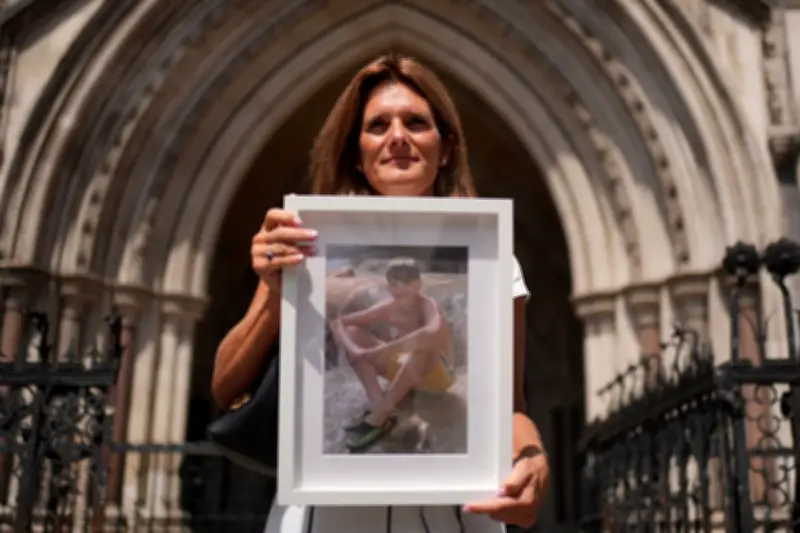
Two senior judges quashed the original inquest conclusion into the death of 14-year-old Jools Sweeney on Thursday, ordering a new inquest to investigate potential links to social media. Jools, from Gloucestershire, died in April 2022, but his initial inquest lasted only 23 minutes and recorded a narrative conclusion without hearing live evidence.
His mother, Ellen Roome, has long suspected that her son died as a result of an online challenge gone wrong. She took legal action against the senior coroner for Gloucestershire, arguing that crucial lines of inquiry were not pursued. At a hearing in London, her lawyers presented new evidence concerning the role of social media, particularly TikTok, in Jools' death.
High Court Ruling and New Evidence
Lord Justice Warby, sitting with Mrs Justice Heather Williams, ruled that a new inquest was “desirable in the interests of justice” because it was “now clear that there are various potential lines of inquiry” that had not been previously considered. The judge noted that it was “simply not possible to know at this stage whether the same conclusion will be reached after appropriate investigations,” leaving the scope of the new inquest to the coroner.
Harry Lambert, representing Ms Roome, argued in written submissions that a new inquest was necessary following a “considerable body of new evidence and a number of investigative insufficiencies.” He highlighted that several lines of inquiry were not pursued, including that Jools had been contacted by a fraudulent Instagram account operated by an African crime gang shortly before his death, and that evidence from his phone indicated a “possible attempt at extortion or ‘sextortion’.”
Mother's Call for Change
Speaking outside the Royal Courts of Justice, Ms Roome said: “Every bereaved family deserves to know that every possible avenue, including a child’s digital life, has been properly investigated. We hope this is a turning point, not only in finding the truth about Jools, but in making the online world safer for every child.” She added: “But our greatest hope is that one day no family has to walk this path. Social media companies must do everything in their power to stop children dying in the first place. No parent should ever have to bury their child because dangerous content was allowed to reach them.”
Ms Roome is one of five British parents separately suing TikTok in the United States after the deaths of their children. She has also been campaigning for a change in the law to force social media firms to hand over children’s data to bereaved parents.
Ofcom Investigation and Legal Response
Thursday’s ruling coincided with Ofcom announcing an investigation into TikTok over children’s risk of exposure to harmful content, questioning whether the platform’s age-checking methods are adequate. Ms Roome said this showed that platforms are “not stepping up enough” to protect children and thanked the regulator for investigating.
Gary Miller, a partner at law firm Mischon de Reya, which represents Ms Roome, said: “What we are calling for is not radical; it is common sense. The protocols and the powers of all state bodies involved in the death of a child must be thoroughly reviewed, updated, and critically, harmonised across all agencies so that every single piece of evidence, in particular, relevant social media data, is preserved and available to the coroner from the earliest opportunity.” He described the ruling as “stunning” and “lights the taper of the firework that is ready to move.”
Implications for Future Inquests
The coroner and TikTok did not oppose the bid to reopen the inquest. Anthony Jones, representing TikTok, said the company could “certainly see the force” in the request. The ruling sets a precedent for families seeking to challenge inquest conclusions when digital evidence may have been overlooked. Mr Miller advised: “Don’t accept no, don’t accept that it can’t be done. Don’t accept that you don’t have any right to get more information, and if you’re dissatisfied with the way that the inquest was run, or that the police investigation was conducted, don’t be shy. Put your hand up and make a noise.”