Oregon Cold Case Solved After 67 Years: Missing Family Identified in Columbia River
The decades-long mystery surrounding the disappearance of an Oregon family has finally been resolved, with authorities confirming the identities of human remains found in the Columbia River. The Hood River County Sheriff's Office announced on Thursday that Kenneth Martin, his wife Barbara, and their eldest daughter Barbie have been positively identified, closing a case that has haunted the community since December 1958.
The Tragic Disappearance and Discovery
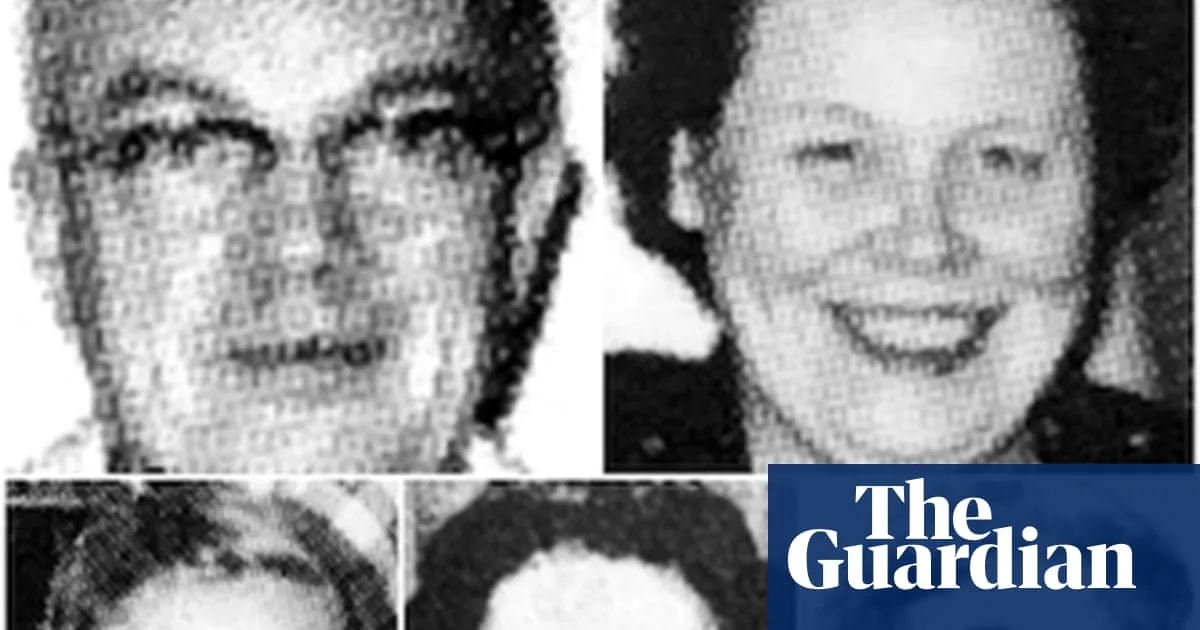
The Martin family originally vanished while reportedly visiting the Columbia River Gorge to collect Christmas greenery. Kenneth and Barbara Martin, along with their three daughters—Barbara (known as Barbie), Virginia, and Susan—were reported missing on December 9, 1958, after the parents failed to show up for work. Initial investigations suggested their car might have accidentally backed into the river, but extensive searches at the time yielded only partial results.
Months after the disappearance, the remains of Virginia and Susan Martin were discovered downstream. However, the parents and eldest daughter Barbie remained missing for nearly seven decades, despite persistent efforts by law enforcement and divers. The case took a dramatic turn in 2024 when independent diver Archer Mayo located a Ford Station wagon believed to belong to the Martins in the Columbia River.
Forensic Breakthrough and Identification
In 2025, the vehicle was successfully retrieved from the river, containing human remains. The Oregon State Medical Examiner's Office, in collaboration with the forensic genetics laboratory Ortham Inc., utilized advanced DNA extraction techniques and genetic genealogy to confirm the identities. DNA profiles from the remains were matched with relatives of the Martin family, providing conclusive evidence after years of uncertainty.
"This identification reflects a sustained coordinated effort, scientific partnership, and continued advancements in forensic genetic genealogy," stated the Oregon State Medical Examiner's Office. Kristen Mittelman, Chief Development Officer at Ortham Inc., emphasized the community impact, noting, "A mystery like this doesn't just weigh on the family, it weighs on the entire community and hopefully this gives a lot of people the resolution they deserve."
Speculation and Theories Over the Decades
Throughout the investigation, numerous theories emerged about the family's fate. The eldest son, Donald Martin, who was 28 and living in New York at the time of the disappearance, expressed skepticism about an accidental death, suspecting foul play. Detectives even offered a $1,000 reward for information, and a gun found near the disappearance site—reportedly with dried blood—added to the intrigue, though it was not collected as evidence initially.
An autopsy report from 1959 mentioned a potential gunshot wound to the head of at least one daughter, but the Medical Examiner later attributed this to decomposition. Despite these elements, no suspects were ever named, and the sheriff's office ultimately concluded there was no evidence of a crime, aligning with diver Archer Mayo's theory of a tragic accident.
Mayo, who spent years searching the river, speculated that the family's car might have become stuck, leading to a fatal mishap. "I think that they turned around in such a way that they kind of got stuck against a curb, put the car in reverse, and it wouldn't move," he told local media, acknowledging that the full truth may never be known.
Closure and Community Impact
The resolution of this cold case marks a bittersweet ending to a story that captivated the nation for over six decades. The identification not only provides answers to surviving relatives but also highlights the importance of technological advancements in forensic science. The collaborative effort between law enforcement, medical examiners, and private labs underscores how modern techniques can solve long-standing mysteries, offering closure to families and communities alike.
As the investigation officially closes, the Martin family's legacy serves as a poignant reminder of the enduring impact of unresolved cases and the hope that science can bring to those seeking answers.