Travel Expert Simon Calder Forecasts Timeline for Gulf Flight Resumption
Travel journalist Simon Calder has provided a cautious forecast regarding when international flights from major Gulf airports, currently closed due to military action in Iran, might resume operations. Speaking while boarding a flight from Istanbul, Calder warned that even if airports reopen, normal service will take considerable time to restore.
Widespread Airport Closures and Casualties
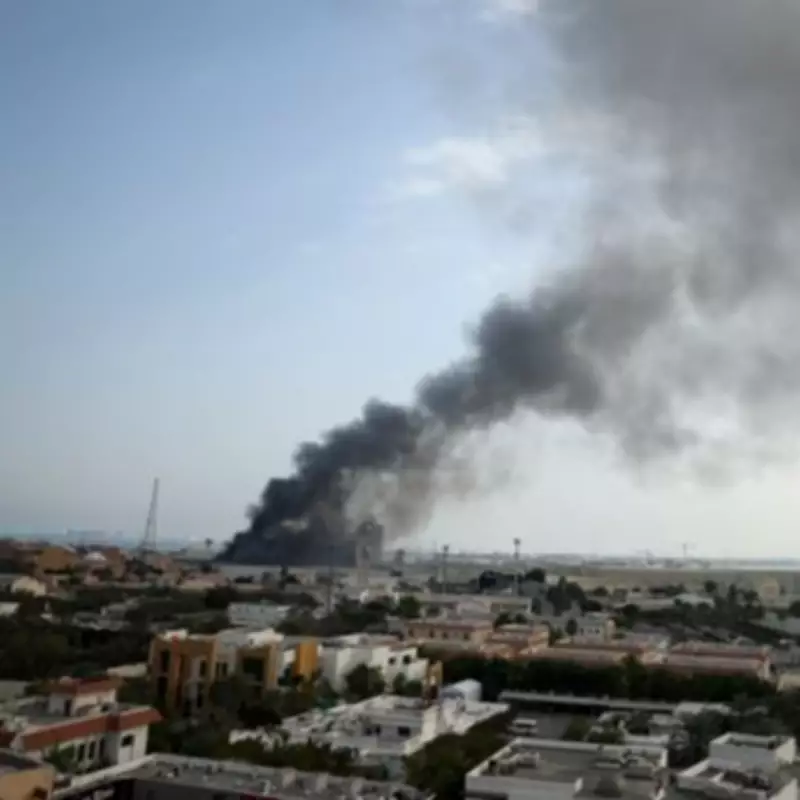
The conflict has led to significant airport closures across the region, with Dubai and Abu Dhabi airports in the United Arab Emirates, along with Doha in Qatar and Manama in Bahrain, among those shuttered. Tragically, one person has died and eleven others have been wounded at airports in Dubai and Abu Dhabi. Over 3,400 flights have been cancelled, disrupting hundreds of thousands of travellers.
The UK Foreign Office is currently advising British nationals against all but essential travel to Bahrain, Kuwait, Qatar, and the UAE. This has left many British citizens and those attempting to travel to the UK stranded in the region, creating a growing humanitarian concern.

Calder's Assessment of the Situation
In an Instagram video, Calder addressed the primary concern of stranded travellers: "The main question is when is the disruption going to stop?" He provided specific updates from various airlines and airports: "Dubai indefinitely closed; Emirates is kind of saying that sometime on Monday it might start up again. Doha, they're going to give an update at 6 o'clock British time tomorrow. And Etihad and Abu Dhabi airport, they're saying, well actually, yeah, we might be opening before that."
Calder expressed hope that flight bans and travel advisories would be lifted promptly but cautioned about practical challenges: "I'm going to say, if you twisted my arm, we will probably see flights start up in the next couple of days but in a small way because, of course, planes and pilots and cabin crew and passengers are all out of position. So it's going to take some time to get this back to normal."
Historical Context and Scale of Disruption
The travel expert drew comparisons to previous major disruptions, noting that aside from the COVID-19 pandemic, this level of travel chaos hasn't been seen since the 2010 Eyjafjallajökull volcano eruption in Iceland. During that week-long event, approximately 20 countries closed their airspace, affecting around 10 million passengers.
While Calder suggested the current situation isn't "quite that severe 'yet'", he described circumstances as extraordinary and warned matters were "definitely heading in that direction." He emphasized the staggering scale of the disruption: "Just bear in mind that every day that there are no flights going in and out of the world's busiest international airport, Dubai, and Doha, and Abu Dhabi, that is two and a half thousand flights and about half a million people."
Logistical Challenges and Potential Solutions
Calder highlighted the compounding problem of accumulating stranded passengers: "Every hour generally, on average, 20,000 people land and depart from those airports, and so you have a massive problem building up. And certainly the numbers haven't been added to because, of course, people are there, but what's happening is that people's holidays are ending and so they are being added to the back of the queue at the airport."
The travel journalist suggested potential logistical solutions might be necessary, including shuttle services to intermediate destinations: "I think there may well be shuttle services operated. They might even go to somewhere like Cyprus; they might just take people back and forth to a relatively short-haul destination from where people can board relatively short-haul flights. That would seem to cause the least amount of problem."
Calder concluded with empathy for those affected: "I do know that there's an awful lot of people out there who really want to be somewhere else and heavens, just imagine the stress and upset if you know that there's somebody across the Gulf who is sending drones and missiles in your direction. A horrible situation for everybody."