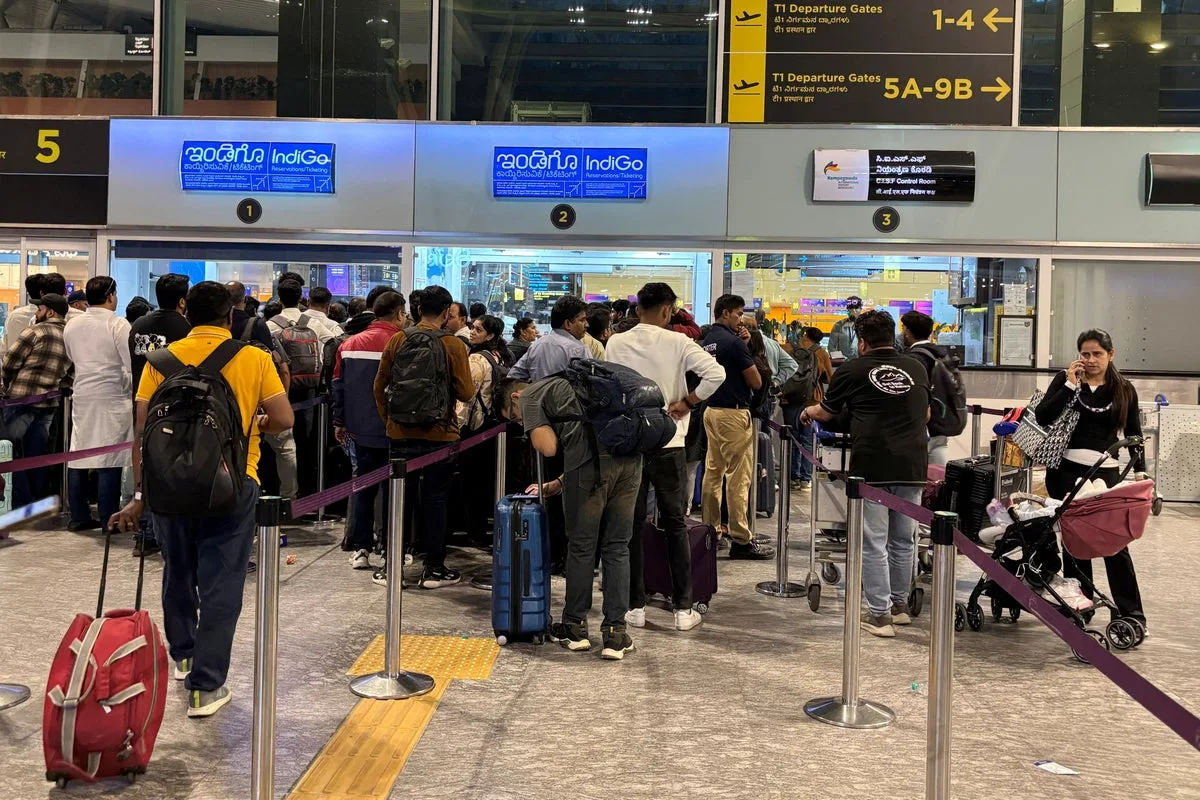
Chaos has gripped India’s busiest airports for the fourth consecutive day as IndiGo, the country’s largest airline, cancelled nearly 550 flights on Friday. Thousands of passengers were stranded at airports in Mumbai, Delhi, Hyderabad, Chennai and Bangalore after their flights were cancelled or delayed by over 10 hours.
The latest wave of cancellations comes as the carrier faces mounting pressure, having cancelled over 1,200 flights in November, according to the national civil aviation regulator. IndiGo apologised to customers for “widespread disruption”, attributing it to adverse weather, greater congestion and new government crew rostering rules.
“The last two days have seen widespread disruption across IndiGo’s network and operations. We extend a heartfelt apology to all our customers and industry stakeholders,” the airline said, adding that it was working to reduce the impact of delays and restore normalcy. On Wednesday, the airline cancelled 67 flights at Delhi airport, 40 at Hyderabad, 33 at Mumbai and 62 at Bengaluru. On Thursday, it cancelled 118 flights in Mumbai, 100 in Bangalore, 75 in Hyderabad, 35 in Kolkata, 26 in Chennai and 11 in Goa, according to news agency PTI.
Passengers wandered terminals visibly angry and confused, crowding IndiGo counters for answers. Many tried to reach customer care while pleading with overwhelmed staff. “The 6pm flight is delayed by two hours, and even that gate has changed four times,” said Rakesh Bhanushali, a chartered accountant from Mumbai. “We are relying on staff completely. Staff are cooperating but are frankly saying they aren’t aware what’s happening.”
The aviation regulator has asked IndiGo to submit a report on the disruption. The airline told the Directorate General of Civil Aviation that operations would be fully restored by 10 February and sought relief from new provisions limiting pilot duty hours at night. The regulator stated that the disruptions arose from misjudgment and planning gaps in implementing the Flight Duty Time Limitations, with the airline accepting that actual crew requirements exceeded their anticipation.
IndiGo’s on-time performance dropped to about 35 per cent on Tuesday, the lowest of all Indian airlines, compared to its typical performance above 80 per cent. The airline’s stock fell 3.4 per cent on Thursday, down 6 per cent for the week. IndiGo, which holds a domestic market share of about 60 per cent and operates over 2,200 flights daily, had previously prided itself on punctuality, with staff often announcing “IndiGo Standard Time” when boarding was completed early.