Major Travel Disruption Leaves Britons Stranded After Iran Airstrikes
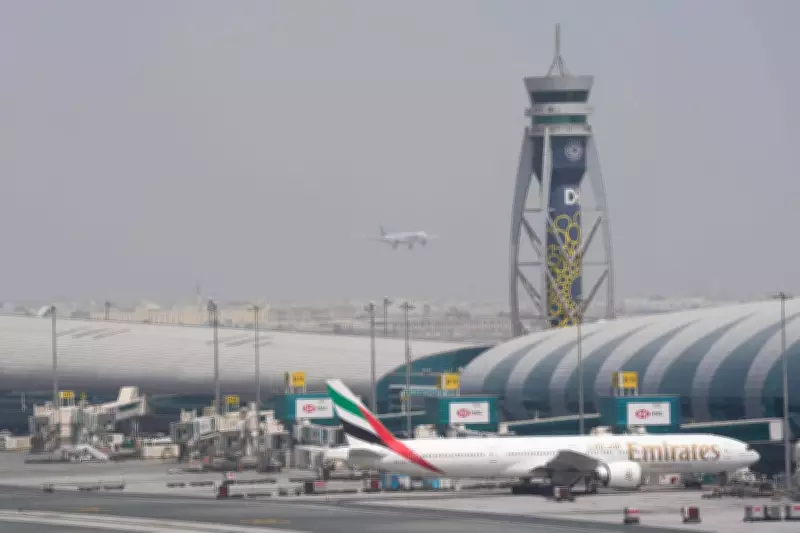
Thousands of British travellers have been left stranded across the Middle East as global airlines grounded hundreds of flights following US and Israeli military strikes against Iran. The escalating conflict has forced the closure of airspaces in Iran and Iraq, with Dubai International Airport, the world's largest aviation hub, suspending all operations on Saturday.
Passengers Describe Airport Carnage and Uncertainty
Martin Boreham, a retired British holidaymaker who has been visiting Dubai for three decades, was aboard a British Airways flight scheduled to depart for Heathrow at 13:10 when the captain announced the airspace closure. After three hours on the tarmac, passengers were instructed to disembark and return through immigration.
"We were all ready to go, sat there for about 15 minutes, and then the captain came on and said that the airspace was shut," Mr Boreham told The Independent. "We've actually just got off and been given instructions to go back into immigration. It's carnage here."

He expressed frustration with the vague instructions from British Airways, who told passengers to collect their bags and await text messages about rebooking. "It seems a bit wishy washy to be honest. I'm a bit concerned about that," he added.
Widespread Chaos Across Regional Airports
The disruption extends beyond Dubai, affecting major hubs throughout the region. Qatar Airways suspended all flights to and from its Doha base after Qatar's airspace was closed. On a typical day, Dubai International Airport handles approximately 250,000 arriving and departing passengers, highlighting the scale of the disruption.
Mr Boreham described scenes of unprecedented chaos at Dubai airport: "It's not just BA, it's every single flight that was due to leave. So it's chaos here, just imagine 100 flights getting off at once. It's hundreds of people, I've never seen the airport like it."
Travellers Face Extended Stranding with No Clear Resolution
Many stranded passengers now face uncertain timelines for returning home. Mr Boreham, who was on holiday with his wife, said: "My biggest concern now is we just don't know when we're going to get out. It could be Monday, it could be a week Monday. Nobody knows what's going on."
He added: "It's all a bit discombobulated at the moment, because I don't think that anyone's been in this situation before." Despite the 90-degree weather, he emphasized: "I'm ready to come home."
Diverted Flights and Growing Passenger Anxiety
BBC producer Elliot Worthing experienced similar disruption when his Qatar Airways flight from Doha to Manchester was diverted to Muscat in Oman after Qatar's airspace closure. Passengers were informed about the attacks only after landing, creating initial panic as travellers questioned whether Oman was safe.
"It's not the case of a delayed flight. It's a case of an attack," Mr Worthing explained, highlighting the serious nature of the situation. He now worries about being stranded in Muscat for an extended period: "I've got work on Monday. I'm sure everyone else has as well. I'm not thinking it's going to be a long day. I'm thinking it's going to be a long few days, possibly even a week. I'm even beginning to think a bit longer than that."
The widespread flight cancellations and airport suspensions have created a perfect storm of travel disruption, leaving thousands of British travellers in limbo across the Middle East with no clear indication of when normal air travel might resume.