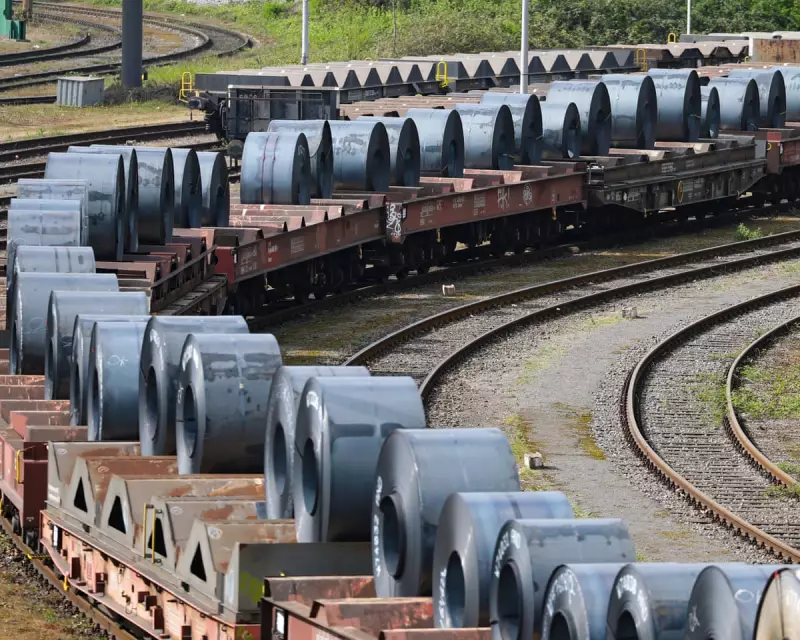
The United Kingdom is anticipated to significantly curtail the volume of foreign steel permitted to enter the country without tariffs, as ministers seek to shield domestic producers from an international oversupply crisis and escalating protectionist trends. This strategic shift involves revising the existing quota framework, which currently allows a specified quantity of metal to be imported before a substantial 25% levy is applied to any excess.
Imminent Changes to Import Safeguards
According to sources familiar with ongoing governmental discussions, new, lower tariff-free quotas could be formally announced as early as April, with implementation scheduled for the 1st of July. This development arrives against a backdrop of a severe global steel surplus, predominantly fuelled by massive exports from China, the world's foremost producer. Chinese steel exports reached unprecedented levels in December, with other major producers including Vietnam, South Korea, and Turkey also aggressively seeking international markets for their output.
A Wave of Global Protectionism
The current situation echoes earlier protectionist moves, notably by the United States. Former President Donald Trump initially imposed 25% tariffs on steel imports in March 2018, later doubling them to 50% in June of the previous year. These measures effectively restricted access to the US market, triggering a chain reaction as producers scrambled to find alternative buyers and other economies, including the European Union and Canada, erected their own trade barriers in response.

Imports into the UK are currently governed by a system of quotas known as safeguards, but these critical protections are set to expire in June. The UK government is now widely understood to be supportive of establishing new quotas with stricter import limits. This is particularly crucial as the state retains control over key assets like the British Steel and Speciality Steel works, which would be highly vulnerable without replacement measures.
Historical Context and WTO Constraints
The original steel safeguards were first implemented by the European Union in 2018—a time when the UK was still a member—to prevent a deluge of cheap steel being diverted from the US market. Following Brexit, the UK adopted identical measures in 2021 and extended them until the end of June 2026. However, regulations set by the World Trade Organization stipulate that these measures cannot be extended beyond this point, forcing a policy rethink.
In a significant precedent, the EU announced in October its intention to replace its own safeguards with a regime of 50% tariffs and substantially reduced duty-free quotas. This move has compelled the UK to negotiate for a protected allocation within the EU's new quota system, amid serious concerns that exclusion could jeopardise the future of the British steel sector.
Industry Calls for Robust Action
The UK steel industry has been vocal in its warnings, arguing that a failure to replace the expiring safeguards with fresh, robust quotas would leave the country exposed to a flood of cheap, subsidised imports. Vlad Darahan, Head of International Trade and Compliance at Tata Steel UK, criticised the current system, stating, "Current UK quotas are too generous to overseas suppliers and in certain cases higher than the total UK demand of that product. This results in the UK being an unfairly priced dumping ground for cheap imports."
He urged the government to "move quickly to implement a clearer, stricter UK system that limits steel imports based on what the country actually needs" while continuing collaborative efforts with the EU. The industry has engaged in detailed consultations with the Department for Business and Trade and steel buyers to establish suitable quotas for specific metal categories.
Opposition from Steel Consumers
Not all stakeholders support tighter import restrictions. Some companies that rely on steel as a raw material have opposed lower quotas, contending that such measures will inevitably drive up material costs. They further argue that UK steelmakers currently lack the capacity to meet domestic demand in certain specialised areas, potentially creating supply chain bottlenecks.

Gareth Stace, Director General of UK Steel, underscored the existential stakes for the sector. "This is a fundamental issue," he said. "Much of the UK steel industry will no longer be viable unless the government puts in place robust trade measures. Until China restrains its model of subsidising colossal production levels and exporting its overcapacity problem to the rest of the world, countries such as the UK will have to utilise trade measures or face deindustrialisation."
Government's Stance and Future Strategy
In response to the speculation, a government spokesperson emphasised that no final decisions have been made regarding this complex issue, but confirmed authorities are "working at pace to ensure the best outcomes to protect UK industry." The spokesperson reaffirmed the government's commitment, stating, "This government has been crystal clear in committing to a bright and sustainable future for steelmaking and steel jobs in the UK. We’ll set out our long-term vision for the sector in our steel strategy which will be published this year."
The coming months will be critical as the UK navigates the expiration of its steel safeguards, balances domestic industrial protection with the needs of manufacturing consumers, and positions itself within an increasingly protectionist global trade landscape for heavy industry.