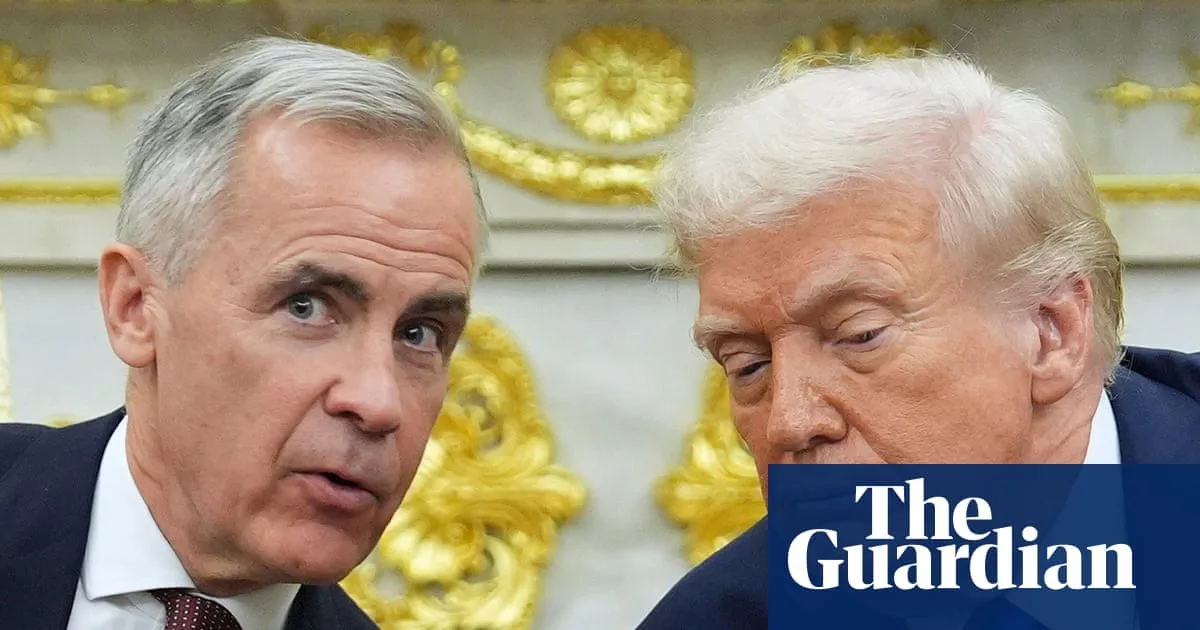
Former US President Donald Trump has issued a blistering warning to Canada, threatening to impose crippling 100 percent tariffs on all Canadian goods entering the United States if the nation proceeds with a potential trade agreement with China. In a characteristically fiery post on his Truth Social platform, Trump declared that Canada would be "eaten alive" by China, with devastating consequences for its economy and society.
A Stark Warning on Social Media
On Saturday, Trump directly addressed Canada and its Prime Minister, Mark Carney, over reported plans to establish the country as a "Drop Off Port" for Chinese imports destined for the US market. The former president asserted that such a move would be a grave error, stating they are "sorely mistaken" in their approach.
"China will eat Canada alive, completely devour it, including the destruction of their businesses, social fabric and general way of life," Trump wrote in his social media post. He followed this dramatic assertion with a clear economic threat: "If Canada makes a deal with China, it will immediately be hit with a 100 percent Tariff against all Canadian goods and products coming into the USA."
Context of Global Tensions
This latest intervention from Trump comes just days after Prime Minister Carney delivered a significant speech to global leaders at the World Economic Forum in Davos, Switzerland. In his address, Carney warned that the post-World War II "rules-based order," traditionally championed by the United States and its allies, is visibly "fading."
"Every day we're reminded that we live in an era of great-power rivalry. That the rules-based order is fading. That the strong can do what they can, and the weak must suffer what they must," the Canadian leader remarked, highlighting the shifting dynamics in international diplomacy and trade.
Implications for US-Canada Relations
The threat of 100 percent tariffs represents an extreme escalation in trade rhetoric, potentially jeopardising the longstanding economic partnership between the United States and Canada. Such a move would have profound implications for cross-border commerce, affecting a wide range of industries and consumers in both nations.
Trump's comments underscore the ongoing geopolitical tensions between Western nations and China, with trade policy becoming a central battleground. The warning also reflects the former president's consistent "America First" approach to international relations, where bilateral deals are favoured over multilateral agreements that might benefit geopolitical rivals.
As global trade patterns continue to evolve, this public admonition from a leading figure in US politics adds another layer of complexity to Canada's strategic calculations. The nation must now weigh its economic interests against the potential for severe retaliatory measures from its southern neighbour, all while navigating an increasingly fragmented international order.




