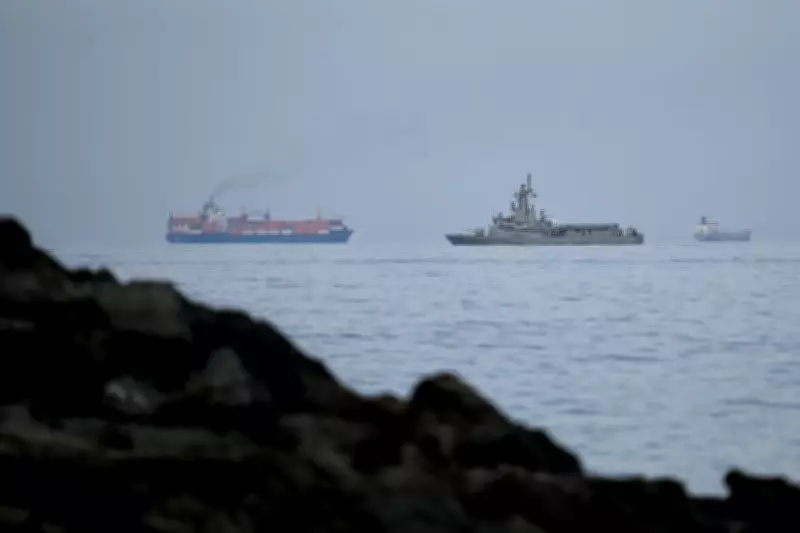
An Indian-flagged oil tanker, the Jag Prakash, has sailed away from the area east of the Strait of Hormuz, according to confirmation from an Indian government official on Friday. The vessel, which is carrying gasoline, is currently bound for Africa from Oman.
Shipping Disruption in the Gulf
This development follows two weeks of significant disruption to Gulf shipping, which authorities attribute to Iran's retaliatory actions in the region following US-Israeli attacks. The situation has created considerable challenges for international maritime traffic through this critical waterway.
Multiple Vessels Remain Stranded
Rajesh Kumar Sinha, India's special secretary at the ministry of shipping, revealed that on Thursday, four Indian-flagged vessels were stranded in the Gulf of Oman, east of the Strait of Hormuz. The Jag Prakash was one of these vessels, leaving three vessels still awaiting passage through the troubled waters.

"Three vessels remain stuck at the east side, they have 76 Indian sailors onboard," Sinha reported during his briefing. He added that 24 Indian-flagged vessels, carrying 677 Indian sailors, remained stranded west of the Strait in the Persian Gulf on Friday – a figure that remained unchanged from the previous day.
Iran's Defiant Stance
Iran's new supreme leader declared on Thursday that the country will continue fighting and maintain the closure of the Strait of Hormuz as leverage against the United States and Israel. These defiant comments represent his first public statements since succeeding his slain father, according to Reuters reports.
The supreme leader's announcement comes as Iran attempts to use control of the strategic waterway to exert pressure on Western nations and their allies in the region.
Tracking the Jag Prakash
Ship-tracking data from Kpler indicates the Jag Prakash will discharge fuel loaded at Oman's Sohar Port at Tanzania's Tanga Port on 21 March. The vessel's successful departure from the troubled area represents a small but significant development in the ongoing maritime crisis.
International Response to the Crisis
The news comes as the US treasury secretary has stated that the US Navy will escort oil tankers through the Strait of Hormuz with assistance from an "international coalition" in response to threats from Iran. This proposed military escort represents a potential escalation in the international response to the shipping disruptions.
"My belief, that as soon as it is militarily possible, the US Navy, perhaps with an international coalition, will be escorting vessels through," Scott Bessent told Sky News during an interview about the developing situation.
Bessent added, "There are, in fact, tankers coming through now, Iranian tankers, I believe some Chinese flag tankers have come through. So we know that they have not mined the straits."
Economic Impact and Strategic Importance
Relentless attacks on tankers in the Persian Gulf have caused oil prices to skyrocket above $100 a barrel as Tehran attempts to block passage through the critical waterway. The economic implications of this disruption are significant for global energy markets.
Approximately one-fifth of the world's oil passes through the Strait of Hormuz, making it one of the most strategically important maritime chokepoints globally. Last week, Iran's Islamic Revolutionary Guard Corps navy declared it had "complete control" over the passage in an attempt to spark economic turmoil among nations dependent on Middle Eastern oil exports.
Iran has claimed it will permit ships to pass through the Strait of Hormuz if they coordinate their passage with the Iranian navy, establishing conditions for maritime traffic that many international shipping companies find unacceptable. This requirement represents a significant shift in how commercial vessels traditionally navigate these international waters.