Hawaii's Fragrant Flower Lei Tradition Threatened by Cheap Imports
The fragrant flower lei, an iconic symbol of Hawaii's culture and spirit of aloha, is facing significant competition from cheaper imported alternatives. This development has sparked concern among Native Hawaiian advocates and lawmakers who are pushing for measures to protect local producers and preserve the authenticity of this cherished tradition.
The Cultural Significance of Lei
For centuries, the custom of giving and wearing lei made from flowers, leaves, seeds, or shells has been deeply ingrained in Hawaiian culture. According to a 2002 University of Hawaii publication, these garlands represented love and the spirit of aloha, worn not just for ceremonies but in everyday life by everyone from chiefs to children. Today, lei remain central to celebrations ranging from birthdays and promotions to graduation ceremonies, where students often receive lei piled high enough to obscure their faces.
"You don't come to Hawaii and not at least have a flower or a lei," emphasized Kuhio Lewis, CEO of the Hawaiian Council, a nonprofit promoting Native Hawaiian culture and business. "For us to now be importing is not good. It's actually embarrassing."

The Import Challenge
The vast majority of odorless orchids used in lei today are imported from Thailand, where production costs are significantly lower. This has created a situation where tourists receiving bright-purple lei during their Hawaii vacations are likely holding garlands made from foreign-grown flowers rather than locally cultivated blooms.
State Representative Darius Kila, who is Native Hawaiian, has implemented a personal rule against giving out purple Thailand orchid lei. "I really try not for us to give out orchid lei, specifically the purple Thailand orchid lei," said Kila, who represents west Oahu.
Legislative Efforts to Protect Local Industry
This year, Kila sponsored legislation requested by the Hawaiian Council that would have required state officials to purchase a certain percentage of lei containing Hawaii-grown flowers and mandated labeling to identify locally produced garlands. Although this measure failed, a related Senate bill remains active, proposing a work group to study whether local flower-growers and lei-makers can meet rising demand and make recommendations for protecting the industry.
The Senate bill states that "the growing commercialization of lei and lei materials has led to increased use of imported plant materials and manufactured components that are marketed using Hawaiian language, imagery, and place names" which "may mislead consumers and undermine local growers, lei makers, and cultural practitioners."
The Flower Hierarchy and Market Realities
As Hawaii's population and tourism expanded throughout the 20th century, lei-makers increasingly turned to nonnative ornamental plants like carnations and jasmine to meet soaring demand. Today, these remain among the most popular choices, alongside traditional favorites.
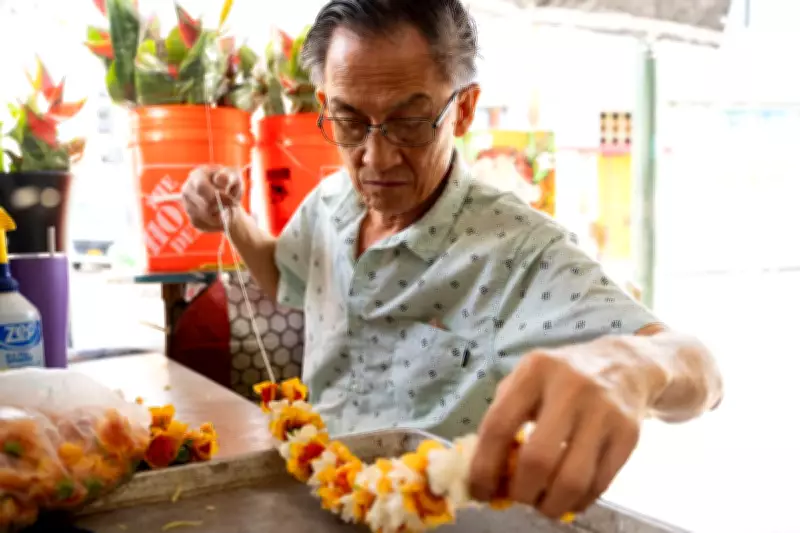
Francis Wong, owner of Jenny's Lei and Flowers in Honolulu's Chinatown, explained that "people want pikake" – a type of jasmine considered "the top flower in Hawaii." Wong typically sources these aromatic white flowers from a Nanakuli farm but faces seasonal shortages during winter months.
Monty Pereira, general manager of Watanabe Floral – Hawaii's largest florist selling approximately 250,000 lei annually – noted that while locals prefer local flowers, imported blooms help stretch limited supplies. One popular compromise blends Hawaii-grown tuberose with imported carnations.
Economic Concerns and Cultural Preservation
Pereira expressed concern that restricting imported flowers could drive up lei costs dramatically. "If like 30 lei stands and florists are fighting for the same lei, that's when lei is going to start to be $100, $150, $200," he warned, noting that a three-strand pikake lei already reached $150 last Mother's Day.

The Native Hawaiian business manager also highlighted how Trump administration tariffs have increased Thailand orchid costs to nearly match some local flowers. More troubling to Pereira is the trend toward lei made with candy or ribbons rather than flowers, particularly at graduation ceremonies.
"The bigger threat is making it so expensive that the people of Hawaii cannot afford to enjoy something that's culturally significant to us," Pereira cautioned, emphasizing the delicate balance between economic viability and cultural preservation.
As Hawaii grapples with these competing pressures, the future of its fragrant flower lei tradition hangs in the balance between commercial realities and cultural authenticity.