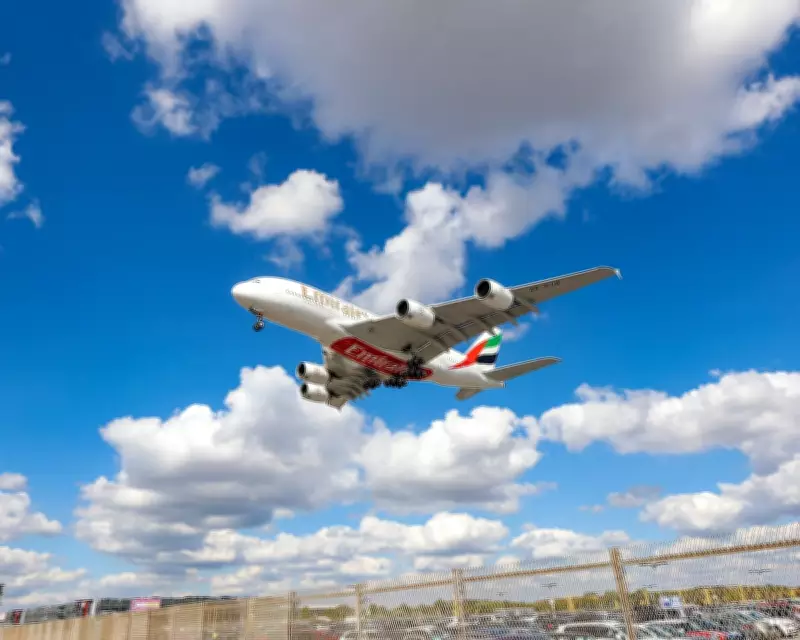
Emirates and Etihad Announce Refund Policies Amid Middle East Airspace Closures
Emirates has confirmed that customers scheduled to fly between Monday and Thursday this week are entitled to a full refund or free rebooking on alternate flights departing by 20 March. Similarly, Etihad is offering refunds for flights booked on Monday or Tuesday, with rescheduling options available for travel until 18 March. These measures come in response to widespread flight cancellations across the Middle East due to escalating regional conflicts.
Impact on Australian Travellers and Flight Operations
A logistical nightmare has unfolded for Australian travellers both at home and abroad since military strikes began in the region over the weekend. Flights to and from key Middle Eastern hubs, including Dubai—the world's busiest international airport—have been suspended, affecting thousands of passengers. Approximately 115,000 Australians are currently in the area, with many stranded at airports while awaiting connecting flights.
Airspace closures in Iran, Iraq, Israel, Syria, Kuwait, Bahrain, Jordan, and the United Arab Emirates have disrupted operations for airlines with stopovers in the Middle East. Gulf carriers such as Qatar Airways, Emirates, and Etihad, which handle a significant volume of flights to and from Australia, are particularly impacted. Around 1.4 million Australians transit through the region annually, primarily en route to Europe, according to the Australian Travel Industry Association.

Airline Responses and Passenger Options
Emirates has suspended all operations to and from Dubai, while Etihad has halted flights in and out of Abu Dhabi. Virgin Australia, partnering with Qatar Airways, cancelled eight services to Doha on Sunday. Qantas, though not operating directly into Middle Eastern airports, relies on its codesharing agreement with Emirates for European routes; its direct flights from Perth or via Singapore remain unaffected.
For affected passengers, airlines are providing various remedies:
- Emirates: Full refunds or rebooking on alternate flights by 20 March.
- Etihad: Refunds for Monday or Tuesday departures, with free rescheduling until 18 March.
- Virgin Australia: Free booking changes, travel credits, or refunds for Doha services this week.
The Australian Competition and Consumer Commission (ACCC) advises passengers to contact their airlines directly to understand available options. Globally, FlightAware reports 7,760 flight cancellations between Saturday and Monday evening.
Expert Advice on Cancellations and Refunds
Travel experts warn against self-cancelling flights, as this may void refund eligibility. Jodi Bird, a travel and insurance expert at Choice, emphasises that passengers should wait for airlines to make decisions and contact them, rather than initiating cancellations themselves. Under Australian Consumer Law, remedies depend on fare terms and conditions, and self-cancellation is often treated as a change of mind, incurring fees.
Dean Long, chief executive of the Australian Travel Industry Association, cautions that cancelling flights can lead to cancellation fees and fare differentials if rebooking. The ACCC notes that consumer guarantees may not apply if the customer initiates cancellation, highlighting the importance of reviewing fare rules.
Travel Insurance Limitations
Travel insurance policies generally exclude coverage for losses due to war, armed conflict, or civil unrest, according to the Insurance Council of Australia (ICA). Andrew Hall, ICA chief executive, states that those reconsidering trips before departure may have coverage under "cancel for any reason" clauses, but travellers already overseas are unlikely to be protected. The ICA is collaborating with the Department of Foreign Affairs and Trade, but repatriation efforts rely on commercial flight resumptions, as noted by Foreign Minister Penny Wong.
This situation underscores the challenges faced by travellers during geopolitical crises, with airlines and regulators scrambling to address disruptions while passengers navigate complex refund and rebooking processes.