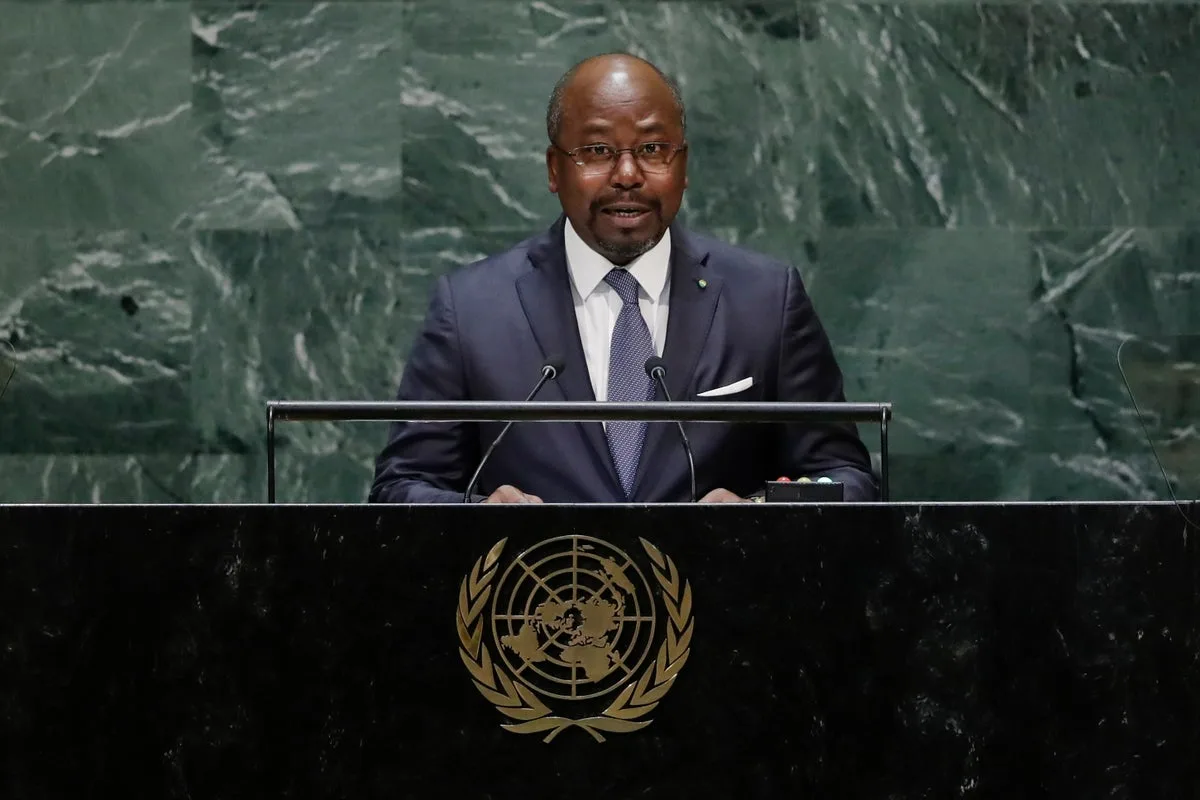
Gabon's Former Prime Minister Detained in Controversial Arrest
Gabon's former prime minister and prominent opposition leader, Alain-Claude Bilie-By-Nze, has been arrested by the country's security forces, according to a statement released by his political party on Thursday. The detention has ignited concerns over political repression and the rule of law in the nation.
Details of the Arrest and Allegations
The arrest occurred at Bilie-By-Nze's residence on Wednesday, carried out by agents from the General Directorate of Investigations (DGR), an intelligence agency. His party, Ensemble pour le Gabon (EPG), condemned the action as "arbitrary, brutal, and manifestly contrary to the fundamental principles of the rule of law." The party alleges that the arrest is linked to a debt of five million Central African francs, equivalent to approximately $8,999, which dates back to 2008.
At that time, Bilie-By-Nze, now 58 years old, was involved in organizing the National Cultural Festival, a public event aimed at celebrating Gabon's cultural heritage. According to EPG, a service provider associated with the festival was not paid, and the debt remains outstanding, leading to the current legal action.
Political Context and Background
Alain-Claude Bilie-By-Nze served as the last prime minister under former president Ali Bongo Ondimba, who was removed from power in a military coup in August 2023. Following the coup, Bilie-By-Nze emerged as a key opposition figure, finishing second in last year's election, the first since the 2023 coup. He lost to junta leader Brice Oligui Nguema, highlighting the ongoing political tensions in Gabon.
In their statement, EPG urged the authorities to "act responsibly and guarantee a peaceful democratic framework, in accordance with Gabon's national and international commitments." This appeal underscores the broader concerns about democratic erosion and human rights under the current military-led government.
Implications for Gabon's Political Landscape
The arrest of such a high-profile critic raises questions about the junta's commitment to political freedoms and judicial independence. Observers note that this move could further destabilize Gabon's already fragile political environment, potentially leading to increased international scrutiny and domestic unrest.
As the situation develops, the international community is closely monitoring Gabon for signs of escalating repression or steps toward reconciliation. The case highlights the challenges faced by opposition voices in nations undergoing political transitions, particularly those involving military rule.