Danish App Fuels Boycott of US Goods Over Trump's Greenland Threats
When my editor proposed the challenge of boycotting American products for a full 24 hours, it initially appeared to be a straightforward task. Inspired by movements in Canada and Denmark, where a new app helps shoppers identify US-made items in supermarkets, the goal was to join a protest against former President Donald Trump's belligerent threats regarding Greenland. However, the reality proved far more complex, and my attempt collapsed within mere seconds.
The Spark of Controversy
Last month, Trump declared that military intervention was "an option" for acquiring control of Greenland, an autonomous territory of Denmark. This statement sent shockwaves across Europe and the NATO alliance, igniting fury in Denmark. Thousands of Danes marched through Copenhagen, chanting "Greenland is not for sale," in a rare display of public protest. The incident struck a nerve in a country where such demonstrations are uncommon, highlighting the deep-seated tensions.
Tech Response to Political Fury
Amidst the outrage, Danish tech developers seized an opportunity. Apps like UdenUSA and Made O'Meter, available on the App Store, allow users to scan products and reveal their origins and ownership. In recent weeks, these tools have empowered Danes to avoid purchasing American goods, turning consumer choice into a political statement. Eager to prove that Europe could stand independently from the US, I downloaded the apps, only to face immediate setbacks.

The Inescapable Web of US Technology
My boycott faltered at the first hurdle when I realized I was communicating via Slack, owned by American software giant Salesforce. A deeper look revealed the pervasive influence of US technology in daily life. My notes were in a Google Doc on an Apple MacBook Pro, connected to a Dell monitor and an HP mouse—all American products. This dilemma underscored the uniquely dominant position of US tech in the global market.
According to an Ofcom report from 2025, more than half (54%) of UK smartphone users aged 16 or over use an Apple iPhone, while 45% use Android, primarily developed by Google. Streaming services like Netflix, used by approximately 17.6 million UK homes, further illustrate the deep integration of American digital platforms into European lifestyles.
Sports and Entertainment: A Hidden American Grip
Stepping out of the office, I attempted a fresh start by avoiding American apps like Instagram, Facebook, X, and WhatsApp—a daunting task for a screen-addicted Gen Z individual. Instead, I planned to read a British book or watch a British football match on a South Korean LG television. However, my plan quickly unraveled when I tuned into TNT Sports to watch Chelsea play Napoli in the Champions League.
TNT Sports, formerly BT Sport, is owned by the American entertainment conglomerate Warner Bros Discovery. Moreover, Chelsea itself is owned by a California-based private equity firm and an American billionaire. This situation highlights the creeping dominance of American big business in British sports. Four of the UK's largest football clubs—Arsenal, Manchester United, Liverpool, and Chelsea—are now majority US-owned, along with others like Fulham, Bournemouth, and Everton. Given football's centrality to English national life, the implications of this ownership shift are significant.
Supermarket Surprises and Gym Revelations
A brief trip to the supermarket offered a slightly less bleak perspective. Approximately 60% of food consumed in the UK is sourced domestically, with 40% imported—mostly from the European Union. Thankfully, iconic American products like Spam and Quaker oats were not on my shopping list, providing a small victory. However, my celebration was short-lived.
As my boycott neared its end, I visited my local PureGym, only to later discover that my monthly subscription fees were funneled into the deep pockets of US private equity firm Leonard Green & Partners, which acquired the company in 2017. This revelation emphasized how American financial interests permeate even routine aspects of European life.

The Unavoidable Reality of Economic Dependence
My unsuccessful boycott reflected an unavoidable truth: in many ways, Europe remains deeply dependent on America. Despite rhetoric about "strategic autonomy" in European capitals, the US economy continues to significantly influence European success. Government figures indicate that the US is the UK's largest single-country trading partner, accounting for around 17–18% of total trade in goods and services.
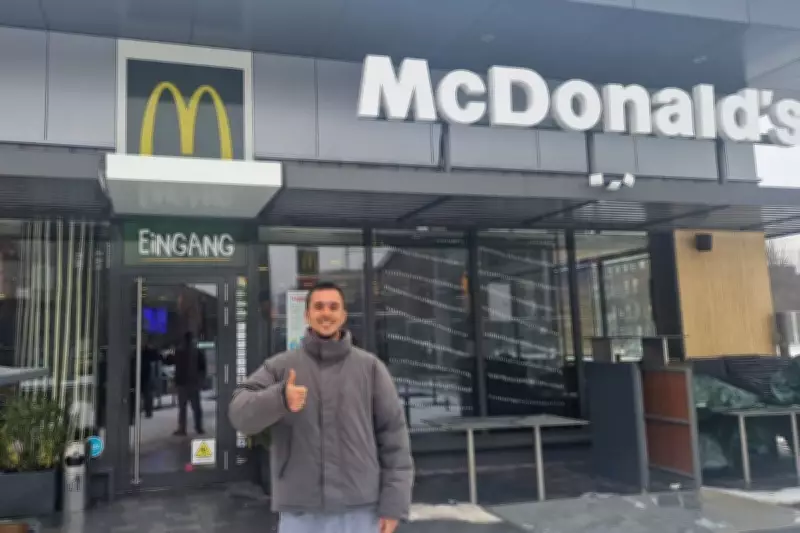
Later in the week, I traveled to Germany, a nation whose culture and economy are also shaped in large part by American influence. Freed from the constraints of my boycott, I had one clear destination in mind: McDonald's. This final act served as a poignant reminder of the enduring and often inescapable ties between Europe and the United States, even in the face of political tensions.