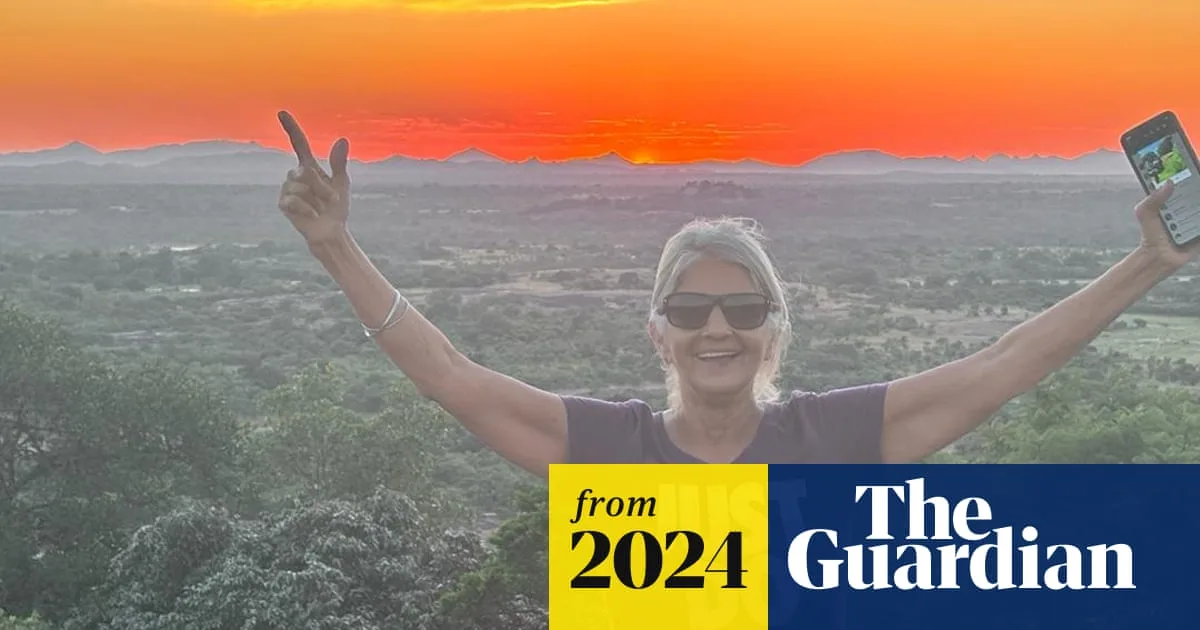
Woman Sells Everything, Travels World for 5 Years After Health Scare
Woman Travels World for 5 Years After Health Scare

For as long as she could remember, Ombeline Daragon Ferreira had a 'hunger in her' to explore the world. After finishing school, the 27-year-old from Bordeaux, France, worked hard to build a conventional life: a steady job, her own apartment, and a pet cat. Yet, she felt something was missing.

'I was a stable, respectable adult. But I was dying, the kind of dying where you wake up each morning and feel the weight of a life that isn't yours pressing down on your chest,' she told the Daily Mail.

At age 21, a horrifying health scare changed everything. 'I lost an ovary because there was a massive cyst on it that could have killed me,' she shared. 'I was in a hospital bed, alone with the particular kind of silence that only exists in medical rooms at night, and I made a promise. If I come out of this, I said, I will stop pretending. I will stop shrinking. I will go.'

Wide Pickt banner — collaborative shopping lists app for Telegram, phone mockup with grocery list

In 2021, after recovering from emergency surgery, she sold everything she owned—including her apartment—rehomed her cat, and left France forever. With only $1,000 in her bank account and no plan, Ferreira has spent the last five years traveling the world full-time.

'I executed what I can only describe as a controlled demolition of my life,' she reflected. 'I want to be clear about something, because people romanticize this moment whenever I tell it. I was not brave. I was terrified. I just decided that the terror of leaving was smaller than the terror of staying.'

Life on the Road

Ferreira has lived in 11 countries, including New Zealand, Australia, the Dominican Republic, the United States, Thailand, Malaysia, Indonesia, Vietnam, and India. Her travels brought immense highs and thrilling experiences, but also tested her in unexpected ways.

'My travel was never a vacation. When I got on that first flight, it wasn't away from something. It was toward myself. The distinction matters enormously, even if it took me years to understand it,' she said.

To survive, she took every job she could find: supervising mining operations in the Australian outback, repairing fishing boat hulls with a needle gun, picking strawberries in Tasmania while living in a tent, and working 90-hour weeks as a chef in New Zealand without a single day off.

She admitted that getting by with no steady work has been extremely difficult. She also faced life-threatening situations, such as being forced to stay in a dangerous neighborhood in California riddled with addiction and crime.

Essential Travel Tips

Ferreira shared vital travel tips and safety hacks that kept her alive on the road. First, she protects herself by keeping her real credit and debit cards hidden, carrying a 'ghost wallet' with expired cards and a small amount of cash as a decoy. 'My real wallet is hidden in a secret pocket. Sometimes a shoe. It sounds paranoid until the one time you need it,' she said.

She also stores $100 hidden inside a hollowed-out lip balm stick or sewn into a jacket lining. 'Have it, forget it, and pray you never need it.'

Ferreira keeps copies of important documents on her phone, accessible even offline, including scans of her passport, visas, insurance documents, and photos of entry stamps in a hidden album. 'The first thing an authority or a hotel asks for even if you're offline is proof. Have it ready before you need it.'

She always carries a laminated card with her accommodation address, three emergency numbers (including a local contact and one person back home), and her insurance phone number. She never travels without premium insurance, stating, 'If you can't afford it, you can't afford to travel. I've seen people's entire lives derailed by a $50,000 medical bill on the road. Insurance is the difference between a crazy story and a catastrophe.'

Other necessities include a power bank, AirTags in all luggage, activated charcoal for stomach bugs, electrolyte salt, and antiseptic cream. 'Dehydration and infected scratches are the two most common trip-ruiners in my experience, and both are entirely preventable. Your body is your most important piece of equipment.'

She emphasizes the importance of rest when feeling run down. 'The best version of yourself is found when you stop moving. The world will always be there. Your nervous system needs permission to rest, and burnout doesn't care how beautiful the view is.'

Pickt after-article banner — collaborative shopping lists app with family illustration

Embracing True Self

After five years on the road, Ferreira says the most important lesson is embracing her true self. 'Travel is a tool—a brutal, beautiful, effective tool for stripping away the false self. But I learned that you don't need to travel to become who you want to be. You need the bravery to be that person in your own environment. Travel just removes the excuses.'