Walking the Mortimer Trail: A Journey Through England's Turbulent Borderlands
In the United Kingdom, there exists a proud tradition of naming long-distance walking paths after infamous historical figures. From opium enthusiasts to international terrorists and child murderers, these characters form a colourful part of the national tapestry, with examples like the Coleridge Way, Drake's Trail, and the Richard III Trail. Thus, a 30-mile weekend walk dedicated to the Mortimers, particularly their most notorious scion, Sir Roger Mortimer, seems a fitting addition to this weave.
Sir Roger was a man who allegedly slept with a reigning queen, Isabella, likely killed her husband, King Edward II, and ruled as the de facto tyrant of the realm for three turbulent years in the 1320s, relentlessly enriching himself during that time. It is safe to say that world leaders of such outrageous calibre are no longer made today.
Starting at Ludlow Castle
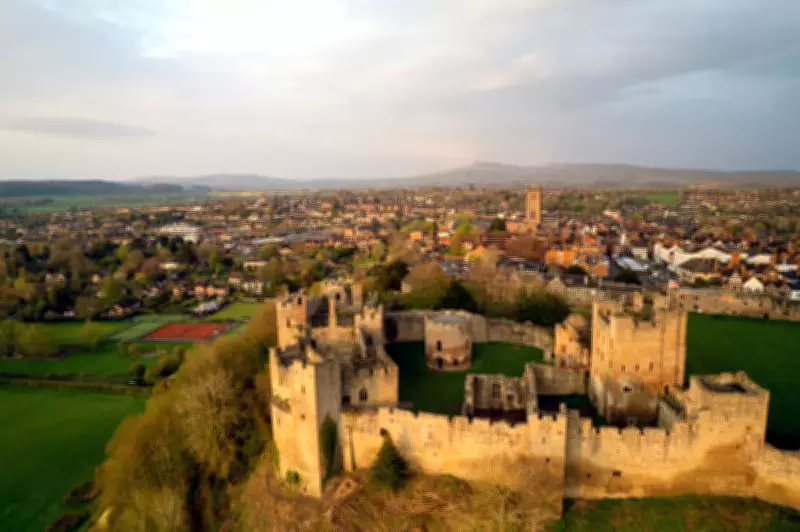
The journey begins at Ludlow Castle in Shropshire, the historical seat of English borderland power during medieval times. This castle is worth a detour, with features like the solar wing built for Queen Isabella, who stayed here in 1328. Sir Roger's wife, Joan, was also in attendance, though she slept in a different wing. History has not recorded where Sir Roger spent the night, leaving room for future dramatizations, perhaps by Netflix.

Ludlow is now famous for its foodie traditions, oozing history through its crooked lanes. Walking down Broad Street, one can admire the bay window of The Angel, from which Horatio Nelson waved to the crowd in 1802 with his left hand. Local legend claims he shouted, "Thank you for the oak," to the adoring crowd below, with his mistress Emma Hamilton and her husband Sir William standing behind him.
Trail Highlights and Accommodations
The trail sets off across Dinham Bridge, climbing into Mortimer Forest with stunning views back to the castle. Watch for deer and goshawks in this ancient woodland. The first night's stay is at Salwey Lodge, where farming owners Arabella and Hugo organise walks and have developed a handy guiding app. They also provide shuttle services, making a car unnecessary, as Ludlow is on the main railway line between Shrewsbury and Hereford.
Salwey Lodge offers a perfect ambience for reflecting on a regicide like Sir Roger. An ancestor of the Salweys was sent to the Tower for anti-monarchial tendencies and implicated in the Farnley Wood Plot of 1663. The lodge is atmospheric, lined with ancient ancestral oil portraits, and serves superlative food from its vegetable garden, farm, and local suppliers.
Historical Reminders and Scenic Views
Day two of the walk takes hikers through more woodland to fabulous views of the Shropshire countryside, notably from an iron age hill fort at Croft Ambrey, abandoned after six centuries of occupation around the time of Emperor Claudius's invasion in AD 43. Throughout the weekend, the path sees few people but many reminders of the area's militarised and dangerous past.
During the middle ages, the Welsh maintained a sturdy resistance to Norman conquerors, who responded with unwavering brutality. Sir Roger was deeply involved until Edward III had him hanged at Tyburn. The ruins of his main residence, Wigmore Castle, can be seen from Croft Ambrey, though the trail does not go there, requiring a five-mile diversion.
Final Stretch to Kington
The path rolls along pleasantly, unveiling magnificent panoramas of the Welsh mountains before dropping down to the River Lugg for an overnight stop at the Riverside Inn. The food here is excellent, with breakfasts that could lead to an early siesta if not for self-restraint. The third day includes a long ramble by the river, up into quiet woodlands and high heaths, with historical sites like the serene church at Byton, sacked multiple times by Welsh nobles.
It is possible to shorten this day to 12 miles, finishing at the church in Titley, but pressing on offers a meeting with Offa's Dyke, the ultimate symbol of militarisation and tribal anxiety. Now a small ripple in the earth used by sheep, it once kept hostile peoples apart. After ruminating on human folly, hikers stride into Kington, where the Border Bean cafe awaits, and Arabella collects them for the return journey.

Practical Information
The trip was supported by Visit Shropshire. A new Mortimer Trail guidebook is available for download or purchase at Castle Bookshop in Ludlow. Salwey Lodge offers a four-night Mortimer Trail package, including accommodation at the lodge and Riverside Inn, walking information, breakfasts, packed lunches, one dinner, and local transfers for £560 per person.