While America boasts countless iconic landmarks that draw millions of visitors annually, some of its most fascinating locations remain strictly off-limits to the public. Beyond the familiar tourist attractions lies a hidden network of heavily restricted sites, including military installations guarding national secrets, private islands closed to outsiders, and remote structures deemed too hazardous to enter.
The Landscape of Inaccessibility
A newly released map has pinpointed where these forbidden places are scattered across the United States, highlighting sites sealed off for reasons ranging from national security and safety to preservation and extreme exclusivity. Some locations are protected by armed guards and sophisticated surveillance systems, while others rely on harsh natural conditions or strict private ownership to maintain their seclusion.
Most Americans will never set foot inside these restricted zones, knowing them only through rumors, conspiracy theories, or brief mentions in historical records and news headlines. Yet these places are very real, their boundaries enforced by rigorous security protocols and firm restrictions. For curious travellers, the knowledge that parts of America remain completely inaccessible only enhances their mystique and allure.

America's Most Fascinating No-Go Zones
Fort Knox, Kentucky
The phrase 'like Fort Knox' exists for good reason, as the actual Fort Knox represents one of the most secure locations on Earth. This heavily fortified US Army installation spans nearly 110,000 square feet across three counties in northern Kentucky: Meade, Hardin, and Bullitt. Most famously, it houses the US Bullion Depository, which stores a staggering 147.3 million ounces of gold bullion – approximately half of the US Treasury's entire reserve. Unsurprisingly, the site remains completely off-limits to the public, protected by multiple layers of security measures. For ordinary visitors, it stands as a symbol of ultimate protection and one of the nation's most renowned restricted areas.
North Brother Island, New York City
North Brother Island in New York City's East River possesses a dark and complex history. The small island remained unused until 1885, when Riverside Hospital opened to quarantine patients with contagious diseases. The location later became associated with tragedy, including the 1905 General Slocum disaster that claimed over 1,000 lives nearby. In 1907, the infamous 'Typhoid Mary' was quarantined there, eventually dying on the island in 1938 after contracting pneumonia. Following its hospital use, the site served as a drug rehabilitation facility before becoming a protected bird sanctuary. Today, the island remains closed to the public, with access granted only under strict and rare conditions for researchers.
Tillamook Rock Lighthouse, Oregon
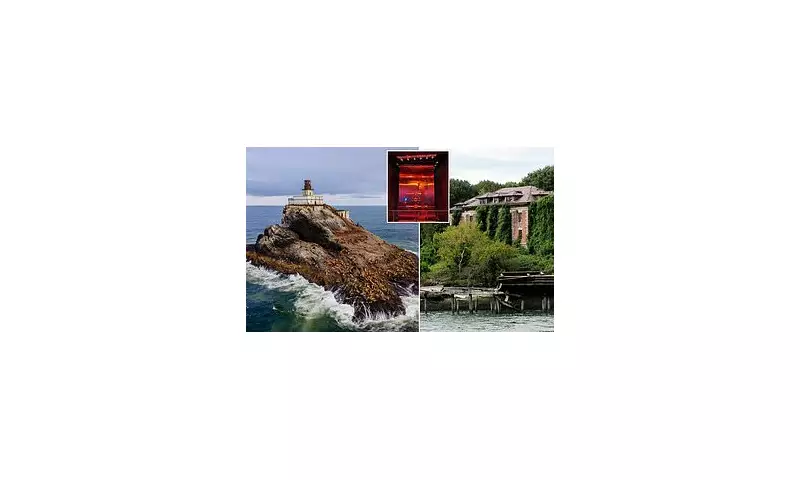
Perched on a basalt outcrop in the Pacific Ocean, Tillamook Rock Lighthouse has earned the nickname 'Terrible Tilly' due to its perilous location. Construction began in 1881, with the site claiming lives even before completion – including a master mason swept out to sea during surveying. A fierce storm during construction left workers stranded for two weeks without supplies, while a nearby shipwreck killed sixteen crew members just before the lighthouse was finished. Decommissioned in 1957, the structure has been closed to visitors ever since. Today, it can only be viewed from shore, as the surrounding conditions remain too hazardous for public access.
Ni'ihau Island, Hawaii
Known as the 'Forbidden Island,' Ni'ihau sits approximately fifteen miles off the coast of Kauaʻi and is home to around 170 residents. This beautiful island may host rare and endangered regional species such as Hawaiian ducks, Hawaiian coots, and Hawaiian monk seals, but gaining access proves exceptionally difficult. Originally purchased by Elizabeth Sinclair in 1864, ownership has passed through her descendants to the Robinson family. The island's estimated 130 indigenous residents live there rent-free without roads or telephone service. Visitors cannot simply arrive, as access is tightly controlled and limited to invited guests. Surrounded by clear blue waters, Ni'ihau remains one of America's most exclusive and mysterious destinations.

Coca-Cola Vault, Georgia
The Coca-Cola secret recipe represents one of the world's most valuable trade secrets, and the company guards it with extreme diligence. The formula is stored within a secure vault inside the World of Coca-Cola museum in Atlanta. While visitors can view the vault as part of the exhibit, the actual recipe remains hidden behind multiple layers of protection. Only a handful of trusted employees have access, with the recipe itself maintained under strict confidentiality. For enthusiasts of the iconic beverage, the vault offers a rare glimpse into a legendary commercial secret.
Langley, Virginia
Langley is widely recognised as the headquarters of the Central Intelligence Agency (CIA), though its true operations remain largely concealed from public view. Officially designated the George Bush Center for Intelligence, the complex is heavily guarded and completely off-limits to civilians. Only individuals possessing the highest security clearances can enter, and even then, access is severely restricted. The facility's secrecy has inspired countless spy thriller narratives and conspiracy theories. In reality, it stands as one of the most tightly controlled sites in the entire country.
Bohemian Grove, California
Bohemian Grove constitutes a private, heavily guarded 2,700-acre campground that most people will never enter. The site hosts an annual gathering for members of the Bohemian Club, a private organisation based in San Francisco. The club has counted several US presidents and prominent figures among its membership, including Ronald Reagan, George W. Bush, and Clint Eastwood. Founded in 1872, the group convenes its male-only members each year for a secluded retreat. Due to the privacy and exclusivity surrounding the event, it remains shrouded in considerable secrecy.
Club 33, California
Hidden within Disneyland Park's New Orleans Square lies Club 33, a private, members-only venue. Originally conceived as a private entertaining space for Walt Disney and his guests, the club opened following his death. Today, membership is extremely limited and involves a substantial waiting list. The initiation fee is reportedly around $33,000, with additional annual dues required. This exclusive establishment remains inaccessible to the vast majority of Disneyland visitors.
Granite Mountain Secret Vault, Utah
The Church of Jesus Christ of Latter-day Saints operates a highly secure vault deep within the mountains of Utah. The Granite Mountain Records Vault is situated 600 feet inside Little Cottonwood Canyon and stores an enormous collection of genealogical records. The facility is engineered to preserve these documents for future generations, consequently prohibiting public access. Few individuals know the vault's precise location, and it is protected by stringent security measures. While its primary purpose is preservation, its secrecy renders it one of the most mysterious sites in the state.
New York Stock Exchange, New York City
The New York Stock Exchange represents one of the world's most famous financial institutions, yet it has been closed to visitors since the September 11 attacks. Security measures have been progressively tightened over the years, making public access virtually impossible. Although observers can view the building from outside and visit nearby attractions like the Charging Bull statue, entry to the trading floor remains strictly restricted. For those seeking insight into financial operations, the nearby Federal Reserve Bank offers tours of its gold vault instead. However, for most people, the inner workings of the exchange stay firmly out of reach.