Millions of Britons planning dream trips to the United States this year for events like the FIFA World Cup are being urged to rethink how they pay for meals, as a wave of new credit card fees sweeps American restaurants.
The Hidden Cost of Paying by Card
Travel and currency experts have issued a stark warning about a growing trend across the Atlantic. To offset spiralling food and labour costs, a significant number of US eateries are now adding a credit card surcharge – typically around four per cent – directly onto customers' bills.
This means diners face an extra cost on top of the base price, local sales tax, and customary service charges. Recent industry data reveals these added fees reached a staggering $187.2 billion (approximately £139bn) in 2024, with analysts predicting the figure will climb even higher this year.

Lara Evans-Fisk, head of digital & engagement at currency specialist Eurochange, explained the mechanism. 'If you pay a restaurant bill by card in the US, you could face a surcharge because the card fees are being passed from the merchant to the customer,' she said.
'Restaurants are charged a fee when customers pay by card. For Visa and Mastercard, this is between 1.43% and 2.6% of the bill. American Express is often higher, between 2.5 per cent and 3.5 per cent. Total processing costs for the merchant can therefore range from 1.5 per cent to four per cent, which are now frequently passed on.'
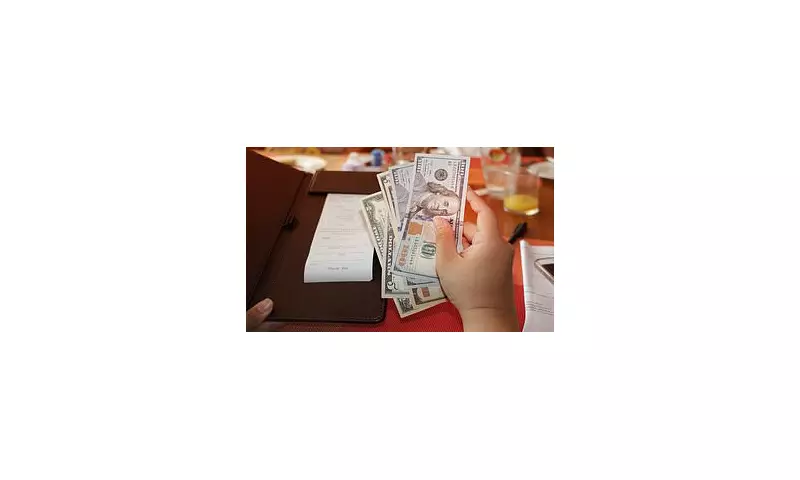
In practical terms, this means a couple enjoying a $200 (£149) dinner could find an unexpected $8 (£5.97) charge added simply for using plastic. The National Restaurant Association reports that, after food and wages, card fees are often the third-highest expense for restaurants.
How UK Visitors Can Avoid Extra Charges
Although US law requires restaurants to disclose these surcharges upon entry and at the point of sale, the notices can be easy for customers to miss in the bustle of a meal.
To sidestep the surcharge, Evans-Fisk strongly advises travellers to pay restaurant bills in cash where possible. However, she cautions that the overall cost of dining out in America will still include unavoidable additions, such as local tax (usually 5-10%) and a standard service charge of 15-20%, regardless of payment method.
Her key recommendation for managing costs is to plan currency exchange wisely. 'To get a great deal on your dollars, be sure to get your travel money in good time, rather than leaving it until the last minute,' she urged.
'Exchanging currency at the airport could result in you paying over hundreds of pounds more. You'll get a much worse rate than if you buy currency on the high street or online before travelling.'
Research highlighted by Eurochange shows a dramatic difference. Travellers buying $1,000 (£746.64) of currency at major UK airports including Edinburgh, Birmingham, Luton, Stansted, or Heathrow could pay up to £172 more compared to using a high street branch.
New Visa Fee – But Good News for Britons
The alert on card surcharges comes alongside news of a separate, recently introduced 'Visa Integrity Fee' for some visitors to the US, which could cost an additional $250 (£185).
This charge, introduced in October 2025, applies only to visitors flying from countries not in the Visa Waiver Program (VWP) who require a traditional non-immigrant visa.
Fortunately, this new fee does not affect British holidaymakers. Brenda Beltrán, a travel expert at Holafly, provided reassurance. 'As long as you qualify for ESTA, which nearly all UK holidaymakers do, you won’t be hit by the new charge,' she confirmed.
For UK travellers, the main financial focus should therefore be on daily spending habits. By carrying cash for meals and securing dollars before reaching the airport, visitors can protect their holiday budgets from creeping, often hidden, additional costs.