Tourists Warned to Verify AI Travel Information After Tasmanian Hot Springs Hoax
Travelers are being urged to double-check information generated by artificial intelligence after a significant incident where tourists showed up to an attraction that didn't exist, having read about it on a travel company's website. The warning comes as experts predict such AI-generated misinformation will become increasingly common in the tourism sector.
The Weldborough Hot Springs That Never Were
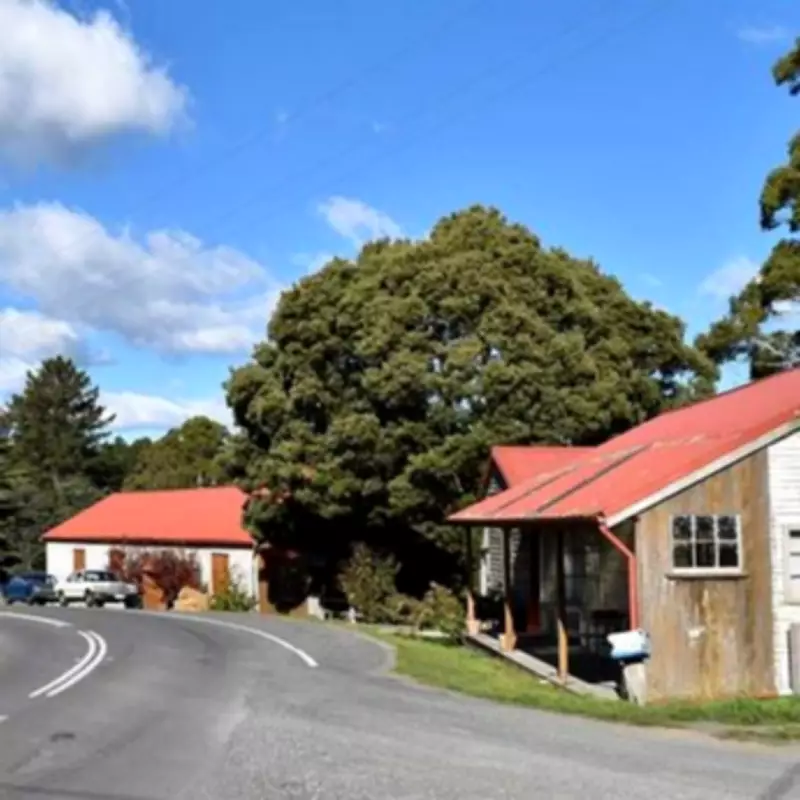
Visitors to the remote Tasmanian town of Weldborough were left thoroughly disappointed when they discovered the hot springs they had travelled to experience were completely fictional. The imaginary attraction had been invented by AI and published in a now-deleted blog post by travel company Tasmania Tours in July 2025.
The post, titled '7 Best Hot Springs Tasmania Experiences for 2026', included Weldborough Hot Springs among its recommendations, promising an off-the-beaten-path experience. It described the non-existent springs as "a tranquil haven" that had become "a favourite among local hiking groups, wellness retreat organisers, and anyone wanting to experience one of the more untouched hot springs Tasmania has to offer."

To make the listing appear more convincing, the article was accompanied by an AI-generated image showing a man backpacking along a bright blue river with steam rising from the surface. While visually enticing, the reality was that Weldborough, though undoubtedly beautiful with its lush green forest hiking trails, has no hot springs whatsoever.
Local Reactions and Tourist Disappointment
Local residents in the small town have been both amused and bemused by the steady stream of tourists arriving in search of the mythical hot springs. Kristy Probert, owner of the local pub, told the Australian Broadcasting Corporation that she receives daily phone calls and visits from people trying to locate the springs.
"I actually had a group of 24 drivers turn up there two days ago that were on a trip from the mainland, and they'd actually taken a detour to come to the hot springs," Probert revealed. "I said, 'If you find the hot springs, come back and let me know and I'll shout you beers all night' — they didn't come back," she joked about the situation.
Those hoping for a healing dip would instead find themselves facing the rather chilly waters of the River Weld, a far cry from the warm, therapeutic springs they had been promised by the AI-generated content.
Company Admission and AI Content Challenges
Scott Hennessey, owner of Australian Tours and Cruises which operates Tasmania Tours, admitted to ABC that "Our AI has messed up completely." He explained that marketing materials were created by a third party and that posts, which he would normally review, were accidentally made public while he was out of the country.
"We don't have enough horsepower to write enough content on our own, and that's why we outsource part of this function," Hennessey said, highlighting the resource challenges faced by smaller tourism operators. He emphasised that the company wasn't running a scam, stating: "We're trying to compete with the big boys. Part of that is you've got to keep your content refreshed and new all of the time. We're not a scam. We're a married couple trying to do the right thing by people."
Growing Pattern of AI Travel Misinformation
This incident is not isolated. In late 2025, images began circulating on Instagram showing an elaborate Christmas market at Buckingham Palace, complete with festive lights and stalls within the iconic gates. These were soon revealed to be AI-generated, forcing the Royal Collection Trust to issue a statement confirming no such event was planned.
Another case emerged in Malaysia where a video circulated on social media showing an amazing new attraction called the Kuak Skyride, a cable car offering spectacular mountain views. A couple reportedly travelled across the country to the town of Pengkalan Hulu only to discover the attraction was entirely fictional.

Expert Warning About AI Hallucinations in Tourism
Professor Anne Hardy, who works for Destination Southern Tasmania and is a tourism expert, warned that AI 'hallucinations' will make such situations increasingly common. She told ABC that current research shows concerning statistics about AI-generated travel information.
"What we know is that now about 90 per cent of itineraries that are generated by ChatGPT actually have at least one error in them," Professor Hardy explained. "And we also know that 37 per cent of people rely on AI to generate their itineraries."
This combination of widespread AI usage and significant error rates creates a perfect storm for tourist disappointment and misinformation, particularly as smaller operators increasingly turn to AI tools to compete with larger companies in content production.
The Broader Implications for Travel Planning
The incident highlights several important considerations for modern travel planning:
- Verification is essential: Travelers should cross-reference AI-generated information with multiple reliable sources
- Small business challenges: Smaller tourism operators face significant pressure to produce content, sometimes leading to over-reliance on AI tools
- Growing AI dependence: With over a third of travelers using AI for itinerary planning, the potential for widespread misinformation is substantial
- Local impact Communities can be unexpectedly affected by AI-generated content, both positively through increased visitation and negatively through disappointed visitors
As AI becomes increasingly integrated into travel planning and content creation, both travelers and tourism operators will need to develop more sophisticated approaches to information verification and quality control to prevent similar incidents in the future.