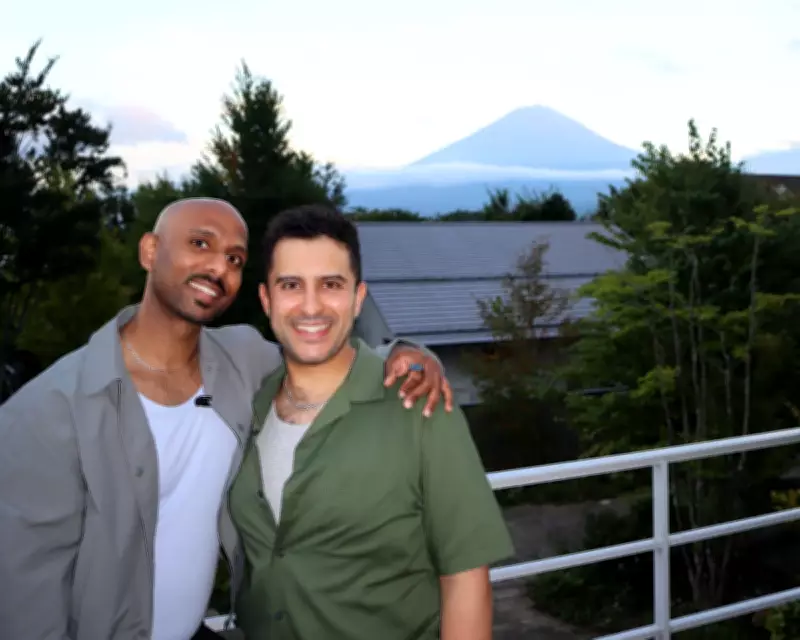
Daniel Nour had long been aware of the cultural norms surrounding public displays of affection in Japan. Like many travellers, he had heard that physical intimacy is typically reserved for the privacy of the home, never to be shown in public spaces. This understanding shaped his initial behaviour when he arrived in Tokyo with his boyfriend for their first overseas holiday together.
A Legacy of Internalised Homophobia
For Nour, this cultural caution intersected with a deeper personal struggle. His first exposure to gay culture came through television coverage of Sydney's Gay and Lesbian Mardi Gras when he was just twelve years old. His Egyptian parents reacted with dismay to the vibrant display of queer expression, leaving a lasting impression on their son.
"For the next 20 years, deep in my closet of internalised homophobia, I would struggle with these competing forces of faith, family and community, in silence," Nour recalls. He had promised himself he would never be "so unashamed as those men on the screen" and would instead present as a "working gay in a collared shirt and sensible trousers."

Arrival in Tokyo: Cultural Caution Meets Personal Anxiety
This lingering sense of caution followed Nour to Japan. With the diligence of a teacher's pet, he found himself excessively careful to observe every cultural norm he had researched online. Their first night in Tokyo was tense as Nour reprimanded his boyfriend for minor infractions:
- Eating onigiri open-mouthed on the street
- Talking too loudly on the Ginza subway line
- Taking "too long" to get ready for their evening plans
His boyfriend grew tired of the demanding itinerary and what Nour describes as his own "anal-retentiveness" during those initial days.
The Transformative Night at Kingdom Tokyo
The turning point came when they visited Kingdom Tokyo, a club in Shinjuku's gay district. Contrary to Nour's expectations about Japanese reserve, they were greeted by a muscular Japanese stripper in a jockstrap and an American bartender in a tight-fitting shirt. This marked the beginning of Nour's liberation.
Pretty soon, they had formed a circle of new friends from around the world:
- A San Franciscan who flew to Tokyo "just for the weekend"
- A Japanese flight attendant-in-training recovering from a breakup
- A Filipino lifestyle influencer who half-slurred Nicki Minaj lyrics all night
Under the twinkly lights of the disco ball, Nour saw his boyfriend in a new light - "even more handsome than those men on Oxford Street I'd seen as a child." As the night progressed, they found themselves on stage, half-drunk with vodka Cokes, performing the entirety of Kylie's Tension album alongside local drag queens.
Aftermath and Reflection
The next day, hungover but transformed, they made their way to see Mount Fuji. Despite the complexity of Japan's transport systems and Nour's throbbing headache, he found himself breathing deeply, remembering the joys of the night before. With his boyfriend's comforting touch on his arm, they navigated their way to the famous mountain.
At the top of a panoramic ropeway, they marvelled at Mount Fuji's majestic presence, visible for only 80 days each year. They felt "lucky, chosen" to witness this natural wonder and made a promise at a nearby shrine to return.
Then, in a public space overlooking one of Japan's most iconic landmarks, they held hands and kissed. A Spanish couple asked them to take their photo, and a middle-aged Japanese man practising his English enthusiastically offered to capture their moment with Fuji as backdrop, shouting "One-ah two-ah three: delightful!" like it was a gameshow.
The Freedom Found in Tradition-Bound Japan
Nour cried at Narita airport when their return flight to Sydney became imminent. "It wasn't because we would never travel again or because I hated our life in Sydney," he explains, "but because in tradition-bound Japan I felt free."

This was a freedom from shame that Nour is still learning to embrace, and it took a trip to a Tokyo gay bar to discover it. The experience challenged his preconceptions about Japanese culture and helped him reconcile the competing forces that had shaped his identity for two decades.
Daniel Nour's journey demonstrates how travel can sometimes provide the most unexpected spaces for personal growth and liberation, even in cultures perceived as reserved about public displays of affection and queer expression.