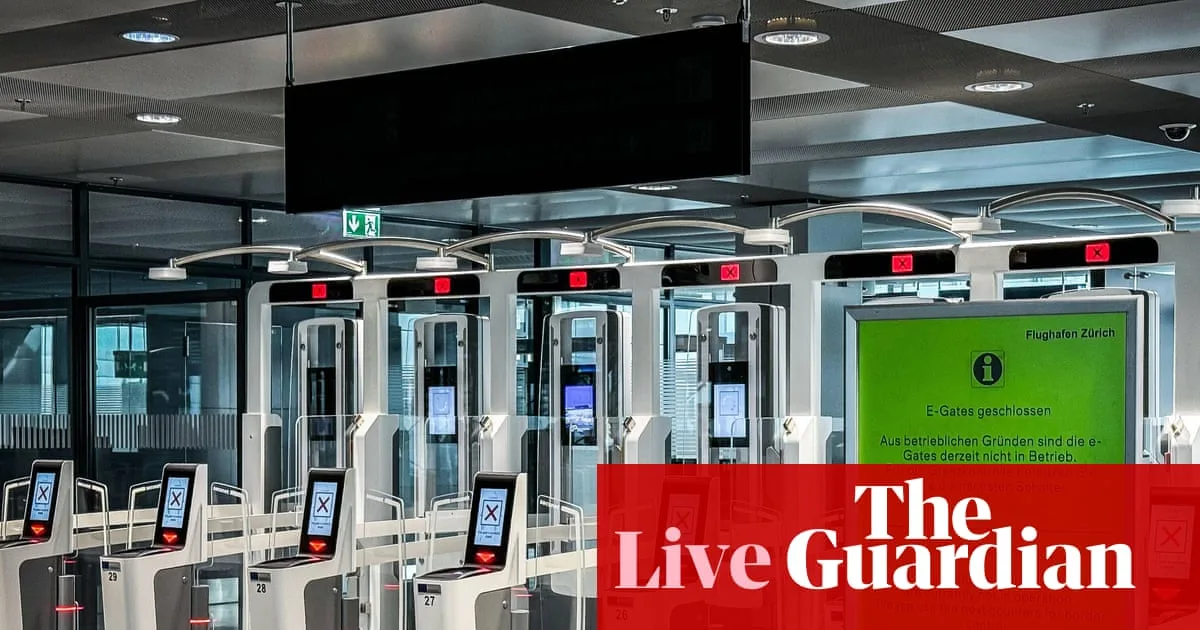
The European Union has confirmed that its new Entry/Exit System (EES) will begin rolling out on 12 October, requiring non-EU citizens, including Britons, to provide fingerprints and facial images instead of having their passports stamped. The system will be introduced gradually over six months, with full deployment expected at all border crossing points by April 2025.
The EES is part of the EU's 'smart border' programme, designed to speed up entry for pre-approved frequent travellers while combating irregular migration. Biometric data will be captured at first registration, and subsequent crossings will require verification of either fingerprints or facial image, but not both. The system will also allow border authorities to instantly check if a visitor has overstayed their permitted period.
Fingerprinting kiosks are already being installed at the Eurostar terminal in London and at the Port of Dover for car, bus, and truck passengers. However, a planned mobile app to facilitate registration has been delayed as each member state integrates the system into its national immigration framework, which remains a national competency.
Exemptions apply to holders of residence permits and passport holders from Iceland, Liechtenstein, Norway, and Switzerland, as well as their family members. The EES will cover 29 European countries, including Schengen Area states and associated nations.