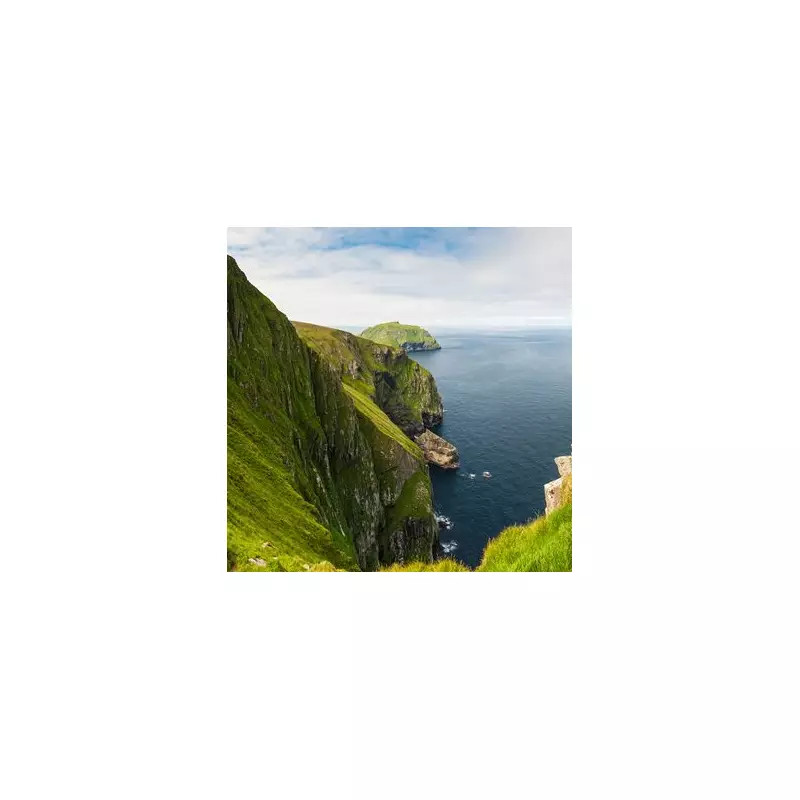
An isolated Scottish archipelago, abandoned for nearly a century, offers intrepid travellers the chance to camp beneath the United Kingdom's most dramatic sea cliffs and explore a hauntingly beautiful landscape steeped in history. St Kilda, located a staggering 100 miles off the Scottish mainland in the North Atlantic, is a place where nature has reclaimed a unique human story.
A Landscape Forged by Isolation
St Kilda's most awe-inspiring feature is its monumental cliffs. The archipelago is home to the tallest and most sheer sea cliffs in the UK, with Conachair on the main island of Hirta soaring to an incredible 427 metres. These vertigo-inducing precipices provide a fortress-like home for one of the world's largest seabird colonies, including the UK's most significant puffin population, supporting an estimated 50% of the national puffin numbers.
Human habitation on these remote islands lasted for an estimated 2,000 years, creating a unique culture utterly dependent on seabirds and isolation. This way of life ended abruptly in 1930 when the final 36 residents were evacuated to mainland Scotland, leaving behind their stone homes and a poignant legacy. Today, the archipelago is jointly managed as a UNESCO World Heritage site, recognised for its dual significance of natural spectacle and cultural heritage.

A Modern Visitor's Experience
Reaching St Kilda remains an expedition. As documented by travel vlogger Ruth Aisling, who runs a popular YouTube channel about Scotland, a day trip typically involves a three-hour boat journey from the Isle of Skye, costing around £280 per person. For those wishing to camp overnight—the only accommodation available—the return journey pushes the total cost to approximately £500.
"Although this is quite pricey, St Kilda is a place I have always wanted to see and this will probably be the only time I will ever visit," Aisling remarked. Upon arrival, visitors are briefed by National Trust for Scotland wardens on where they can explore. Aisling was immediately struck by the abandoned village on Hirta, noting the stone structures and surrounding Village Bay were "very beautiful."
Contrary to expectations of total emptiness, she found a temporary community of 30 or 40 people, including researchers and conservation staff, giving the island a feeling of being "lived on." The facilities are basic: there are toilet and shower blocks, but no shops or restaurants, so visitors must be entirely self-sufficient.
Challenges and Unforgettable Rewards
Hiking on St Kilda is not for the faint-hearted. Aisling offered a stark warning: "If you're someone who is afraid of heights I don't recommend hiking up here. Even me who is not really scared of heights my legs are wobbling a little bit." The weather is notoriously unpredictable; during her climb to the highest point, clouds descended, obscuring what would have been a lifetime view.
Overnight, the sounds of the island come alive. Aisling's sleep was disturbed by a "huge mouse" attempting to enter her tent and the constant bleating of the island's sheep. Yet, the rewards are immense. On her second day, exploring another part of Hirta, she declared a particular vista "100% the best view of St Kilda in my opinion," describing it as a picture frame of stones looking out to the vast ocean.
The islands are accessible via organised boat trips generally running between April and September, though the volatile Atlantic weather frequently leads to cancellations. The sense of history is palpable amongst the church, cleits (stone storehouses), and deserted cottages. As described by writer Martin Martin in 1697, the former inhabitants were seen to enjoy "the sweetness of true liberty," though their isolation ultimately contributed to their demise through disease, emigration, and crop failure.

For modern visitors, the experience is profound. One recent Tripadvisor reviewer called it a "breathtakingly beautiful place," while another felt "very privileged to visit." The Telegraph's Robin McKelvie evocatively dubbed the archipelago the "real-life Jurassic Park" and described its cliffs as "Tolkien-esque." It stands as a powerful monument to resilience, isolation, and the relentless force of the natural world.