Historic Display of St. Francis' Relics Draws Massive Pilgrim Crowds to Assisi
The bones of St. Francis of Assisi, the medieval friar whose teachings inspired Pope Francis and countless Christians across centuries, are being exhibited publicly for the very first time. This unprecedented event marks the 800th anniversary of the saint's death, transforming his picturesque hilltop hometown in Umbria into an epicentre of religious devotion and logistical challenge.
A Mixed Blessing for the Historic Town
Assisi Mayor Valter Stoppini, local residents, and the Franciscan friars organising the month-long display acknowledge the complex implications. With nearly 400,000 people already registered to pray before the relics—a number Stoppini estimates could swell to half a million—the city is bracing for an enormous strain. The bones, housed in a bulletproof glass case within the lower Basilica of St. Francis, will be accessible until March 22, after which they return to their crypt.
A dedicated force of 400 volunteers has been mobilised to manage the flow of pilgrims through the town's narrow, cobblestone streets, which are lined with souvenir shops and offer limited services. While Assisi is no stranger to pilgrim influxes, typically during brief celebrations, this prolonged exhibition presents a unique test. "We're used to this kind of event, but that lasts for one, two or three days," Stoppini remarked. "This is something prolonged, for a month, so I'm a bit worried, but calm."

The Enduring Legacy of a Humble Saint
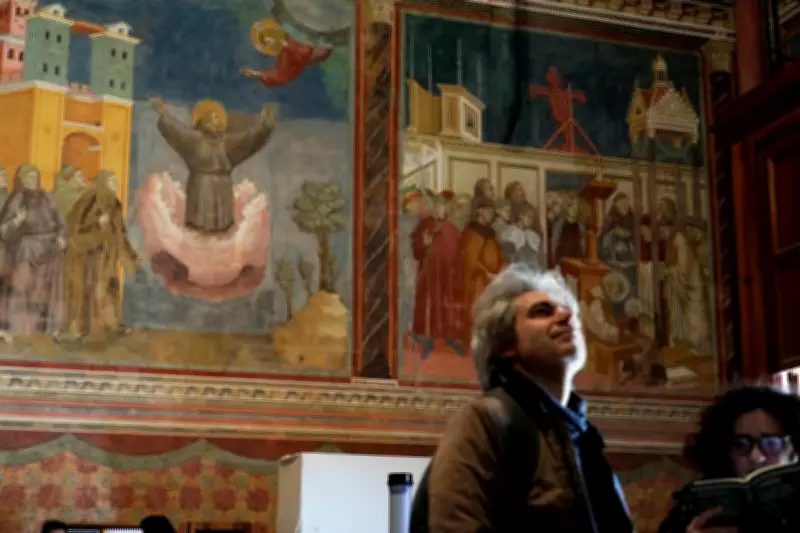
St. Francis, born into wealth in 1182, famously renounced his fortune to live as a mendicant friar after a divine calling to reform the church. He is revered for his messages of peace, love for creation, and dedication to the poor—principles that profoundly influenced Pope Francis, the first pontiff to adopt his name. Assisi itself, built from pink-tinged limestone that glows at sunset, is one of the world's premier Christian pilgrimage sites, attracting millions annually to visit the saint's tomb and the basilica adorned with Giotto's famed frescoes.
Although the Franciscan friars have periodically inspected the remains for conservation, this public display is a historic first. Officials state that removing the relics from the crypt aims to revitalise St. Francis' message and offer Christians a rare opportunity for prayerful reflection. Stoppini emphasised that a month-long exhibition is the maximum feasible duration, considering the city's capacity after a significant pilgrim surge in 2025.
A New Saint Adds to Pilgrim Appeal
While St. Francis remains Assisi's iconic figure, a contemporary saint is attracting a fresh wave of devotees. Carlo Acutis, canonised last year by Pope Leo XIV as the Catholic Church's first millennial saint, died of leukaemia at age 15 and is buried in a separate Assisi basilica. His popularity, particularly among young Latin Americans, has made the town a new destination for Catholic youth groups visiting Italy.
"When we go out onto the piazza, we find many people who ask us 'Where's Carlo? Where's Carlo?'" noted Brother Marco Moroni, custodian of the convent of St. Francis. Last year saw a 30% increase in pilgrims, attributed both to Acutis' canonisation and the Holy Year, which drew around 33 million to Rome, with many extending their journey to Assisi. Moroni observed, "The beautiful thing is that saints don't go to war against one another, thanks be to God. Many who come to the basilica go to see Carlo, and many who go to Carlo Acutis come to the basilica, creating an osmosis and a growing movement that does though create some problems for the city."
Local Perspectives on Religious Tourism
For Assisi's souvenir merchants, whose livelihoods depend on religious tourists, the extended event is a welcome boon. "Other people will see what we see every day," with Francis' spirit permeating the town, said shopkeeper Arianna Catarinelli, who works on the main street leading to the basilica. Her shop stocks Assisi-branded sweatshirts, pens featuring Acutis' image, St. Francis-themed mugs, and neon rosaries. She acknowledged the challenges for residents, such as difficult parking, but added, "For businesses, I think it's positive that there are so many people."

To mitigate the influx, city authorities have established new parking areas outside the centre and implemented a shuttle service to transport visitors into town. Local bank employee Riccardo Bacconi expressed hope that these additional parking facilities would become a lasting benefit for residents post-exhibition. After a morning run, Bacconi reflected, "I don't judge it negatively, economically it's important. There are more advantages than disadvantages." He conceded that tourism is the town's lifeblood, and choosing to live in Assisi necessitates accommodating its pilgrim-driven economy.